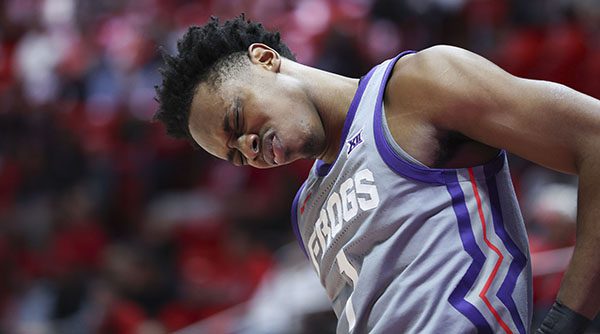
It’s a clash of high-impact stars as Houston’s freshman phenom Kingston Flemings, fresh off a 42-point explosion, meets TCU’s interior force David Punch. Our CBB Picks focus on how these individual matchups and the backcourt duel between Emanuel Sharp and Jayden Pierre will dictate the final score in Fort Worth.
The Setup: Houston at TCU
Houston’s laying 8 to 8.5 points on the road at TCU, and this spread screams Big 12 defensive grinder. The Cougars are 8-1 with the sixth-ranked adjusted defensive efficiency in the country at 94.1 according to collegebasketballdata.com, while TCU sits at 6-3 with respectable metrics but nothing that suggests they can hang with Houston’s suffocating defense. Here’s the thing: when you’ve got a team ranked 14th nationally in defensive rating (90.6) going up against a squad that’s 200th (107.1), the efficiency gap tells you everything you need to know. Houston wins by making opponents miserable, and TCU’s offense—while ranked 47th in offensive rating—hasn’t faced this level of defensive intensity at home yet. This number makes sense, and I’m here to tell you why it might not be enough.
Game Info & Betting Lines
Matchup: Houston at TCU
Date: January 28, 2026
Time: 9:00 PM ET
Venue: Schollmaier Arena, Fort Worth, TX
Bovada:
Point Spread: Houston -8
Over/Under: 137.5
Moneyline: TCU +300, Houston -400
DraftKings:
Point Spread: Houston -8.5
Over/Under: 137.5
Moneyline: TCU +205, Houston -250
Why This Number Makes Sense (or Doesn’t)
Let’s dig into the efficiency numbers because that’s where this game lives and dies. Houston’s adjusted net efficiency of 18.4 ranks 26th nationally, while TCU sits at 74th with a 9.9 mark. That’s an 8.5-point gap right there in the adjusted metrics, which lines up perfectly with the spread. But here’s where it gets interesting: both teams play at glacial pace. Houston ranks 315th in tempo at 63.8 possessions per game, while TCU is even slower at 346th with 60.3 possessions. When you’ve got two teams grinding possessions into dust, every possession becomes magnified.
The market landed here because Houston’s defense is elite—allowing just 60.0 points per game, fifth-best in the nation—while holding opponents to 37.8% from the field (17th) and an absurd 25.9% from three (seventh). TCU’s offense is efficient in a vacuum, but they’re not built to solve elite defensive schemes. The Horned Frogs turn it over 12.1 times per game (169th nationally) compared to Houston’s 9.8 (25th). In a slow-tempo game where possessions are precious, that turnover differential becomes a death sentence. The total at 137.5 also makes perfect sense—these teams combine for a projected 123 possessions, and neither wants to run. This screams under, and the spread feels light given Houston’s defensive dominance.
Houston Breakdown: The Analytical Edge
Houston does one thing better than almost anyone in college basketball: they make you earn every single point. That 94.1 adjusted defensive efficiency (sixth nationally) isn’t a fluke—it’s a system. Emanuel Sharp leads the scoring at 17.6 points per game (105th nationally), but this team’s identity is defensive suffocation. They force opponents into contested shots, limit second chances despite ranking just 38th in offensive rebounding percentage at 35.8%, and protect the rim with 4.6 blocks per game (58th).
The offensive numbers aren’t pretty—227th in points per game at 75.7, 262nd in true shooting percentage at 54.0%—but they don’t need to be. Kingston Flemings (15.9 PPG) and Milos Uzan (12.2 PPG, 4.7 APG) provide enough creation to generate quality looks, and the Cougars assist on 17.0 buckets per game (59th). They’ve got the 25th-best turnover rate in the country at 9.8 per game, which means they value possessions. In a rock fight, that discipline wins games. Chris Cenac Jr. gives them size inside at 8.0 rebounds per game (80th nationally), and they’re coming off a loss at Texas Tech where they scored 86 points—proof they can score when needed.
TCU Breakdown: The Counterpoint
TCU’s got some juice offensively—124.6 offensive rating ranks 47th nationally—but their defensive metrics are pedestrian. That 101.5 adjusted defensive efficiency (55th) is respectable, but it’s not stopping Houston’s methodical attack. David Punch leads the way at 13.4 points and 7.6 boards per game (124th in rebounding), while Brock Harding is a legitimate playmaker at 6.1 assists per game (20th nationally). The problem? TCU’s turnover issues and rebounding deficiencies.
The Horned Frogs rank 247th in rebounds per game at 35.1 and 145th in offensive rebounding percentage at 32.0%. Against Houston’s size and physicality, that’s a problem. They’re also giving the ball away 12.1 times per game with a turnover ratio of 0.2 (228th), which means they’re careless with possessions. In a game projected for 60-62 possessions, you can’t afford three or four empty trips. TCU’s recent win at Baylor (97-90) shows they can score, but that was a pace-up game. Against Houston’s crawl, they’re going to struggle to find rhythm. Jayden Pierre (11.6 PPG) and Micah Robinson (9.6 PPG) provide depth, but nobody on this roster scares Houston’s elite perimeter defenders.
The Matchup: Where This Gets Decided
This game gets decided in two places: turnovers and offensive rebounding. Houston forces mistakes with their 9.1 steals per game (45th) and disciplined defensive rotations, while TCU coughs it up at a 169th-ranked rate. In a game with 60 possessions, if TCU has 12-13 turnovers and Houston has 8-9, that’s a four-possession swing that translates to 8-10 points in a game projected to be low-scoring.
The second battleground is the offensive glass. Houston ranks 38th in offensive rebounding percentage at 35.8%, while TCU is just 145th at 32.0%. Second-chance points could be the difference between a six-point game and a 12-point blowout. Houston’s Chris Cenac Jr. and Joseph Tugler (5.4 RPG, 491st nationally) should dominate the glass against TCU’s undersized frontcourt.
The pace favors Houston completely. TCU wants to play slow (346th in tempo), but they’re not built to win defensive slugfests. Houston thrives in exactly this environment—they’re 315th in pace and have the defensive metrics to turn this into a 58-55 type of game. The Cougars’ 90.6 defensive rating (14th) against TCU’s 107.1 (200th) is a 17-point gap per 100 possessions. Scale that to 60 possessions and you’re looking at a 10-point Houston advantage just from defensive efficiency alone.
Bash’s Best Bet
I’m laying the points with Houston -8.5 and I’m not sweating it. The efficiency gap is real, the pace favors the better defensive team, and TCU’s turnover issues are going to get exploited. Houston’s adjusted defensive efficiency of 94.1 (sixth nationally) against TCU’s mediocre 101.5 (55th) tells me the Cougars win this by double digits. The Horned Frogs have no answer for Houston’s defensive pressure, and in a game with 60 possessions, every mistake gets magnified.
I’m also taking the under 137.5 with confidence. Two teams ranked 315th and 346th in tempo aren’t suddenly going to start running. Houston allows 60.0 points per game (fifth nationally), and TCU’s offense—while efficient—hasn’t seen this level of defensive intensity. I’m projecting something like 68-57 Houston, which gets you well under the total and covers the spread comfortably. This is exactly the kind of game Houston was built to win, and TCU doesn’t have the horses to keep up in a grind-it-out Big 12 battle.