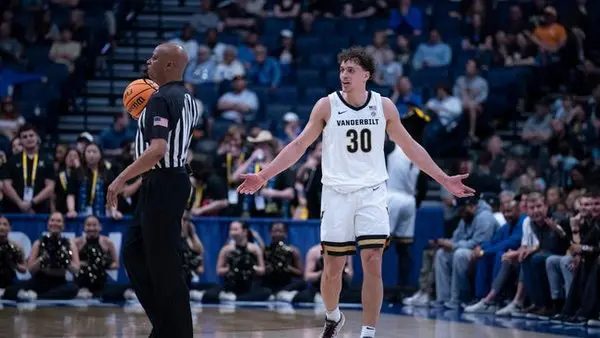
Vanderbilt has won 10 straight at home, but is a 2.5-point cushion enough against a Florida team that just dismantled No. 21 Tennessee? Bash asks if Vanderbilt’s offensive rhythm can survive the best bet pressure of a Florida squad that leads the country in total rebounds.
The Setup: Florida at Vanderbilt
Vanderbilt’s laying 2.5 points at home against Florida, and if you’re scratching your head wondering why an undefeated team is getting such a short number, you’re not alone. Here’s the thing though—when you dig into the collegebasketballdata.com efficiency numbers, this line tells you everything about how the market views these two SEC squads. Florida’s defense is the real deal, checking in at 9th nationally in adjusted defensive efficiency (95.3), while Vandy’s sitting at a pedestrian 63rd (102.0). The Commodores might be 9-0, but they’ve done it by outscoring opponents in a crawl-pace environment that ranks 362nd in tempo. Florida pushes at the 25th-fastest pace nationally, and when you force Vanderbilt out of their comfort zone, that offensive efficiency gap starts to narrow real quick.
The Gators are 5-3, sure, but they’re battle-tested with wins over Tennessee and Oklahoma already. Vanderbilt’s undefeated record? It comes with an asterisk—their only loss was an 80-64 beatdown at Texas, and that game exposed exactly what happens when the Commodores face elite defensive pressure on the road. This number is short because the market knows Florida’s got the tools to make this a dogfight in Memorial Gymnasium.
Game Info & Betting Lines
Game: Florida at Vanderbilt
Date: January 17, 2026
Time: 2:00 PM ET
Location: Memorial Gymnasium, Nashville, TN
Spread: Vanderbilt -2.5
Total: 163.5 (DraftKings) / 163 (Bovada)
Moneyline: Vanderbilt -170, Florida +142
Why This Number Makes Sense (or Doesn’t)
Let’s start with the obvious: Vanderbilt’s adjusted offensive efficiency is absolutely absurd. They rank 1st nationally at 127.7, which is video game territory. But here’s what that number doesn’t tell you—it’s built entirely on controlling pace. The Commodores play at a glacial 56.8 possessions per game, 362nd in the country. That’s not a typo. They’re methodical, they’re efficient, and they turn the ball over just 9.3 times per game (15th nationally). When they control tempo, they’re nearly impossible to beat.
The problem? Florida doesn’t want to play that game. The Gators rank 25th in pace at 74.3 possessions, and they’re going to push every chance they get. Florida’s offensive rating sits at 112.3, which isn’t elite, but their adjusted offensive efficiency (114.6, 69th) suggests they can score when it matters. More importantly, their defensive rating of 96.8 (48th) and that elite adjusted defensive mark tells you they can get stops.
The total of 163.5 is fascinating because it’s essentially the market hedging between these two tempos. If Vanderbilt controls the game, we’re looking at something in the 75-72 range. If Florida speeds this up, we could easily see 85-80. The spread at 2.5 reflects the market’s uncertainty about which team dictates pace, and that’s exactly where sharp bettors should be paying attention.
Florida Breakdown: The Analytical Edge
Florida’s identity is crystal clear: they rebound like maniacs and defend the three-point line better than anyone in the country. The Gators rank 1st nationally in rebounds per game (47.2) with a 31st-ranked offensive rebounding percentage (36.0%). When you combine that with an 8th-ranked opponent three-point percentage (26.0%), you’ve got a team built to grind possessions and limit second chances for opponents.
Thomas Haugh (18.6 PPG, 7.5 RPG) and Alex Condon (15.4 PPG, 8.6 RPG) give Florida a legitimate frontcourt advantage, but the real weapon is Rueben Chinyelu. At 11.5 rebounds per game (5th nationally), he’s a monster on the glass. Vanderbilt ranks just 267th in offensive rebounding percentage (28.9%), which means Florida should dominate the boards.
The concern? Florida can’t shoot. They’re 352nd in three-point percentage (27.3%) and 286th in effective field goal percentage (49.3%). If Vanderbilt packs the paint and forces Florida to beat them from outside, the Gators could struggle to score in the halfcourt.
Vanderbilt Breakdown: The Counterpoint
Vanderbilt’s offense is a thing of beauty when they’re clicking. That 7th-ranked field goal percentage (52.7%) and 6th-ranked effective field goal percentage (61.2%) tells you they don’t waste possessions. Duke Miles (17.8 PPG, 4.4 APG) and Tyler Tanner (16.2 PPG, 4.3 APG) form one of the best backcourt duos in the SEC, and their 9th-ranked assist rate (20.0 APG) shows how unselfish this offense operates.
The Commodores also take care of the basketball—15th nationally in turnovers per game (9.3)—which is critical in their slow-paced system. Every possession matters when you’re only getting 57 of them, and Vanderbilt maximizes efficiency better than almost anyone.
But here’s the red flag: that defensive rating of 128.3 ranks 359th nationally. Yes, 359th. Their adjusted defensive efficiency (102.0) is better but still just 63rd. When Vanderbilt faced Texas—a team with similar defensive chops to Florida—they got boat-raced 80-64. The blueprint is there: pressure them, speed them up, and force them into uncomfortable situations.
The Matchup: Where This Gets Decided
This game comes down to one simple question: who controls the tempo? If Vanderbilt can slow this down and operate in the halfcourt, their offensive efficiency gives them the edge. Florida’s going to struggle to score in a grind-it-out game, especially if they’re settling for contested threes (which they will be, given that 352nd-ranked three-point percentage).
But if Florida can push pace off rebounds—and with that 1st-ranked rebounding rate, they absolutely can—Vanderbilt’s defense becomes a major liability. The Commodores allow 73.0 points per game (175th) and rank 359th in defensive rating. In transition, Florida’s got the athletes to exploit that weakness. Boogie Fland and Urban Klavzar can get out in the open court, and suddenly that offensive efficiency gap doesn’t matter as much.
The other X-factor is the glass. Florida’s offensive rebounding percentage (36.0%, 31st) against Vanderbilt’s weak defensive rebounding could create extra possessions. In a game where every possession matters, that’s huge. Florida’s averaging 312 points in the paint compared to Vanderbilt’s 380, but the Gators’ size advantage with Chinyelu, Condon, and Haugh should tilt the interior battle their way.
Bash’s Best Bet
I’m on Florida +2.5, and I’m comfortable with it. Vanderbilt’s undefeated record is impressive, but it’s built on a specific style that Florida is uniquely equipped to disrupt. The Gators’ elite perimeter defense (8th in opponent three-point percentage) will force Vanderbilt into contested twos, and their rebounding dominance should create second-chance opportunities all afternoon.
More importantly, Florida’s already shown they can win tough road games in the SEC. That win at Oklahoma and the home victory over Tennessee prove this team can execute in hostile environments. Vanderbilt’s lone loss—that 16-point beatdown at Texas—showed exactly what happens when they face a physical, defensive-minded team that can push tempo.
Take the points. Florida’s got the matchup advantages where it matters, and in a game that should come down to the final possession, I want the better defensive team getting the cushion.