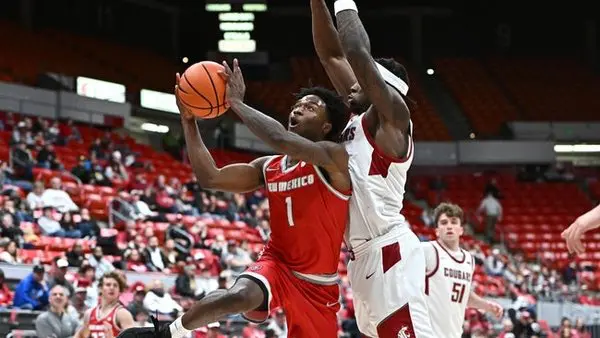
Bash is laying the points with New Mexico in this NIT clash, trusting the 14-point net rating gap and The Pit’s altitude advantage to overwhelm a Saint Joseph’s squad that can’t shoot straight.
New Mexico’s laying 10.5 at home against Saint Joseph’s in Tuesday night’s NIT matchup, and the market’s telling you everything you need to know about this one. The Lobos check in at #46 in KenPom with a +17.2 adjusted efficiency margin, while the Hawks limp in at #106 with a pedestrian +5.9 mark. That’s an 11-point talent gap before we even factor in venue, and when you’re talking about The Pit at 9:00 PM ET, that venue factor isn’t some throwaway line—it’s a legitimate 3-4 point swing in a building where opponents shoot worse and fatigue faster at 5,312 feet above sea level. According to collegebasketballdata.com, New Mexico’s offensive rating sits at 118.5 (#56 nationally) against Saint Joseph’s 107.5 (#202), and that’s the kind of mismatch that shows up on the scoreboard in March.
This is a classic mid-major metric gap situation where the A-10 visitor gets exposed by a Mountain West program that’s been battle-tested in a superior conference.
Why the Market Landed on Double Digits
The 10.5-point spread reflects what the advanced metrics have been screaming all season: New Mexico is simply a better basketball team in every measurable category. The Lobos rank #37 nationally in adjusted defensive efficiency (99.9), while Saint Joseph’s sits at #71 (103.2)—a 3.3-point gap that matters when you’re trying to generate quality looks. But it’s the offensive side where this gets ugly for the Hawks. New Mexico’s true shooting percentage of 58.0% (#74 nationally) dwarfs Saint Joseph’s 53.9% mark (#276), and that 4.1-point efficiency gap translates directly to scoring margin over 70 possessions.
Warren Nolan’s data shows New Mexico at RPI #53 with a strength of schedule ranked 102nd, while Saint Joseph’s doesn’t even crack the top-100 in RPI. The Lobos went 2-7 in Quadrant 1 games and 5-1 in Q2 contests—they’ve seen quality opponents and know how to execute in pressure spots. The Hawks’ shooting numbers tell you why they’re playing in the NIT instead of the Big Dance: 30.9% from three (#327 nationally) and 42.9% overall field goal percentage (#300). You can’t win tournament games when you’re ranked in the bottom 20% of Division I in shooting efficiency.
Saint Joseph’s Offense Meets Altitude Reality
I keep coming back to those shooting splits because they’re disqualifying. Deuce Jones leads the Hawks at 17.0 PPG, but he’s working with a supporting cast that includes Derek Simpson (11.9 PPG) and Jaiden Glover-Toscano (12.1 PPG)—solid players, but nobody who scares you in an elimination game on the road. Saint Joseph’s ranks #277 nationally in effective field goal percentage (49.8%), and when you’re already struggling to generate quality looks, the last place you want to be is in The Pit at altitude against a defense that ranks #14 nationally in opponent three-point percentage (30.1%).
The Hawks do defend—they’re #54 in defensive rating and #23 in opponent field goal percentage (40.6%)—but their offensive limitations are going to get exposed against a New Mexico squad that forces 8.1 steals per game (#45 nationally) and converts turnovers into 575 points off turnovers this season. Saint Joseph’s turnover ratio of 0.2 (#160) suggests they’re not careless with the ball, but the Lobos’ 19.1% forced turnover rate (#46 per KenPom) creates extra possessions that a team shooting 36.3% from three can capitalize on.
New Mexico’s Balanced Attack and Home Dominance
The Lobos don’t rely on one guy to carry them, and that’s a problem for a Saint Joseph’s defense that’s built to take away one option. Jake Hall (13.3 PPG), Deyton Albury (12.6 PPG), Tomislav Buljan (12.2 PPG with 11.0 RPG—#8 nationally), Uriah Tenette (11.6 PPG), and Antonio Chol (11.0 PPG) give coach Eric Olen five double-figure scorers who can exploit mismatches. Buljan’s rebounding prowess is particularly relevant here—Saint Joseph’s ranks #33 in rebounds per game (39.1), but they’re facing a guy who’s averaging nearly a double-double and anchoring a frontcourt that scores 1,194 points in the paint.
The one concern is Albury’s questionable status due to illness. He’s a key piece averaging 12.6 PPG and 3.1 APG, and if he can’t go, that’s 30-35 minutes of production the Lobos need to replace. But even at 85% capacity, New Mexico’s depth and home-court advantage should overwhelm a Saint Joseph’s squad that’s 7-5 on the road this season. The Lobos are 15-3 at home, and they just torched George Washington 86-61 and Sam Houston 107-83 in their last two games in Albuquerque.
Matchup Breakdown: Where This Game Gets Decided
| Metric | Saint Joseph’s | New Mexico | Edge |
|---|---|---|---|
| KenPom Rank | #106 | #46 | New Mexico |
| RPI Rank | N/A | #53 | New Mexico |
| Strength of Schedule | #112 | #102 | New Mexico |
| Q1 Record | N/A | 2-7 | New Mexico |
| Adj. Offensive Efficiency | 107.5 (#202) | 118.5 (#56) | New Mexico +11.0 |
| Adj. Defensive Efficiency | 103.2 (#71) | 99.9 (#37) | New Mexico +3.3 |
| Pace | 67.4 (#157) | 70.1 (#45) | New Mexico +2.7 |
The pace differential matters more than it looks. New Mexico wants to push tempo at 70.1 possessions per game (#45), while Saint Joseph’s prefers a slower 67.4 pace (#157). In a one-game elimination scenario, the Lobos can dictate tempo at home and force the Hawks into uncomfortable transition situations. KenPom projects 70 possessions for this matchup, which favors the team with the superior offensive rating—and that’s New Mexico by a mile. The Lobos’ 53.6% two-point shooting percentage overwhelms Saint Joseph’s interior defense, and with Buljan controlling the glass, second-chance opportunities will tilt heavily toward the home side.
The style clash also shows up in the turnover battle. New Mexico’s 14.9% turnover rate (#61 per KenPom) is significantly better than Saint Joseph’s 16.9% mark (#191), and when the Lobos force extra possessions with their #46-ranked forced turnover rate, they convert those mistakes into easy baskets. The Hawks’ 5.5 steals per game (#310) tells you they don’t create chaos defensively—they’re structured and disciplined, but that won’t matter when New Mexico’s shooting 54.1% effective field goal percentage and generating quality looks in the halfcourt.
The Bottom Line: Talent Gap Too Wide
The model projects New Mexico by 7.1 points, which suggests there’s 3.4 points of value on Saint Joseph’s at +10.5. I’m not buying it. The model doesn’t fully account for altitude fatigue, NIT elimination desperation, or the fact that the Hawks can’t shoot well enough to hang around if this game stays in the 70-possession range. New Mexico’s 86% win probability per KenPom feels right, and in a tournament setting where one loss ends your season, the Lobos have every incentive to step on the throat early and avoid drama.
The total of 152.5 looks inflated given the model’s 147.5 projection, but I’m more interested in the spread. Saint Joseph’s has won four of their last five, but three of those wins came against A-10 competition (Davidson, La Salle) or mid-tier programs (California, Colorado State). They lost by 13 to VCU in their only recent test against a quality opponent, and New Mexico’s a better team than VCU in a much tougher environment.
The risk here is Albury’s illness keeping him out or limiting his effectiveness, which would force New Mexico to lean harder on Hall and Buljan. But even at 80% strength, the Lobos have enough firepower to cover double digits against a team that ranks #327 in three-point shooting and #300 in overall field goal percentage. This is the NIT, not the NCAA Tournament—there’s no margin for error, and New Mexico’s not letting a 24-11 A-10 squad come into The Pit and steal a game they’re supposed to win by 12-14 points.
BASH’S BEST BET: New Mexico -10.5 for 2 units. The talent gap is real, the venue advantage is significant, and Saint Joseph’s shooting woes will get exposed against a defense that ranks top-15 nationally in opponent three-point percentage. Lay the points and trust the Lobos to advance in this NIT clash.
Public money is loud in March — our college hoops sharp picks stay disciplined.