Bash sees Tennessee laying 4.5 at home against a Vanderbilt squad with the third-best offensive rating in college basketball, and he’s not buying the Volunteers’ ability to slow down this tempo-free scoring machine in a ranked-versus-ranked SEC finale.
The Line That Doesn’t Add Up
Tennessee’s laying 4.5 points at home against Vanderbilt on Saturday afternoon at Food City Center, and the market is asking you to believe that Rick Barnes’ defense can neutralize the nation’s third-best offensive rating. I’m not buying it. According to collegebasketballdata.com, Vanderbilt checks in at 131.3 in offensive rating (#3 nationally) while Tennessee sits at 117.9 (#58). That’s a 13.4-point chasm in offensive efficiency, and you’re telling me home court erases that and flips it into a Tennessee cover? The adjusted numbers tell a more nuanced story—Vandy’s adjusted offensive efficiency ranks #10 nationally at 124.4, while Tennessee’s adjusted defense sits at #12 at 95.5—but this spread feels like it’s giving too much credit to the home team’s ability to dictate tempo and style.
This is a ranked-versus-ranked SEC showdown with AP #24 Vanderbilt visiting AP #23 Tennessee, and both teams are fighting for tournament seeding with Selection Sunday approaching. The Commodores are 23-7 overall with an RPI of #22, while the Volunteers sit 21-9 with an RPI of #31. Tennessee won the first meeting 69-65 in Nashville two weeks ago, but that game featured Vanderbilt shooting just 41.5% from the field—well below their season average of 47.7%.
Why the Market Landed Here
The spread opened around Tennessee -4 and has held steady at -4.5 on DraftKings, which tells me the market respects both Tennessee’s home-court advantage and their elite defensive profile. The Volunteers rank #12 in adjusted defensive efficiency and hold opponents to just 40.8% from the field (#31 nationally). Their defensive identity is built on rebounding—they rank #2 nationally in offensive rebounding percentage at 37.3% and #4 overall in total rebounds per game at 42.7. That glass-crashing creates extra possessions and shortens games, which theoretically limits Vanderbilt’s offensive opportunities.
But here’s the problem: Vanderbilt doesn’t beat you with volume—they beat you with efficiency. The Commodores rank #11 nationally in turnover ratio with just 9.6 turnovers per game, and their assist-to-turnover ratio of 1.73 dwarfs Tennessee’s 1.43. When you’re protecting the ball at that level and converting at a 60.3% true shooting percentage (#27 nationally), you don’t need 75 possessions to put up points. The projected pace blend sits at 65.2 possessions, which favors neither team dramatically—Vandy plays at 64.6 (#287 nationally) while Tennessee sits at 65.8 (#226).
The total of 147.5 feels high given the tempo and Tennessee’s defensive strength, but Vanderbilt’s offensive firepower keeps it in play. KenPom projects this game at 76-72 Tennessee with a 64% home win probability, which aligns closely with the spread. Warren Nolan’s strength of schedule data shows Tennessee at #34 overall and Vanderbilt at #28, so both teams have been tested throughout SEC play.
The Bubble Motivation Factor
This is March 7th—the final weekend of the regular season before conference tournaments—and both teams are playing for NCAA Tournament seeding. Vanderbilt’s resume includes a 5-5 record in Quadrant 1 games and a 5-1 mark in Q2 contests, which gives them quality wins but also some concerning losses. Tennessee sits 5-7 in Q1 games, which means they need statement wins to improve their seed line. The Volunteers are 11-6 in SEC play compared to Vanderbilt’s 10-7 mark, so there’s no desperation angle here—both teams are safely in the field and fighting for positioning.
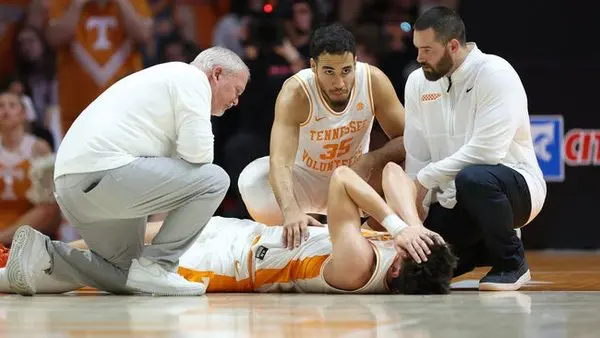
The injury report adds a layer of uncertainty: Nate Ament (16.3 PPG, 7.1 RPG) is listed as questionable with an ankle injury for Tennessee. Ament is the Volunteers’ second-leading scorer and a critical piece of their rebounding dominance. If he’s limited or unavailable, Tennessee loses a significant chunk of their interior presence, which directly impacts their ability to control the glass against Vanderbilt’s frontcourt. For Vanderbilt, Frankie Collins remains out with a lower-body injury, but he’s been sidelined since December and isn’t factored into their current rotation.
I’m also watching Vanderbilt’s recent form: they’re 2-5 ATS in their last seven road games and just 4-6 ATS over their last ten overall. That’s not inspiring confidence, but the underlying metrics suggest they’ve been better than their ATS record indicates. They’ve covered the spread in 9 of their last 11 games at Tennessee, which tells me this matchup historically favors the Commodores from a betting perspective even when they lose straight up.
The Matchup That Matters
The key contrast here is Vanderbilt’s elite offense against Tennessee’s elite defense, and I trust the offense more in this spot. Duke Miles (17.8 PPG) and Tyler Tanner (16.2 PPG) give the Commodores two dynamic guards who can create shots in the halfcourt, and their 55.6% effective field goal percentage (#35 nationally) means they’re getting quality looks even against elite defenses. Tennessee’s Ja’Kobi Gillespie (17.3 PPG, 5.4 APG) is a capable facilitator, but the Volunteers’ offensive rating of 117.9 ranks just #58 nationally—they’re not built to win shootouts.
Vanderbilt’s Quadrant 1 record of 5-5 shows they can hang with elite competition, and their road wins this season include quality performances at Ole Miss (89-86) and a 10-4 straight-up record away from home. Tennessee’s 2-9 ATS mark in their last 11 home games against Vanderbilt is a glaring trend that suggests the market consistently overvalues the Volunteers in this matchup. The Commodores may not win outright—they’re 0-5 SU in their last five trips to Knoxville—but they’ve covered the number repeatedly by keeping games close.
The Numbers That Tell the Story
| Metric | Vanderbilt | Tennessee |
|---|---|---|
| KenPom Rank | #15 | #13 |
| RPI (Warren Nolan) | #22 | #31 |
| Strength of Schedule | #28 | #34 |
| Quadrant 1 Record | 5-5 | 5-7 |
| Adj. Offensive Efficiency | 124.4 (#10) | 120.9 (#37) |
| Adj. Defensive Efficiency | 100.1 (#35) | 95.5 (#12) |
| True Shooting % | 60.3% (#27) | 56.1% (#177) |
The tempo projection of 65.2 possessions favors neither team dramatically, but Vanderbilt’s 4.2-percentage-point advantage in true shooting means they’re converting at a significantly higher rate per possession. Tennessee’s rebounding edge is real—they grab 42.7 boards per game compared to Vanderbilt’s 36.0—but the Commodores’ ability to protect the ball (#11 in turnover ratio) limits the impact of second-chance opportunities. When you’re only turning it over 9.6 times per game, you’re not giving Tennessee extra possessions to exploit their glass dominance.
The model projects Tennessee winning 76-72, which would result in a one-possession Vanderbilt cover. KenPom’s 64% home win probability suggests this game is closer to a pick’em on a neutral floor, and I’m getting 4.5 points with the team that has the superior offensive efficiency and a strong track record of covering in Knoxville.
The Play
I’m backing Vanderbilt to cover the 4.5-point spread. The Commodores have the third-best offensive rating in college basketball and rank #10 in adjusted offensive efficiency, which gives them the firepower to hang with Tennessee even on the road. The Volunteers’ defensive strength is undeniable, but Vanderbilt’s ball security and shooting efficiency neutralize Tennessee’s ability to dictate tempo through rebounding. The historical trend of Vandy covering 9 of their last 11 games in Knoxville tells me the market consistently overvalues Tennessee in this matchup, and I’m not going to fight that pattern.
The primary risk is Nate Ament’s availability—if he plays and Tennessee controls the glass at their usual elite level, the Volunteers could shorten this game enough to pull away late. But even with Ament healthy, I trust Vanderbilt’s offensive efficiency to keep this game within a possession. The Commodores are battle-tested with a 5-5 Q1 record, and they’ve shown they can compete in hostile environments.
BASH’S BEST BET: Vanderbilt +4.5 for 2 units.