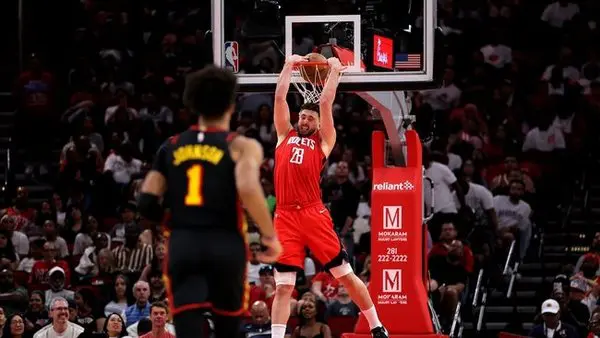
Bash sees a pace differential the market hasn’t fully priced, and he’s targeting the total in Saturday’s Heat-Rockets matchup at Toyota Center.
The Setup: Miami Heat at Houston Rockets
Saturday night brings an intriguing pace clash to Toyota Center when the Miami Heat visit the Houston Rockets. The spread sits at Houston -2.0, the total at 229.5, and I’m immediately drawn to the tempo dynamics here. Miami runs at 104.7 possessions per game—eighth-fastest in the league. Houston grinds at 96.7, one of the slowest paces in basketball. When you blend those numbers, the projection lands around 100.7 possessions, which pushes this game into uptempo territory despite Houston’s preference to slow things down.
The Heat limp in at 38-32 after dropping three straight, including a Thursday night beatdown where Luka Doncic hung 60 on them in a 134-126 loss to the Lakers. Houston sits 42-27 and just snapped Atlanta’s 11-game winning streak with a convincing 117-95 victory Friday night. Both teams are dealing with injury issues, but the core rotations remain intact enough to execute their respective styles.
Game Info & Betting Lines
Miami Heat at Houston Rockets
Date: March 21, 2026
Time: 8:00 PM ET
Venue: Toyota Center
TV: Space City Home Network (home), FanDuel SN Sun, NBA League Pass (away)
Current Betting Lines (MyBookie.ag):
Spread: Houston Rockets -2.0 (-110)
Total: 229.5 (Over -110 / Under -110)
Moneyline: Houston -130 / Miami +106
Why This Line Exists
Houston getting just two points at home makes sense when you consider both teams’ overall efficiency profiles. The Rockets post a +4.2 net rating compared to Miami’s +2.9, a gap of 1.3 points per 100 possessions that translates to modest separation in a neutral setting. Add in the standard home-court advantage, and you land right around this -2.0 number.
The total at 229.5 reflects the market’s acknowledgment that Miami pushes pace, but I think there’s more scoring variance baked into this number than the matchup warrants. Yes, Miami runs, but Houston has the personnel to dictate tempo in their building. Kevin Durant and Alperen Sengun operate best in the halfcourt, and the Rockets’ defensive identity revolves around controlling possessions and limiting transition opportunities.
What’s interesting is the offensive rebounding dynamic. Houston grabs offensive boards at a 35.0% clip compared to Miami’s 25.7%—a massive 9.3 percentage-point gap that creates second-chance scoring opportunities for the Rockets. That differential matters in a pace-down environment where each possession carries more weight. The market seems focused on Miami’s tempo reputation without fully accounting for Houston’s ability to slow the game and control the glass.
Miami Heat Breakdown
The Heat are banged up and reeling. Andrew Wiggins is out for an eighth straight game with a toe issue, and Jaime Jaquez Jr. misses his second consecutive contest. Both guys provide scoring punch and defensive versatility Miami desperately needs right now. Pelle Larsson and Simone Fontecchio are both questionable, which further thins an already compromised rotation.
Norman Powell continues to carry the offensive load at 22.3 points per game on 47.3% shooting and 38.4% from three. Tyler Herro adds 21.4 points and has been efficient at 48.6% from the field. Bam Adebayo gives you 20.2 points and 9.7 boards, though his 32.4% three-point shooting limits his floor spacing. The Heat’s offensive rating of 114.7 is solid, but their defensive rating of 111.8 shows vulnerability, especially when rotation depth gets tested.
Miami’s 15-19 road record tells you they struggle away from home. Their clutch numbers are mediocre—16-15 in tight games with a negative plus-minus. This team can score in bunches when healthy, but right now they’re piecing together lineups and trying to survive possessions defensively.
Houston Rockets Breakdown
Houston’s 24-10 home record reflects a team that protects their building. Kevin Durant remains the engine at 25.7 points per game on elite efficiency—51.7% from the field and 40.5% from deep. Alperen Sengun provides 20.2 points, 8.9 rebounds, and 6.2 assists as the hub of the offense. Amen Thompson adds 17.9 points and 7.8 boards with his athleticism and transition ability, while Jabari Smith Jr. chips in 15.6 points and stretches the floor at 36.4% from three.
The Rockets’ 116.3 offensive rating pairs with a 112.1 defensive rating for a net rating advantage over Miami. They control the glass, limit turnovers, and play through Durant’s scoring in crunch time. Steven Adams is out for the season, and Jae’Sean Tate remains sidelined with an MCL sprain, but the core rotation has enough depth to execute their halfcourt sets and defensive schemes.
Houston’s clutch record sits at 18-20, which isn’t dominant, but their ability to slow games down and play through Durant in late-clock situations gives them an edge in tight contests. The offensive rebounding advantage becomes critical when possessions are limited and every second-chance opportunity matters.
The Matchup
This game comes down to which team controls the pace. Miami wants to push tempo, create transition opportunities, and get out in the open floor where Powell and Herro can attack before Houston’s defense gets set. The Heat’s 104.7 pace works when they force turnovers and generate easy baskets in transition.
Houston wants the opposite. They want to grind possessions, work the ball through Sengun in the post, let Durant operate in isolation, and dominate the offensive glass. The Rockets’ 96.7 pace reflects a team comfortable in the halfcourt, and their defensive rebounding limits opponents’ second-chance points while their offensive rebounding creates extra possessions.
The projection expects around 100.7 possessions, which splits the difference between these two styles. When you apply offensive and defensive efficiency to that possession count, the model projects Miami at 114.2 points and Houston at 114.9 points for a total of 229.1. That’s basically in line with the market at 229.5—no real edge there despite the pace variance.
The spread projection at Houston by 2.6 points aligns with the -2.0 line. Houston’s offense against Miami’s defense creates a 4.5-point advantage per 100 possessions, while Miami’s offense against Houston’s defense generates a 2.6-point edge. The Rockets’ home-court advantage and overall efficiency profile support the small spread.
Bash’s Best Bet & The Play
The Play: Houston Rockets -2.0 (-110)
I’m laying the short number with Houston at home. The Rockets control tempo, dominate the glass with that 9.3 percentage-point offensive rebounding edge, and have the best player on the floor in Kevin Durant. Miami’s injury situation limits their rotation flexibility, and asking them to win on the road against a team that’s 24-10 at home feels like a stretch in their current state.
The pace dynamic favors Houston’s style. They’ll slow this game down, limit Miami’s transition opportunities, and work through their halfcourt sets. The offensive rebounding advantage creates extra possessions that matter in a grind-it-out game. Durant’s ability to get buckets in isolation late gives Houston the edge in close situations.
Miami’s three-game losing streak and depleted rotation raise questions about their ability to execute on both ends. Powell and Herro can score, but without Wiggins and Jaquez, the defensive versatility and depth aren’t there. Houston’s net rating advantage and home-court edge make -2.0 a reasonable price.
The risk is Miami’s shooting variance. If Powell and Herro get hot from three and Miami forces turnovers to create transition baskets, they can steal this game. But I’m betting on Houston’s structural advantages—pace control, rebounding, and Durant’s scoring—to carry them to a small cover at home.