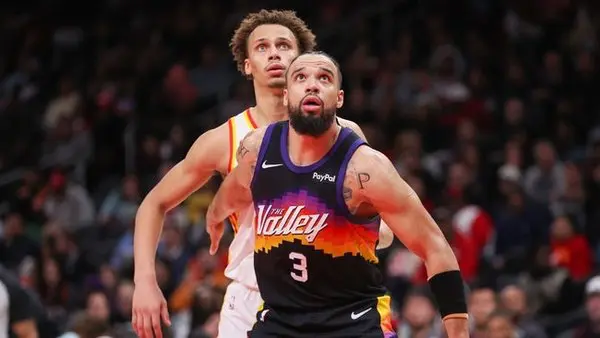
Phoenix returns home as a 3.5-point favorite, but the loss of Devin Booker to an ankle injury looms large. Bash analyzes if Miami’s interior dominance can fuel an ATS pick against a shorthanded Suns rotation.
The Setup: Miami Heat at Phoenix Suns
Phoenix lays 3.5 at home against a Miami squad that just dropped 147 on Utah, and the market’s telling you something important: both rosters are compromised. The Suns are without Devin Booker after he left Friday’s loss to Atlanta on crutches with a right ankle injury. The Heat are missing Tyler Herro and dealing with the Terry Rozier situation that’s turned their backcourt into a rotation puzzle. This number sits at 3.5 because the market respects Miami’s offensive firepower even on the road, where they’re 9-15 but just produced their second 147-point performance of the season. Phoenix checks in at 14-5 at home, but that home strength gets tested when your leading scorer and primary facilitator is watching from the bench. The total at 229.0 reflects two teams that can score in bunches when the rotations click, but the injury context creates efficiency questions that narrow the margin between these clubs significantly.
Game Info & Betting Lines
When: Sunday, January 25, 2026, 8:00 ET
Where: Mortgage Matchup Center
Watch: Home: Arizona’s Family 3TV, Suns Live | Away: FanDuel SN Sun, NBA League Pass
Current Betting Lines (MyBookie.ag):
- Spread: Heat +3.5 (-110) | Suns -3.5 (-110)
- Moneyline: Heat +132 | Suns -161
- Total: 229.0 (Over/Under -110)
Why This Line Exists
The market landed at 3.5 because Phoenix’s home-court advantage gets diluted when Booker’s 25.4 points and 6.2 assists per game disappear from the offensive structure. That’s not just scoring volume—it’s shot creation and decision-making that shifts to Grayson Allen and Dillon Brooks, who average 16.3 and 20.2 points respectively but don’t replicate Booker’s playmaking gravity. Miami counters with their own injury issues, missing Herro’s 21.9 points and 4.7 rebounds, but they just demonstrated offensive depth in Salt Lake City. Bam Adebayo posted 26 points and 15 rebounds, Nikola Jovic added 23, and Pelle Larsson contributed 20 in a game that showed Miami’s secondary options can produce when given the runway.
The 229.0 total reflects offensive firepower on both sides, but the efficiency math changes when primary ball-handlers exit the rotation. Norman Powell leads Miami at 23.3 points per game, and he’s the focal point now with Herro sidelined. Phoenix still has Brooks carrying a significant offensive load alongside Allen, but the question becomes whether that duo can maintain scoring efficiency without Booker’s spacing and creation. The spread respects Phoenix’s home record but acknowledges that 3.5 is narrow territory when both teams are navigating compromised rotations.
Miami Heat Breakdown: What You Need to Know
Miami sits 24-22 overall but splits dramatically between home (15-7) and road (9-15) performance. That road number matters here because the Heat have struggled to maintain defensive consistency away from home, but their offensive ceiling remains high when the shot-making clicks. Powell averaging 23.3 points gives them a legitimate primary scorer, and Adebayo’s 17.8 points with 9.7 rebounds provides interior presence that Phoenix will need to account for without Booker’s defensive attention pulling help.
The recent performance in Utah showed Miami’s depth potential. Jovic and Larsson combined for 43 points, demonstrating that the Heat can generate secondary scoring even with Herro out. The concern is replicating that production against a Phoenix defense that’s 14-5 at home for a reason. Miami’s road inefficiency suggests they struggle with the pace and physicality adjustments required in hostile environments, but the Suns’ depleted backcourt creates opportunities for Powell and Adebayo to control possessions without facing Booker’s perimeter pressure.
Phoenix Suns Breakdown: The Other Side
Phoenix checks in at 27-18 with a 14-5 home record that’s built on Booker’s offensive orchestration. Without him, the Suns lean heavily on Brooks and Allen to carry the scoring load. Brooks at 20.2 points per game has shown he can be a primary option, but his efficiency typically benefits from Booker’s gravity creating cleaner looks. Allen averaging 16.3 points and 3.8 assists becomes more critical as a secondary playmaker, but asking him to elevate usage significantly changes the offensive math.
The Friday loss to Atlanta exposed what happens when Booker exits mid-game—Phoenix scored just 103 points and couldn’t maintain offensive rhythm down the stretch. That’s the blueprint Miami will try to exploit: force Brooks and Allen into contested creation and limit second-chance opportunities. Phoenix’s home-court advantage typically manifests in defensive intensity and transition execution, but the Heat’s ability to score 147 in their last outing suggests they’re not intimidated by pace or physicality right now.
The Matchup: Where This Game Gets Decided
This game gets decided in the half-court efficiency battle when both teams are forced to execute without their primary playmakers. Miami’s offensive structure now runs through Powell and Adebayo pick-and-roll action, which creates mismatches if Phoenix’s interior defense can’t rotate quickly enough. Adebayo’s 9.7 rebounds per game give Miami second-chance opportunities that become critical when first-shot efficiency drops without Herro’s spacing.
Phoenix needs Brooks to maintain his 20.2 scoring average while Allen handles increased playmaking responsibility. The problem is Miami’s defensive attention can now load up on those two without worrying about Booker punishing help rotations. Over the course of 95-100 possessions, that defensive adjustment matters. If Phoenix’s efficiency drops even 3-4 points per 100 possessions without Booker’s creation, the home-court advantage shrinks considerably.
The total at 229.0 requires both teams to push pace and convert in transition, but compromised rotations typically slow games down as teams adjust to new offensive hierarchies. Miami’s willingness to push tempo after defensive rebounds could be the difference—if they can generate 12-15 transition opportunities before Phoenix sets its defense, those extra possessions create the margin that makes 3.5 points irrelevant.
Bash’s Best Bet & The Play
The market’s giving you 3.5 points with a Miami team that just scored 147 and has offensive weapons that match up well against a Phoenix squad missing its best player. Powell’s scoring ability keeps Miami competitive in any game, and Adebayo’s interior presence creates problems Phoenix will struggle to solve without Booker’s offensive gravity pulling defensive attention. The road split is concerning, but the specific matchup context—both teams compromised, Phoenix more dependent on their missing piece—tilts the value toward the Heat.
Phoenix’s home record is legitimate, but 3.5 points is narrow territory when your primary ball-handler is watching on crutches. Brooks and Allen are capable, but asking them to replace Booker’s production against a Miami team that’s shown offensive depth is a tough assignment. The risk is Miami’s road inconsistency showing up in a hostile environment, but the number accounts for that concern while still offering value.
BASH’S BEST BET: Heat +3.5 for 2 units. The rotation depth and offensive firepower give Miami the tools to stay within this number, and the injury context levels the playing field more than the market’s pricing in.