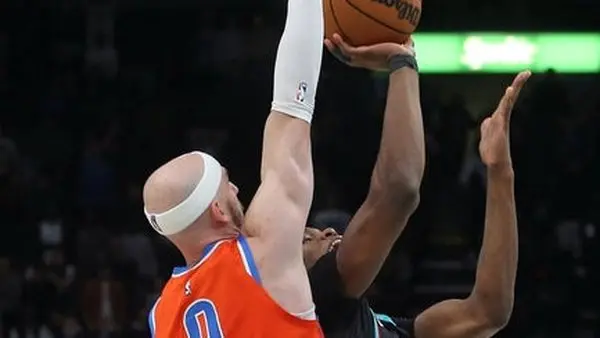
The Thunder are looking to extend their winning streak at Paycom Center, while Miami deals with significant roster questions and road fatigue. Bash dives into the handicapping data to see if the Oklahoma City spread pick is the right way to play this mismatch.
The Setup: Heat at Thunder
The Thunder are laying 14 points at home against a Heat team that just got blown out in Indiana, and on the surface, this number makes sense. Oklahoma City is 32-7 overall and an absurd 18-2 at Paycom Center. Miami limps in at 20-18, sitting 8th in the East, and they’re dealing with the Terry Rozier situation that’s created both roster uncertainty and usage questions. But here’s the thing — a 14-point spread in the NBA isn’t just about talent disparity. It’s about whether the better team can maintain that margin over 96-100 possessions against a Heat squad that still has legitimate offensive weapons in Norman Powell and Tyler Herro.
Let me walk you through why this line exists and why I’m comfortable laying the points with the Thunder on Sunday night. This isn’t about blindly backing the West’s best team. It’s about rotation depth, efficiency gaps, and a Miami team that’s now down a rotation guard while facing the league’s most complete defensive system. When you factor in OKC’s 18-2 home record and the way they control pace and possessions at Paycom Center, this spread starts to look less like a ceiling and more like a floor.
Game Info & Betting Lines
Game Time: January 11, 2026, 7:00 ET
Venue: Paycom Center
Spread: Thunder -14.0 (-110) / Heat +14.0 (-110)
Total: 232.5 (Over/Under -110)
Moneyline: Thunder -909 / Heat +563
Why This Line Exists
The market is telling you that Oklahoma City should win this game by two possessions or more, and the efficiency data backs that up. The Thunder sit at 32-7 with the conference’s best record, while Miami is 20-18 and just got demolished 123-99 in Indianapolis. That’s a 24-point loss to a Pacers team that isn’t in OKC’s stratosphere defensively. The Rozier situation removes a guard who was averaging double figures and handling secondary creation duties — that’s not just a roster loss, it’s a usage redistribution problem that forces more minutes and decision-making onto Herro and Powell.
Oklahoma City’s home dominance is the foundation of this number. At 18-2 in Paycom Center, they’re not just winning — they’re controlling games from the opening tip. Shai Gilgeous-Alexander is averaging 31.9 points and 6.4 assists, Jalen Williams gives them 17.6 and 5.8, and even without Isaiah Hartenstein, they’ve got enough frontcourt depth to contain Bam Adebayo. Miami’s 7-12 road record tells you everything about how they travel. They’re a home-dependent team that thrives in South Beach but struggles to maintain offensive rhythm in hostile environments.
The total sitting at 232.5 suggests the market expects Oklahoma City to push tempo and Miami to struggle keeping pace. That’s consistent with OKC’s identity — they defend at an elite level, force turnovers, and convert those into transition opportunities. For Miami to cover 14 points, they’d need either a massive shooting night from Powell and Herro or a complete breakdown in OKC’s rotational discipline. I don’t see either scenario as likely given the context.
Heat Breakdown: What You Need to Know
Miami’s offensive identity runs through Powell and Herro, who are combining for nearly 46 points per game this season. Powell is averaging 23.8 points on volume shooting, while Herro adds 22.1 with better playmaking at 5.8 rebounds and 2.6 assists. Bam Adebayo remains their defensive anchor at 16.8 points and 9.6 rebounds, but his offensive game is limited to mid-range and short rolls — he’s not a post-up threat who can punish smaller defenders.
The problem is depth and road execution. At 7-12 away from home, Miami hasn’t shown the ability to sustain offensive efficiency in tough environments. They just lost by 24 in Indiana, a game where they had no answer for the Pacers’ pace and ball movement. Andrew Nembhard dropped 29 points and nine assists on them, and Aaron Nesmith controlled the glass before exiting early. If Indiana can generate that kind of production, what’s Oklahoma City — with Gilgeous-Alexander, Williams, and Chet Holmgren — going to do?
Without Rozier, Miami’s second unit takes a hit. They’re asking more from their role players in terms of shot creation and defensive assignments, and that’s a tough ask against a Thunder team that plays 10 deep and never lets up. The Heat’s best-case scenario is a slow, grind-it-out game where they limit possessions and keep it close through physicality. But OKC controls pace better than almost anyone in the league, and Miami doesn’t have the personnel to dictate tempo on the road.
Thunder Breakdown: The Other Side
Oklahoma City’s 32-7 record isn’t a fluke — it’s the result of elite two-way execution and the deepest rotation in the Western Conference. Gilgeous-Alexander is an MVP-caliber guard averaging 31.9 points and 6.4 assists, and he’s surrounded by complementary talent that fits perfectly. Jalen Williams just dropped 26 in Memphis during that 21-point comeback win, showing his ability to carry the offense when SGA is off the floor. Holmgren adds 18.2 points and 8.3 rebounds with legitimate rim protection and floor spacing.
Even without Hartenstein, who’s missed eight straight games with a soleus strain, the Thunder haven’t missed a beat. Their frontcourt depth allows them to throw different looks at Adebayo, and they can switch across multiple positions without sacrificing size or athleticism. That’s a nightmare matchup for a Heat team that relies on Adebayo’s screening and short-roll passing to generate offense.
At 18-2 at home, Oklahoma City is nearly unbeatable in Paycom Center. They defend the three-point line, they don’t turn the ball over, and they convert turnovers into easy baskets. That Memphis game on Friday showed their resilience — down 21 in the second half, they locked in defensively and got timely shot-making from Kenrich Williams, who hit the go-ahead three with just over a minute left. That kind of depth and composure is why this team is the West’s top seed.
The Matchup: Where This Game Gets Decided
This game comes down to pace, efficiency, and Miami’s ability to withstand OKC’s defensive pressure over 48 minutes. The Thunder are going to force the Heat into tough half-court possessions, and without Rozier, Miami’s secondary creation takes a hit. That means more isolation from Herro and Powell, which plays directly into Oklahoma City’s hands. They can switch everything, they can help off non-shooters, and they can turn Miami’s offense into a series of contested jumpers.
Offensively, Oklahoma City has too many weapons. Gilgeous-Alexander will get his 30-plus, but it’s the complementary scoring that buries opponents. Williams can attack closeouts, Holmgren can punish smaller defenders in the post, and their role players — guys like Kenrich Williams and whoever fills Hartenstein’s minutes — are disciplined and efficient. Miami doesn’t have the defensive versatility to match up across the board, especially on the road where communication and rotations tend to break down.
The total at 232.5 suggests a game in the mid-110s for OKC and somewhere in the low 100s for Miami. That feels right. Oklahoma City will push tempo off turnovers, but they’ll also grind out half-court possessions when Miami tries to slow it down. For the Heat to cover 14, they’d need to shoot lights out from three and somehow limit OKC’s transition opportunities. I don’t see that happening in a hostile road environment against the West’s best team.
I keep coming back to this efficiency gap. Oklahoma City is elite on both ends, and Miami is a middling road team that just lost a rotation guard. That’s not just a stat — it’s how this game tilts. The Thunder control pace, they control possessions, and they have the depth to maintain intensity for 48 minutes. Miami will have stretches where Powell or Herro get hot, but OKC has the firepower to answer every run.
Bash’s Best Bet & The Play
The Play: Thunder -14.0 (-110) — 2 Units
I’m laying the points with Oklahoma City at home. This line exists because the Thunder are 18-2 in Paycom Center and Miami is 7-12 on the road with a depleted backcourt. Once you dig into the matchup data, OKC’s depth advantage and defensive versatility make this spread feel fair, not inflated. Gilgeous-Alexander and Williams will control the game, Holmgren will limit Adebayo’s effectiveness, and Miami simply doesn’t have the firepower to keep this within two possessions.
The main risk here is Miami catching fire from three and keeping it close through volume shooting. Powell and Herro are capable of big nights, and if they combine for 50-plus, this game could stay within the number. But I’ve accounted for that scenario, and I still think Oklahoma City’s defensive discipline and home-court advantage carry them to a comfortable win. They just came back from 21 down in Memphis — they’re not overlooking a Heat team that got blown out by Indiana.
When you do the math over 96 possessions, OKC’s efficiency advantage should produce a margin in the 15-18 point range. I’m comfortable laying 14 at home with the West’s best team against a road-weary opponent that’s dealing with roster uncertainty. This matchup narrows Miami’s margin for error, and I don’t think they have the depth or defensive versatility to hang for 48 minutes. Thunder by 17.