Bash sees a double-digit spread that’s pricing in full-strength rosters and ignoring what’s actually taking the floor Wednesday night in Salt Lake City. The projection says one thing, but the situational reality tells a different story.
The Setup: New York Knicks at Utah Jazz
The Knicks roll into the Delta Center on Wednesday night as 12.5-point road favorites against a Jazz squad that’s been decimated by injuries and playing out the string at 20-45. On paper, this looks like a mismatch—New York sitting at 41-25 and third in the East, Utah at the bottom of the West with nothing to play for but lottery positioning. The spread reflects that gap, and honestly, it should. But here’s where it gets interesting: Utah just took down Golden State on Monday with a roster full of two-way players, and the Knicks are coming off a loss in LA where they couldn’t get stops down the stretch. Miles McBride is out with a sports hernia that won’t see him back until April, and Josh Hart is questionable with a knee tweak from Monday’s game. This isn’t the clean layup spot the number suggests.
My model projects the Knicks by 4.7 points in this one, which creates a massive 7.8-point edge against the posted spread. That’s not noise—that’s a fundamental disagreement about how this game scripts out. The question isn’t whether New York is better. It’s whether they’re that much better given the circumstances.
Game Info & Betting Lines
Matchup: New York Knicks (41-25) at Utah Jazz (20-45)
Date & Time: March 11, 2026, 9:00 ET
Location: Delta Center
TV: MSG, NBA League Pass | KJZZ-TV, Jazz+
Betting Lines (Bovada):
Spread: Jazz +12.5 (-105) | Knicks -12.5 (-115)
Total: 230.0 (O/U -110)
Moneyline: Jazz +525 | Knicks -800
Why This Line Exists
The market is looking at a 13.3 net rating gap between these teams and setting the spread accordingly. New York runs a 118.1 offensive rating against a 112.0 defensive rating, good for a plus-6.1 net. Utah sits at 113.3 offensively and 120.5 defensively, a minus-7.2 net that screams bottom-feeder. That’s a 13.3-point chasm in efficiency, and when you add in the fact that the Knicks are fighting for playoff seeding while the Jazz are auditioning G-League call-ups, the number makes sense from a season-long perspective.
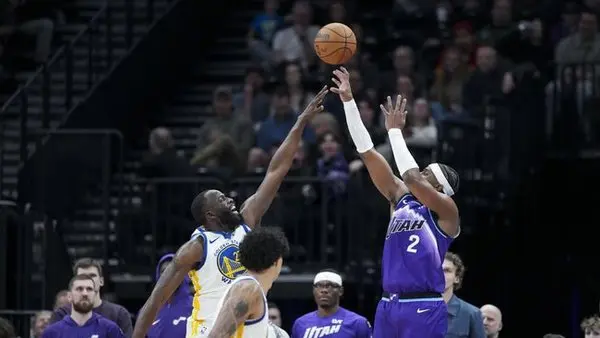
But here’s what the line doesn’t account for: Utah’s pace. The Jazz play at 102.7 possessions per game compared to New York’s 98.6. The blended pace projects to 100.6 possessions, which means more trips, more variance, and more opportunities for a bad team to hang around if they get hot from three. Utah also just beat a Warriors team on Monday using Blake Hinson and Elijah Harkless—two-way players who combined for 20 points and hit clutch shots down the stretch. Brice Sensabaugh dropped 21, and Kyle Filipowski posted 19 and 15 boards. That’s not a team that’s mailing it in.
The other factor: this is a late-season road spot for New York. They just played Monday night in LA, lost to the Clippers 126-118, and now they’re flying to Salt Lake City for a 9:00 ET tip on a Wednesday. Karl-Anthony Towns fouled out in that Clippers game after dropping 35 and 12. Jalen Brunson logged heavy minutes. These guys are grinding through the stretch run, and this has all the makings of a professional-but-not-inspired performance.
New York Knicks Breakdown
The Knicks are elite offensively—118.1 offensive rating ranks among the best in the league—and they shoot it well across the board. They’re hitting 47.3% from the field, 37.3% from three, and 78.4% from the line. Brunson is the engine, averaging 26.2 points and 6.5 assists, and Towns gives them a legitimate second scorer at 20.0 points and 11.9 boards. OG Anunoby and Mikal Bridges provide two-way versatility, and when this team is locked in, they can score with anyone.
But the defense has been inconsistent, especially on the road where they’re 17-16. That 112.0 defensive rating is solid but not dominant, and they just allowed 126 to a Clippers team that’s been up and down all year. The McBride injury matters more than people realize—he’s been their best perimeter pest, and without him, they’re relying on Tyler Kolek and Jordan Clarkson to fill minutes. Josh Hart’s questionable status adds another layer of uncertainty. If he sits, that’s 36 minutes of rebounding and connective playmaking that has to come from somewhere else.
The clutch numbers are fine—15-12 record in close games, 46.6% shooting in crunch time—but this isn’t a team that’s been blowing people out on the road. They grind, they execute, and they win, but they don’t always cover inflated numbers in spots like this.
Utah Jazz Breakdown
The Jazz are a mess on paper, but they’re not rolling over. Lauri Markkanen is out with an injury suffered in practice, which removes their best player and leading scorer at 26.7 points per game. Keyonte George is questionable with an illness after playing just 24 minutes Monday. Walker Kessler, Jaren Jackson Jr., and Jusuf Nurkic are all done for the season. This is a skeleton crew running out there, and yet they just beat Golden State 119-116 with Hinson hitting a go-ahead three in the final minute.
What they do have is pace and shooting volume. They play fast—102.7 possessions per game—and they’ll jack threes all night. Sensabaugh has been getting run and can score in bunches. Filipowski is a 6-foot-11 rookie who’s been logging heavy minutes and producing 19 and 15 in the Warriors game. The offense isn’t pretty, but they generate enough looks to stay in games longer than they should.
Defensively, they’re atrocious. That 120.5 defensive rating is bottom-five in the league, and they don’t have the personnel to guard anyone consistently. But in a pace-up game where both teams are trading buckets, that defensive weakness becomes less of a factor. They’re not trying to slow you down—they’re trying to outscore you in a track meet.
The Matchup
This sets up as a pace-and-space game where New York should control the tempo but might not dominate possession-to-possession. The Knicks offense against Utah’s defense is a 1.3-point edge for the Jazz when you compare New York’s 118.1 offensive rating to Utah’s 112.0 defensive rating allowed. Going the other way, Utah’s 113.3 offensive rating against New York’s 120.5 defensive rating allowed creates a 2.4-point edge for the Knicks. Those are small mismatches, not the kind of separation you’d expect from a 12.5-point spread.
The shooting quality gap is minimal—1.8 percentage points in effective field goal percentage favoring New York. The turnover rate slightly favors the Knicks, and they hold a 2.6-point edge in offensive rebounding, which could matter in a game with 100-plus possessions. But none of these edges scream blowout. They scream competent road win, maybe by six to eight points if things go smoothly.
The projected total sits at 233.4 against a posted number of 230.0, which gives the over a 3.4-point edge. That pace blend at 100.6 possessions supports the higher scoring environment, and both teams have shown they can put up points even when the defense isn’t there. New York projects to 120, Utah to 113, and in a game where both teams are running, that feels about right.
Bash’s Best Bet & The Play
I’m taking Utah Jazz +12.5 and sprinkling the over 230.0. The projection has this as a 4.7-point Knicks win, and even if you want to give New York some cushion for talent, you’re still not getting to double digits. This is a road spot for a team that’s 17-16 away from MSG, coming off a Monday night loss in LA, and potentially without Josh Hart. Utah just showed they’ll compete with whoever’s available, and in a pace-up game where both teams will score, 12.5 points is too many.
The over makes sense as a secondary play. Both teams want to run, neither defense is stopping anyone consistently, and the math points to 233 combined points. I’ll take the extra possessions and the shooting volume over a number that feels a tick low.
Risk here is obvious—if New York comes out focused and buries Utah early, this could get ugly. But I’m betting on the situational spot and the pace dynamic to keep this closer than the market thinks.