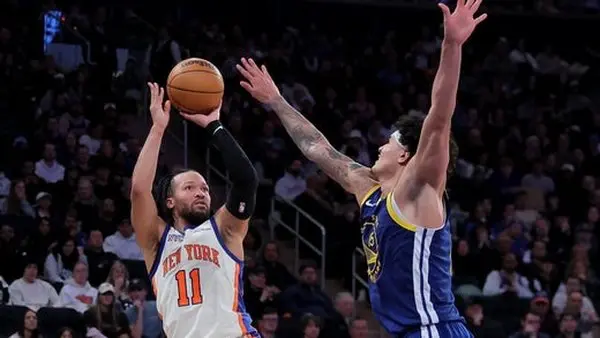
Bash sees a massive spread that doesn’t align with the underlying efficiency gap, and he’s finding value on the wrong side of a blowout number in Madison Square Garden.
The Setup: Indiana Pacers at New York Knicks
The Knicks are laying 16 points at home against a Pacers team that’s been gutted by injuries and sitting at 15-53. On the surface, this looks like a stay-away spot—New York coming off three straight wins, Indiana limping in at 5-29 on the road. But when I see a spread this wide, I’m not asking if the favorite wins. I’m asking if they cover a number that assumes complete domination.
The projection here lands at Knicks by 9.4 points. That’s a seven-point gap between what the math suggests and what the market is asking you to lay. Indiana’s been a disaster this season, no question—they’re -8.5 in net rating and bleeding points on the defensive end at 117.3 per 100 possessions. But the Knicks aren’t exactly built to blow teams out. They play at 98.5 pace, one of the slower tempos in the league, and their net rating of +6.3 is solid but not elite. This isn’t a team that routinely wins by 20.
The total sits at 223.5, and with a pace blend around 100 possessions and both teams capable of scoring, the Over carries appeal as well. But the real value is on that spread. When you’re getting 16 points with a team that can still put up 110-plus on any given night, you’re getting cushion that accounts for a blowout that may never materialize.
Game Info & Betting Lines
Indiana Pacers at New York Knicks
Date: Tuesday, March 17, 2026
Time: 7:30 PM ET
Venue: Madison Square Garden
TV: MSG (Home), FanDuel SN IN, NBA League Pass (Away)
Current Betting Lines (MyBookie.ag):
Spread: New York Knicks -16.0 (-110) | Indiana Pacers +16.0 (-110)
Total: 223.5 (Over -110 / Under -110)
Moneyline: Knicks -1304 | Pacers +724
Why This Line Exists
This number is built on perception and recent results. The Knicks just rallied from 21 points down against a depleted Warriors squad—Jalen Brunson dropped 30 and nine assists, Karl-Anthony Towns added a double-double, and New York showed they can grind out wins even when they start flat. Indiana, meanwhile, just got torched in Milwaukee 134-123, and Aaron Nesmith’s 32 points couldn’t mask the fact that this team has no defensive identity without Tyrese Haliburton running the show.
The Pacers are also dealing with a laundry list of questionable tags—Pascal Siakam is doubtful, Andrew Nembhard and several rotation pieces are game-time decisions. The market sees a team that might be down to G-League call-ups facing a Knicks squad that’s 24-9 at home. So the number inflates. Sixteen points is the market telling you this is a mismatch, and if you want Indiana, you’re getting them at their absolute lowest.
But here’s the thing: the efficiency gap doesn’t support a 16-point spread. The season-long net rating difference is 14.8 points per 100 possessions, which is significant. But over the course of a slower-paced game with around 100 possessions, that gap translates to a margin closer to 10 or 11 points, not 16. The Knicks also have Brunson listed as questionable with ankle and cervical strain management. If he sits, this line moves dramatically. Even if he plays, you’re banking on New York to not just win, but to dominate wire-to-wire.
Indiana Pacers Breakdown
The Pacers are a shell of what they were supposed to be this season. Haliburton’s out for the year, and the offense has cratered without his playmaking—they’re 108.8 in offensive rating, bottom-tier in the league. Pascal Siakam has been their most consistent scorer at 24.0 points per game on 48.4% shooting, but he’s doubtful for Tuesday. Andrew Nembhard has stepped into a larger role at 17.0 points and 7.3 assists, but he’s also questionable with a calf contusion.
If both sit, you’re looking at a lineup anchored by Ivica Zubac in the paint—14.1 points and 10.7 rebounds per game—and Aaron Nesmith, who just went off for 32 in Milwaukee. The Pacers can still score. They average 111.2 points per game and shoot 45.0% from the field. The problem is they give up 117.3 points per 100 possessions on defense, and they don’t have the personnel to slow down Brunson or Towns in the half-court.
But in garbage time or a game that stays competitive into the third quarter, Indiana has enough shooting to keep this within the number. They’re 34.6% from three and 55.9% true shooting. That’s not elite, but it’s functional. And in a pace-up environment—this game projects around 100 possessions—they’ll get enough looks to stay within striking distance if the Knicks don’t step on their throat early.
New York Knicks Breakdown
The Knicks are built around Brunson’s pick-and-roll mastery and Towns’ ability to stretch the floor. Brunson’s averaging 26.3 points and 6.6 assists, and he’s the engine that makes everything work. Towns gives them 20.0 points and 11.9 boards, and his 36.8% three-point shooting opens up driving lanes. OG Anunoby and Mikal Bridges provide two-way versatility, and Miles McBride was a spark off the bench before going down with a sports hernia.
New York’s net rating of +6.3 is good, not great. They’re 118.2 in offensive rating and 111.9 on defense, which makes them a balanced team but not a juggernaut. The concern here is pace. At 98.5 possessions per game, they’re one of the slower teams in the league. That limits the total number of scoring opportunities, and it also makes it harder to build a massive lead unless they’re shooting lights out.
The Knicks also have a 7.2-percentage-point edge in offensive rebounding rate, which is a strong advantage. That’s where Towns and their frontcourt depth can really punish Indiana. But offensive rebounding doesn’t always translate to blowouts—it extends possessions, but it also slows the game down. And if Brunson sits, the offense loses its primary creator. The projection shows the Knicks winning by 9.4 points, and that feels right. Winning by 16 or more requires everything to go perfect.
The Matchup
This game sets up as a pace battle that favors Indiana’s ability to hang around. The pace blend projects to 100.1 possessions, which is faster than New York’s season average but slower than Indiana’s. That’s a middle ground that keeps the game from turning into a track meet, but it also gives the Pacers enough possessions to score into the 110s if they’re hitting shots.
The shooting quality gap is real—New York’s 3.1-percentage-point edge in effective field goal percentage and 2.8-point edge in true shooting both classify as medium-level advantages. But those edges explain a 9- or 10-point win, not a 16-point destruction. The Knicks’ 7.2-percentage-point edge in offensive rebounding rate is the one area where they can really pull away, but again, that’s a grind-it-out advantage, not a blow-the-doors-off edge.
Indiana’s offense against New York’s defense shows a mismatch of just 0.9 points per 100 possessions, which is basically within noise. The Pacers aren’t going to dominate, but they’re not going to get shut down either. And if this game stays in the 110-115 range for Indiana, the Knicks need to score 126-plus to cover. That’s asking a lot from a team that averages 116.9 per game and plays at a slower pace.
The total projection of 228.4 points suggests the Over has value as well. With 100 possessions and both teams capable of scoring, 223.5 feels a touch low. But the sharper play is on the spread. You’re getting 16 points with a team that’s been competitive in stretches, and you’re fading a number that assumes the Knicks play a perfect game from start to finish.
Bash’s Best Bet & The Play
I’m taking the Indiana Pacers +16.0. This spread is inflated by perception and injury concerns, but the underlying efficiency gap doesn’t support a margin this wide. My model projects the Knicks by 9.4 points, which gives you nearly seven points of cushion. Even if Indiana is down to a skeleton crew, they’ve got enough shooting and pace to stay within this number. Nesmith just dropped 32 in Milwaukee, and Zubac gives them a presence in the paint. If Brunson sits or plays limited minutes, this line is even softer.
The Knicks will win this game. But asking them to cover 16 at their slower pace, in a game that projects around 100 possessions, is asking too much. Indiana’s offense isn’t elite, but it’s functional enough to score into the 110s, and that keeps them within range. This is a spot where you’re getting a bad team at their absolute floor price, and the number has overshot what the math supports.
The risk is obvious—if Indiana’s injury report gets worse and they’re down to third-string guys, the Knicks can name their score. But at 16 points, you’ve got margin for error. This isn’t a game I expect to be close in the fourth quarter, but I expect it to be close enough that Indiana sneaks in the back door or keeps it within 12-14. That’s all you need.
The Play: Indiana Pacers +16.0 (-110)