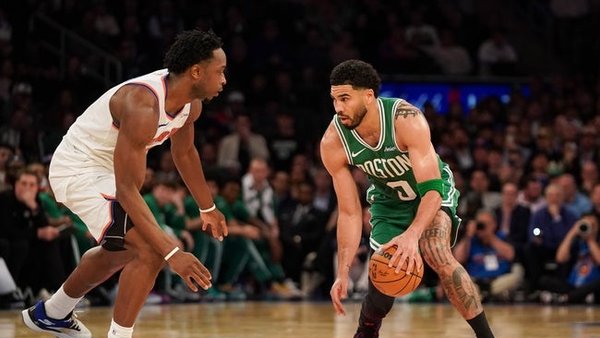
Bash sees a market overreaction in Friday’s Boston-New Orleans matchup, with the Celtics laying a bloated number against a Pelicans squad that’s already checked out for the season.
The Setup: Pelicans at Celtics
Boston sits as a massive 16.5-point home favorite Friday night against New Orleans, and I get it—the Celtics are fighting for playoff seeding while the Pelicans are running out glorified tryouts. But this number feels like the market just looked at the records, saw Boston’s 54-26 mark against New Orleans’ 26-54, and slapped on an extra touchdown for good measure.
Here’s the thing: New Orleans just hung 156 points on Utah in their last outing, setting franchise records for points in a game and points in a quarter despite sitting their entire starting lineup. Meanwhile, Boston just dropped a game to the Knicks on Thursday night, and now they’re staring at a back-to-back with Jaylen Brown questionable and minimal motivation to grind out a blowout against a tanking opponent.
The projection sees Boston winning by 8 points when you factor in home court and efficiency differentials. That’s an 8.5-point gap between what the model expects and what the market is asking you to lay. That’s not a small difference—that’s the kind of separation that creates real value on the other side.
Game Info & Betting Lines
When: Friday, April 10, 2026, 7:30 PM ET
Where: TD Garden
Watch: NBC Sports BO (home), GCSEN, Pelicans.com, NBA League Pass (away)
Spread: Boston Celtics -16.5 (-110)
Total: 223.5 (O/U -110)
Moneyline: Celtics -1429 | Pelicans +786
Why This Line Exists
The market is pricing in the obvious: Boston needs wins to hold off the Knicks for the 2-seed, while New Orleans has been actively tanking for weeks. The Pelicans sat Zion Williamson, Trey Murphy III, Dejounte Murray, Herb Jones, and Saddiq Bey in their last game despite all being healthy enough to suit up. That’s a franchise waving the white flag.
But here’s where the market gets sloppy. That same Pelicans squad—led by rookies Jeremiah Fears and Derik Queen, plus Jordan Poole running wild—just torched Utah for 156 points. Fears dropped 40 in a rookie record performance. Poole added 34, including 22 in a quarter. They scored 90 points in the paint and shot the ball with zero defensive resistance. They played at a 101.2 pace all season, which is significantly faster than Boston’s 95.3.
The Celtics, meanwhile, are coming off a loss to New York on Thursday night where Jayson Tatum played 35-plus minutes in his return to MSG. Now they’re facing a back-to-back situation with Brown’s status uncertain and minimal incentive to chase a 20-point win when an 8-point victory gets them the same thing in the standings. This is a classic schedule spot where the favorite sleepwalks through three quarters before turning it on late—if they even need to.
Pelicans Breakdown
New Orleans is out of the playoff picture and has been for weeks, but their offensive rating of 113.2 isn’t terrible when you consider they’ve been playing essentially a G-League rotation recently. The issue is their 117.3 defensive rating, which ranks near the bottom of the league. They don’t defend, they don’t rebound particularly well (43.8 RPG compared to Boston’s 46.4), and they turn the ball over at a manageable 14.3 per game but don’t force many themselves.
The good news for covering purposes? They can score. They shot 46.6% from the field this season and 34.9% from three, and when they push pace—which they will against a Boston team on a back-to-back—they can create enough possessions to keep things closer than the market expects. Fears, Poole, Jordan Hawkins, and Micah Peavy all showed they can fill it up in their last game, and there’s no reason to think Boston will lock them down defensively when the Celtics have nothing to prove.
Murphy, Murray, Williamson, and Yves Missi are all out. Bey and Jones are questionable but likely sitting for rest. This is the same group that just scored 156, and they’ll have the freedom to play loose and fast without worrying about playoff implications.
Celtics Breakdown
Boston’s 119.9 offensive rating and 111.8 defensive rating paint the picture of a legitimately elite team, and they are. Jaylen Brown leads the way at 28.8 points per game, Tatum is back from his Achilles injury and contributing across the board, and Payton Pritchard has been a revelation at 17.0 points per game off the bench. Derrick White and Nikola Vucevic round out a deep, talented rotation.
But here’s the context: they just played Thursday night in New York, where Tatum logged heavy minutes in an emotional return to MSG. They lost 112-106, and now they’re facing a back-to-back against a team that poses zero competitive threat. Brown is questionable, and even if he plays, there’s a real question about how hard this team will push to cover a 16.5-point spread when they could cruise to a 10-point win and save energy for the final stretch.
Boston’s pace of 95.3 is one of the slowest in the league, but New Orleans will try to speed them up. The Celtics shoot 36.5% from three and 46.7% overall, so they can certainly blow this game open if they want to. The question is whether they’ll have the motivation to step on the gas for four full quarters against an opponent that’s essentially auditioning players for next season.
The Matchup
The efficiency gap favors Boston by 12.2 points per 100 possessions, which is substantial. The Celtics are better offensively, better defensively, and better in almost every measurable category. They rebound better, shoot more efficiently, and take care of the ball at a higher rate. On paper, this should be a massacre.
But basketball isn’t played on paper, and this game is being played in a specific context. The pace blend projects around 98 possessions, which is faster than Boston typically plays but slower than New Orleans wants. That middle ground creates more possessions than the Celtics prefer, which means more opportunities for the Pelicans to score and keep this game within striking distance.
The effective field goal percentage gap is 2.2 points in Boston’s favor, and the offensive rebounding edge is 2.6 points. Those are real advantages, but they’re not insurmountable when you’re getting 16.5 points. The Celtics are better in clutch situations—48.4% win rate compared to New Orleans’ 31.6%—but this game likely won’t come down to the final five minutes. It’ll come down to whether Boston can sustain the effort level needed to cover a massive number on a back-to-back against a team with nothing to lose.
My model projects Boston winning by 8 points, which includes home court advantage. That’s a comfortable win for the Celtics, but it’s nowhere close to covering 16.5. The total projection sits at 227.2, which is nearly four points higher than the posted 223.5. That tells you the game environment should be faster and higher-scoring than the market expects, which also helps the underdog stay within range.
Bash’s Best Bet & The Play
I’m taking New Orleans +16.5. This isn’t about the Pelicans winning—they won’t. It’s about Boston not caring enough to blow them out by 20 on a back-to-back. The Celtics will win this game, probably by double digits, but they’ll do it without emptying the tank. Meanwhile, New Orleans will push pace, get up shots, and keep this thing closer than the market thinks.
The 8.5-point gap between the projection and the spread is too large to ignore, especially when you factor in the schedule spot and Boston’s questionable motivation. I’d play this up to +15 if the line moves, but I like the current number just fine.
The risk here is obvious: if Boston decides to make a statement and bury a tanking team, this could get ugly fast. But I’m betting on human nature and the reality of an 82-game season. The Celtics have bigger fish to fry, and this game isn’t one of them.