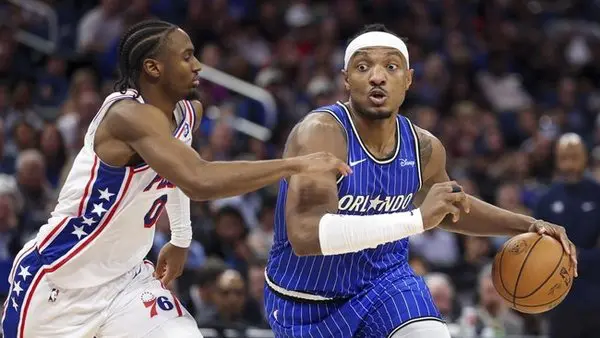
Orlando faces a shorthanded New Orleans squad at the Kia Center while navigating a complex injury report of their own. Our analytical preview explains why the Pelicans’ recent road efficiency makes the home team a heavy ATS pick for the Sunday matinee.
The Setup: Pelicans at Magic
Orlando is laying 6.5 at home against New Orleans on Sunday afternoon, and on the surface, this number makes sense. The Magic sit at 21-18 and seventh in the East, while the Pelicans are limping through a nightmare season at 9-31. New Orleans just snapped a nine-game losing streak with a win over Washington—a team that’s somehow worse than they are—but let me walk you through why this line exists and why it might actually be light given the current circumstances.
Here’s the thing: the Pelicans are dealing with significant rotation issues. Herbert Jones remains out with that sprained right ankle, and Dejounte Murray hasn’t played all season after tearing his Achilles. That’s two key pieces missing from an already thin roster. Meanwhile, Orlando is without Franz Wagner and Jalen Suggs, but they just pulled off a buzzer-beater win in Brooklyn and have shown they can win with their depth. The Magic are 12-6 at home, and when you factor in how this matchup actually plays out over 96 possessions, I keep coming back to Orlando’s ability to control pace and efficiency against a Pelicans team that’s bleeding points on the road.
Game Info & Betting Lines
New Orleans Pelicans (9-31) at Orlando Magic (21-18)
When: January 11, 2026, 3:00 ET
Where: Kia Center
Current Spread: Magic -6.5 (-110)
Moneyline: Magic -260 / Pelicans +215
Total: 233.5 (Over/Under -110)
Why This Line Exists
The market landed on Magic -6.5 because of three primary factors: record disparity, home court advantage, and injury context. Orlando’s 12-6 home record versus New Orleans’ 3-14 road record creates a natural foundation for a spread in this range. The Pelicans are 9-31 overall and ranked 14th in the Eastern Conference—dead last. The Magic, despite their own injury issues, are holding down a playoff spot at seventh in the East.
But once you dig into the matchup data, this line starts to look reasonable rather than inflated. New Orleans is missing Herbert Jones, who provides critical defensive versatility, and they’re still without Dejounte Murray for the foreseeable future. That means rookie Jeremiah Fears continues running the point, and while he’s shown flashes, he’s still a first-year player learning on the fly. The Pelicans’ recent win over Washington was encouraging—Zion Williamson dropped 31 and Trey Murphy III went for 35—but that was against a Wizards team that’s competing for the worst record in the league.
Orlando, on the other hand, just beat Brooklyn for the eighth straight time and got a game-winner from Paolo Banchero at the overtime buzzer. Even without Wagner and Suggs, they’re finding ways to manufacture offense and defend at home. The 6.5-point spread reflects Orlando’s structural advantages in this matchup: better depth, home court, and a defense that should be able to contain New Orleans’ limited offensive weapons.
New Orleans Breakdown: What You Need to Know
The Pelicans are averaging 22.8 points per game from Zion Williamson, 21.7 from Trey Murphy III, and 15.3 from Jordan Poole. That’s a solid top-three scoring punch, but the problem is what happens after that. With Jones out and Murray unavailable, the rotation depth falls off dramatically. Saddiq Bey is doubtful with a hip flexor strain, which means even less wing depth for a team that’s already struggling to fill minutes.
New Orleans’ 3-14 road record tells you everything you need to know about their ability to compete away from home. They’re not just losing on the road—they’re getting blown out. The nine-game losing streak they just snapped included multiple double-digit defeats, and their defensive efficiency has been atrocious all season. That’s not just a stat—it’s how this game tilts when they face a disciplined home team like Orlando.
The Pelicans will lean heavily on Zion and Murphy to generate offense, but both players have to carry enormous usage loads without Murray and Jones. When you do that math over 96 possessions, it’s hard to see how New Orleans keeps pace with a Magic team that can rotate fresh bodies and maintain defensive intensity throughout the game.
Orlando Breakdown: The Other Side
The Magic are dealing with their own injury concerns—Franz Wagner remains out with that left ankle sprain, and Jalen Suggs is sidelined with a bruised right knee—but they’ve shown remarkable resilience. Paolo Banchero is averaging 20.8 points, 8.7 rebounds, and 4.8 assists per game, and he’s stepped up as the primary offensive initiator. Desmond Bane is chipping in 19.0 points per game with 4.5 assists, providing secondary playmaking and floor spacing.
Orlando’s 12-6 home record isn’t accidental. They defend the Kia Center well, and their depth allows them to weather injuries better than most teams. Tristan da Silva and Noah Penda have absorbed minutes with Wagner out, and the Magic have maintained their defensive identity even with rotational shuffling. That structural advantage matters in a matchup like this, where New Orleans simply doesn’t have the bodies to match Orlando’s depth chart.
The Magic are coming off an overtime win in Brooklyn where Banchero hit a buzzer-beating three-pointer. That kind of confidence boost matters, especially at home. They’ve now beaten the Nets eight straight times, and they’re playing with the kind of swagger that suggests they’re not intimidated by their injury situation. Against a Pelicans team that’s 9-31 and missing key rotation pieces, Orlando should be able to control tempo and dictate terms.
The Matchup: Where This Game Gets Decided
This matchup comes down to depth and defensive efficiency. Orlando can throw multiple defenders at Zion and Murphy, rotating fresh bodies to prevent either player from taking over the game. New Orleans, on the other hand, doesn’t have the personnel to slow down Banchero and Bane consistently. The Pelicans will likely try to push pace and create transition opportunities, but that strategy backfires when you’re on the road against a disciplined defensive team.
The Magic’s ability to control the glass and limit second-chance points will be critical. New Orleans doesn’t have the size or rebounding depth to compete on the boards without Jones, and Orlando should be able to generate clean defensive possessions that lead to transition opportunities. When you factor in Orlando’s 12-6 home record and New Orleans’ 3-14 road mark, the efficiency gap becomes even more pronounced.
Here’s what I keep coming back to: the Pelicans are thin, they’re on the road, and they’re facing a Magic team that’s playing with confidence at home. Even accounting for Orlando’s injuries, they have the depth and defensive structure to win this game by double digits. This matchup narrows the margin more than the line suggests—but it narrows it in Orlando’s favor, not New Orleans’. The 6.5-point spread might actually be conservative given the context.
Bash’s Best Bet & The Play
The Play: Orlando Magic -6.5 (-110) | 2 Units
I’ve accounted for the home court—and it still doesn’t get there for New Orleans. The Pelicans are 3-14 on the road, missing Herbert Jones and Dejounte Murray, and facing a Magic team that’s 12-6 at home with significantly better depth. Orlando just beat Brooklyn in overtime on a Banchero buzzer-beater, and they’re playing with the kind of confidence that suggests they’ll control this game from start to finish.
The main risk here is if Zion and Murphy both get nuclear and Orlando can’t slow them down. But even in that scenario, I trust Orlando’s depth to weather the storm and pull away in the fourth quarter. The Pelicans don’t have the rotation pieces to match Orlando’s fresh legs, and that gap widens as the game progresses. When you do that math over 96 possessions, I’m comfortable laying the 6.5 with the Magic at home. This is a spot where the better team, with better depth, in a better situation, should cover the number.