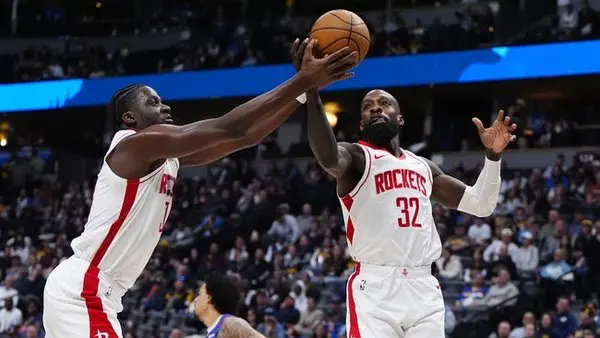
Bash sees a deliberate pace environment that the market hasn’t fully priced in. With Houston’s elite offensive rebounding and New Orleans limping through another lost season, the total looks inflated despite the scoring talent on the floor.
The Setup: New Orleans Pelicans at Houston Rockets
Houston sits as a 6.5-point home favorite against New Orleans on Friday night, and the total is parked at 229. That number feels high for a matchup between the league’s fourth-slowest team and a Pelicans squad that’s been playing deliberate basketball all season. The Rockets are coming off an ugly 36-point loss in Denver where they shot 4-of-33 from three—the kind of blowout that tends to refocus a contender. New Orleans just beat Toronto at home behind 28 from Trey Murphy III and 27 from Dejounte Murray, but that win came against the 22nd-ranked defense in a game that featured 44 three-point attempts from the Raptors alone. This is a different environment entirely.
The projection here is Houston by 6.3 points with a total around 227.6. That spread is basically priced correctly—no edge there. But the total? That’s where the market has left some room. The pace environment and Houston’s defensive profile suggest fewer possessions and tighter execution than this number implies.
Game Info & Betting Lines
When: March 13, 2026, 8:00 ET
Where: Toyota Center
Watch: Space City Home Network (home), GCSEN, Pelicans.com, NBA League Pass (away)
Spread: Houston Rockets -6.5 (-115) | New Orleans Pelicans +6.5 (-105)
Total: Over 229.0 (-110) | Under 229.0 (-110)
Moneyline: Houston Rockets -270 | New Orleans Pelicans +220
Why This Line Exists
The spread reflects what you’d expect: a 40-25 playoff contender laying a reasonable number against a 22-45 lottery team at home. Houston is 22-8 at Toyota Center, while New Orleans is 9-24 on the road. The season-long efficiency gap is 8.6 points per 100 possessions in Houston’s favor, which sets the foundation for this margin. The Rockets own a net rating of plus-4.3 compared to New Orleans’ minus-4.3, and that 8.6-point gap is strong enough to support a mid-range spread even without significant injury leverage.
The total at 229 is where things get interesting. Both teams have capable offensive players—Kevin Durant is averaging 25.9 points, Alperen Sengun adds 20.2, and New Orleans counters with Murphy at 22.1 and Zion Williamson at 21.4. The market sees scoring talent and sets a number that assumes a standard NBA pace. But the pace blend here projects around 99.1 possessions per game—a deliberate environment that favors execution over volume. Houston plays at 96.8 possessions per game, fourth-slowest in the league, and New Orleans isn’t far behind at 101.3. That’s not a recipe for 230 combined points unless someone gets hot from three, and Houston just went 4-of-33 in their last outing.
New Orleans Pelicans Breakdown
The Pelicans have won seven of ten, which sounds encouraging until you realize they’re still 13 games under .500 and ranked 13th in the Western Conference. Murphy has been excellent—he dropped 28 on Toronto and shot 5-of-8 from three—and Murray is finding his rhythm after returning from a torn Achilles. His 27 points against the Raptors marked his highest-scoring game since coming back, and he’s averaging 17.6 points with 5.4 assists on the season. Williamson adds 21.4 per game on 58.7% shooting, though his three-point shot remains a liability at 25%.
The problem is New Orleans ranks 25th in defensive rating at 117.6 points allowed per 100 possessions. They don’t protect the rim consistently, and their offensive rebounding sits at just 27.2%—nearly eight percentage points worse than Houston’s 35.1%. That gap matters in a slower game where second-chance opportunities become magnified. The Pelicans also struggle in clutch situations, going 11-23 in games decided by five or fewer points in the final five minutes. Bryce McGowens remains out, though his absence doesn’t significantly alter the rotation.
Houston Rockets Breakdown
The Rockets are dealing with some lineup uncertainty. Alperen Sengun is listed as questionable for this one—it’s the fourth game in six days, and against a 22-45 opponent, the medical staff might opt for rest. If Sengun sits, Clint Capela would likely start, and Durant would handle more playmaking responsibilities. Steven Adams is out for the season with a Grade 3 ankle sprain, and Jae’Sean Tate is sidelined with a knee injury that carries a four-to-six-week timeline.
Even with those absences, Houston’s defensive identity remains intact. They rank sixth in defensive rating at 112.2 points allowed per 100 possessions, and their offensive rebounding at 35.1% creates consistent second-chance scoring. Durant is shooting 40.5% from three and averaging 25.9 points, while Sengun—if he plays—adds 20.2 points with 8.9 rebounds and 6.1 assists. Amen Thompson provides 17.7 points and 7.6 rebounds, and Jabari Smith Jr. chips in 15.4 points with solid perimeter defense. The Rockets’ clutch record sits at 17-18, essentially a coin flip, but they’re significantly better than New Orleans in those situations with a 48.6% win rate compared to the Pelicans’ 32.4%.
The Matchup
This game sets up as a possession-by-possession grind. Houston’s pace of 96.8 possessions per game is going to dictate tempo, and New Orleans doesn’t have the defensive discipline to force turnovers and create transition opportunities. The Pelicans average 8.9 steals per game compared to Houston’s 8.7, but their turnover rate of 12.3% is actually better than Houston’s 13.6%. That’s not enough to manufacture extra possessions against a team that controls the glass and limits second chances on defense.
The offensive rebounding gap of 7.9 percentage points is one of the strongest edges in this matchup. Houston’s ability to generate second-chance points in a slower game creates separation without needing high-volume three-point shooting. The Rockets shot just 4-of-33 from deep against Denver, and while that’s an outlier, it highlights their willingness to win games through interior scoring and defensive execution rather than relying on perimeter variance.
My model projects Houston winning by 6.3 points with a total around 227.6 possessions. The effective field goal percentage gap is just 1.1 percentage points in Houston’s favor—small enough to be within noise—but the combination of pace, rebounding, and defensive rating creates a lower-scoring environment than the market expects. New Orleans’ offensive rating of 113.2 against Houston’s defensive rating of 112.2 suggests the Pelicans will have some success scoring, but not enough to push this game into the 230s unless both teams suddenly find their three-point rhythm.
Bash’s Best Bet & The Play
The Play: Under 229 (-110)
The total is the move here. The pace blend projects 99.1 possessions, and both teams rank in the bottom third of the league in tempo. Houston’s defensive rating of 112.2 and their elite offensive rebounding create a game script where possessions matter more than volume. New Orleans can score—Murphy, Murray, and Williamson have the talent—but they’re not built to run with elite pace, and Houston isn’t going to let them. The Rockets just got embarrassed in Denver and will come out focused on defensive execution, especially at home where they’re 22-8.
Even if Sengun sits and the offense loses some playmaking, Capela provides rim protection and rebounding that keeps this game in the half-court. The under has a 1.4-point edge against the market projection, which is small but meaningful in a matchup where the pace and style favor fewer possessions. The risk is three-point variance—if New Orleans catches fire like they did against Toronto, this number gets torched—but Houston’s perimeter defense and deliberate pace make that unlikely. Take the under and trust the possession count to stay low.