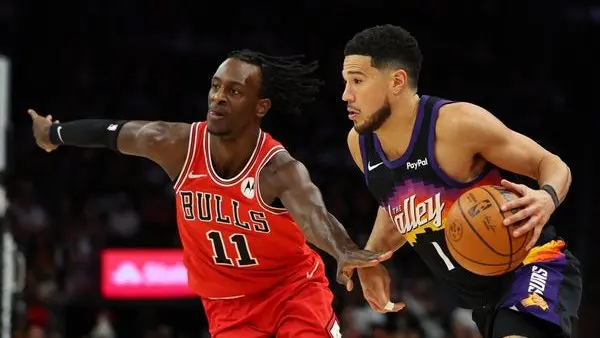
Our handicapper is diving into the efficiency gaps at Mortgage Matchup Center and has found a distinct pace-based edge for his ATS pick.
The Setup: New Orleans Pelicans at Phoenix Suns
Phoenix lays 6 points at home against a New Orleans squad that’s limped to 20-44, but this line doesn’t add up once you run the efficiency math. The Suns project to win by 4.9 points, giving the Pelicans +6.0 legitimate value in a game that should tighten considerably once you account for pace. New Orleans comes off a 133-123 win in Sacramento where Zion Williamson went 10-for-14 for 23 points and Trey Murphy III added 21. Phoenix, meanwhile, just dropped a home game to Chicago 105-103 despite Devin Booker’s 27 points in his second game back from a hip injury. The projection here is clear: Phoenix wins, but the possessions math tells a different story about the margin. The efficiency gap is real at +5.8 per 100 possessions, but in a game projected for just 99.9 possessions, that gap compresses. The market’s asking you to lay six with a Suns team missing Dillon Brooks and facing a Pelicans squad that just hung 133 on Sacramento. I’m taking the points all day long.
Game Info & Betting Lines
Game Time: Friday, March 6, 2026, 9:00 PM ET
Location: Mortgage Matchup Center
TV: Arizona’s Family 3TV, Suns Live (Home) | GCSEN, Pelicans.com, NBA League Pass (Away)
Current Odds (MyBookie.ag):
Spread: Phoenix Suns -6.0 (-110) | New Orleans Pelicans +6.0 (-110)
Total: 225.0 (Over/Under -110)
Moneyline: Suns -233 | Pelicans +185
Why This Line Exists
The market landed on Phoenix -6.0 because the season-long numbers clearly favor the home side. The Suns carry a +0.8 net rating compared to New Orleans’ -5.0, creating that +5.8 efficiency gap that forms the foundation of this spread. Phoenix sits 35-27 and 20-13 at home. New Orleans is 20-44 and 9-23 on the road. On paper, six points feels reasonable.
But here’s where the pace blend changes everything in this matchup. Phoenix operates at 98.4 possessions per game, one of the more deliberate tempos in the league. New Orleans pushes at 101.3, but when you blend those rates, you’re looking at 99.9 possessions in this game. That’s a grind-it-out affair where every possession matters and efficiency advantages compress.
The Suns project to score 115.3 points while holding New Orleans to 112.4, a margin that includes the standard two-point home court advantage. That 4.9-point projected margin sits a full point and change below the market number. The offensive rebounding edge also tilts Phoenix’s way at +2.0 percentage points, giving them second-chance opportunities that matter more in a slower game. But when you factor in the Pelicans’ ability to score—they just put up 133 in Sacramento with Zion and Murphy both clicking—this number points to value on the dog.
New Orleans Pelicans Breakdown: What You Need to Know
The Pelicans are a mess record-wise, but the offensive talent is undeniable. Trey Murphy III leads the way at 21.9 points per game on 47.5% shooting and 38.2% from three. Zion Williamson matches that at 21.6 points while shooting an absurd 58.7% from the field. Saddiq Bey adds 17.4 points and went 6-for-11 with three triples in that Sacramento win.
The issue is on the other end. New Orleans allows 117.7 points per 100 possessions, one of the worst defensive ratings in the league. They’re 13th in the West for a reason—they can’t stop anyone consistently. Their 112.7 offensive rating is respectable, fueled by a 56.6% true shooting percentage and 60.0% assist rate that indicates good ball movement when engaged.
Dejounte Murray sat Thursday’s game but is expected back for this one, which matters for playmaking. In clutch situations, New Orleans is just 11-22 with a -2.1 plus/minus, shooting 26.9% from three in close games. They’re not built to win tight ones, but they don’t need to win here—they just need to hang within six.
Phoenix Suns Breakdown: The Other Side
Phoenix is better, but they’re not dominant. The +0.8 net rating reflects a team that’s solid but vulnerable. Devin Booker returned from a four-game absence due to a hip injury and dropped 27 points Thursday, but the Suns still lost at home to Chicago. Grayson Allen added 21 points, but Jalen Green went just 5-for-20 from the field and 1-for-8 from three.
The bigger concern is Dillon Brooks being out. Brooks averages 20.9 points per game and provides defensive intensity Phoenix desperately needs. Without him, the Suns lose a two-way contributor who was having a breakout season. Mark Williams is also out, forcing Phoenix to rely on backups at center. Jordan Goodwin remains sidelined as well.
Phoenix’s 113.2 offensive rating is basically in line with the market expectations here, and their 112.4 defensive rating is solid but not elite. They rank 7th in the West at 35-27, which is competitive but hardly imposing. In clutch situations, they’re 16-13 with a +0.3 plus/minus, significantly better than New Orleans but still not overwhelming. The Suns shoot just 27.4% from three in clutch moments, which tells you they grind out wins rather than blow teams away.
The Matchup: Where This Game Gets Decided
This is exactly the spot where Phoenix burns you if you’re laying the number. The pace blend of 99.9 possessions means fewer opportunities for the efficiency gap to manifest. Over the course of 100 possessions, Phoenix’s +5.8 net rating advantage projects to about a six-point edge. But in a 100-possession game, variance matters. One cold shooting stretch or a few extra turnovers, and that margin evaporates.
The offensive rebounding gap of +2.0 percentage points favors Phoenix, which matters in a slower game where every possession carries more weight. Phoenix grabs 29.1% of available offensive boards compared to New Orleans’ 27.1%. That’s worth roughly two extra possessions per game, which in a 100-possession contest translates to about 2.3 additional points for the Suns.
But here’s the counter: New Orleans’ offense is within noise of Phoenix’s defense. The Pelicans’ 112.7 offensive rating against the Suns’ 112.4 defensive rating creates a +0.3 mismatch that’s essentially neutral. Meanwhile, Phoenix’s offense faces New Orleans’ porous defense, creating a -4.5 per 100 possession mismatch that favors the Suns. That’s where Phoenix builds its edge, but it’s not enough to justify laying six.
The writing’s on the wall with this matchup: Phoenix wins a close one, but New Orleans keeps it within striking distance. The Pelicans just scored 133 with Zion and Murphy both efficient. Phoenix just lost at home to Chicago. The clutch data shows Phoenix is 21.9% better in tight games, but that speaks to winning, not covering. this number points to Pelicans +6.0.
Bash’s Best Bet & The Play
My model projects Phoenix by 4.9 points, which gives us over a full point of value on New Orleans +6.0. The market’s disrespecting the Pelicans here based on record, but the pace math and offensive talent say this game stays within a possession or two. Phoenix is the better team, no question. But better by six in a 100-possession game where they’re missing Dillon Brooks and just lost at home? I’ve seen this movie before, and it doesn’t end with a comfortable cover.
The risk is obvious: New Orleans’ 117.7 defensive rating is abysmal, and if Phoenix gets hot from three, this could get ugly. But the Suns shoot just 35.9% from deep as a team, and Jalen Green went 1-for-8 from three on Thursday. The efficiency gap is real, but it’s not insurmountable over 100 possessions. The possessions math tells a different story than the record books.
BASH’S BEST BET: New Orleans Pelicans +6.0 for 2 units.
Phoenix wins, but New Orleans covers. The pace blend compresses the margin, and six points is too many in a game that projects closer to five. I’m taking the points all day long.