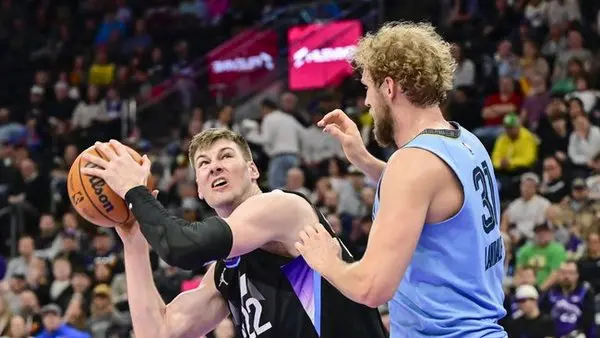
Handicapper Bryan Bash’s latest Detroit Pistons vs. Utah Jazz prediction analyzes the mismatch in the paint and whether Detroit’s efficiency can overcome a high-octane Utah offense.
The Setup: Pistons at Jazz
Detroit is laying 10 points on the road in Utah, and on the surface, this number makes sense. The Pistons are 24-6, sitting first in the Eastern Conference, and they’ve won nine of their last 11 games. Utah is 10-19, struggling at 7-10 at home, and just gave up 137 points to Memphis in their last outing. Here’s the thing — when you’re looking at a double-digit road favorite, the market is telling you there’s a significant talent and execution gap that should hold up over 48 minutes.
Let me walk you through why this line exists and why I think Detroit covers it. Cade Cunningham is putting up 26.4 points and 9.4 assists per game, Jalen Duren just dropped a 23-point, 12-rebound performance in Sacramento, and this Pistons team has the kind of two-way balance that travels well. Utah’s missing Walker Kessler for the season after shoulder surgery, and that rim protection void is exactly the kind of structural weakness Detroit exploits with Duren’s interior dominance. The thesis here is straightforward: Detroit’s efficiency and depth should create separation in the second half, and 10 points isn’t enough to account for that gap.
Game Info & Betting Lines
Game Time: December 26, 2025, 9:30 ET
Venue: Delta Center
Spread: Detroit Pistons -10.0 (-110) | Utah Jazz +10.0 (-110)
Moneyline: Detroit -476 | Utah +345
Total: Over/Under 244.0 (-110)
Why This Line Exists
A 10-point road spread tells you the market sees a clear class differential, and the numbers back it up. Detroit sits at 24-6 with an 11-4 road record, while Utah is 3-9 away from home and just 7-10 at Delta Center. The Pistons are first in the Eastern Conference; the Jazz are 12th in the West. That’s not just positional context — it reflects how these teams execute possession-to-possession.
The moneyline at -476 for Detroit translates to roughly an 83% implied win probability, which means the market expects the Pistons to win this game more than four out of five times. When you’re getting that kind of confidence baked into the odds, a 10-point spread is actually the market trying to find middle ground. The question isn’t whether Detroit wins — it’s whether they win by enough.
I keep coming back to Utah’s interior defense without Kessler. He’s out for the season, and that 10.8 rebounds and rim protection presence isn’t easily replaced. Duren averaged 18.5 points and 11.1 rebounds this season, and he just put up 23 and 12 against Sacramento. When you’ve got a dominant big facing a depleted frontcourt, that’s where double-digit margins get built. The total sitting at 244 suggests the market expects pace and scoring, which also favors the more efficient offense — and that’s Detroit.
Pistons Breakdown: What You Need to Know
Detroit’s success this season starts with Cade Cunningham, who’s having an All-NBA caliber year at 26.4 points, 6.4 rebounds, and 9.4 assists per game. That’s not just volume — it’s control. Cunningham had 23 points and 14 assists in the win over Sacramento, and when he’s facilitating at that level, Detroit’s offense becomes nearly impossible to contain because he creates quality looks for everyone.
Jalen Duren is the other half of this equation. At 18.5 points and 11.1 rebounds per game, he’s giving Detroit a legitimate interior anchor on both ends. His 23-point, 12-rebound performance against the Kings wasn’t an outlier — it’s what he does when he’s got a size or skill advantage down low. Against a Utah team missing Kessler, Duren should dominate the paint.
Tobias Harris adds another layer at 14.0 points per game, giving Detroit a third scoring option who can exploit mismatches and knock down open looks when defenses collapse on Cunningham. The only question mark is Ronald Holland II, who’s day-to-day with a knee issue, but he’s a role player — not someone who shifts the foundation of this rotation. Detroit’s depth is real, and it shows in their 11-4 road record.
Jazz Breakdown: The Other Side
Utah’s offense has some legitimate firepower. Lauri Markkanen is averaging 27.8 points and 7.1 rebounds, and Keyonte George is putting up 23.9 points and 6.8 assists. Those are All-Star caliber numbers, and in their recent loss to Memphis, the Jazz scored 128 points. So this isn’t a team that can’t score — it’s a team that can’t stop anyone.
That’s where the Kessler injury becomes critical. Without him, Utah has no rim protection, no defensive anchor, and no one who can consistently challenge drivers or clean up defensive breakdowns. Memphis dropped 137 on them, and that wasn’t because the Grizzlies shot lights out from three — it was because they got to the rim at will. Detroit will do the same thing with Duren and Cunningham attacking downhill.
The Jazz are 7-10 at home, which tells you Delta Center isn’t providing much of an advantage this season. Georges Niang is also out with a foot injury, further thinning their rotation depth. When you’re 10-19 and missing key pieces, covering 10 points against the East’s best team becomes a tall order, even at home.
The Matchup: Where This Game Gets Decided
This game gets decided in the paint and in transition. Detroit ranks first in the East because they control pace, execute in the halfcourt, and don’t beat themselves with turnovers. Utah gave up 137 to Memphis because they couldn’t protect the rim or get back in transition. Once you dig into the matchup data, the efficiency gap becomes obvious.
Duren versus Utah’s frontcourt without Kessler is a mismatch that tilts this game from the opening tip. When you do the math over 95-100 possessions, Detroit should generate higher-quality looks in the paint, get to the free-throw line more often, and create second-chance opportunities off offensive rebounds. That’s not just a stat — it’s how this game tilts.
Cunningham’s playmaking is the other factor. At 9.4 assists per game, he’s orchestrating an offense that ranks among the league’s best in halfcourt execution. Utah’s perimeter defense isn’t elite, and without Kessler protecting the rim, help defense becomes a gamble. That opens up kick-out threes for Harris and others, which stretches the floor and creates even more driving lanes.
The total at 244 suggests a pace that favors offensive execution, and Detroit is the more disciplined, efficient team. This matchup narrows Utah’s margin for error more than the line suggests, and I expect Detroit to build a lead in the second and third quarters that Utah can’t close.
Bash’s Best Bet & The Play
I’m on Detroit -10.0 for 2 units. Here’s why: the Pistons are 24-6, 11-4 on the road, and playing with the kind of two-way balance that wins and covers in spots like this. Utah is missing Kessler, struggling at 7-10 at home, and just gave up 137 to Memphis. The interior mismatch with Duren, Cunningham’s playmaking, and Detroit’s depth should create separation in the second half.
The main risk here is Utah’s offensive firepower. Markkanen and George can get hot and keep this close if they’re hitting shots, and home teams tend to hang around longer than they should. But I’ve accounted for the home court — and it still doesn’t get there. Detroit’s efficiency advantage and Utah’s defensive vulnerabilities without Kessler should push this margin into double digits by the final buzzer.
The Play: Detroit Pistons -10.0 (-110) for 2 units