While Houston’s season-long metrics suggest road dominance, the situational math at the Kia Center indicates that taking the home underdog as our best bet is the sharp play given the Rockets’ late-game struggles.
The Setup: Rockets at Magic
The Rockets are laying 2.5 points on the road in Orlando Thursday night, and this line doesn’t add up once you run the efficiency math. Houston sits third in the West at 36-21 with a +5.6 net rating, while Orlando’s 31-26 record masks a barely-positive +0.4 net rating. the projection has Houston by less than a point after factoring in home court, but the market’s giving you 2.5 points with the Magic. That’s a 1.8-point edge favoring Orlando covering at home.
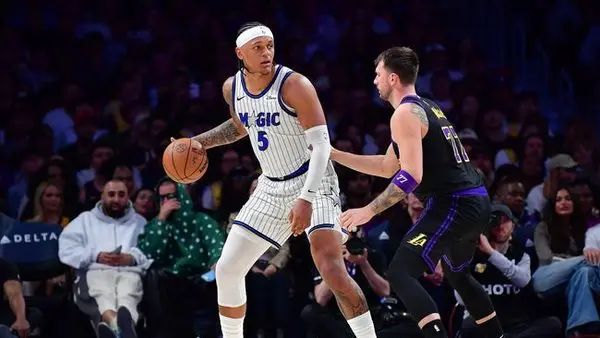
Here’s the wrinkle: Houston’s dealing with rotation issues. Amen Thompson is out, Jae’Sean Tate is sidelined for weeks with a knee injury, and Dorian Finney-Smith sat Wednesday but returns tonight. Meanwhile, Franz Wagner remains out for Orlando, and Jalen Suggs is questionable with a back issue. The Rockets just demolished Sacramento 128-97 behind Reed Sheppard’s career-high 28 points and Alperen Sengun’s triple-double. Orlando’s riding momentum too, winning six of eight including a clutch victory in LA where Paolo Banchero dropped 36 and Wendell Carter Jr. hit the game-winner with 6.7 seconds left.
The efficiency gap is too wide to ignore here, but Orlando’s 65.5% clutch win rate compared to Houston’s 46.7% tells me this game stays tight. The projected total of 224.4 possessions sits 8.4 points above the market’s 216.0 number. The writing’s on the wall with this matchup—we’ve got value on both the spread and the total.
Game Info & Betting Lines
Houston Rockets at Orlando Magic
Date: Thursday, February 26, 2026
Time: 7:30 PM ET
Venue: Kia Center
TV: Prime Video
Current Betting Lines (MyBookie.ag):
Spread: Magic +2.5 (-110) | Rockets -2.5 (-110)
Total: 216.0 (Over/Under -110)
Moneyline: Magic +114 | Rockets -139
Why This Line Exists
The market landed on Rockets -2.5 because Houston’s season-long profile screams road favorite. They’re 117.1 offensive rating against 111.4 defensive rating, producing that +5.6 net rating that ranks among the league’s elite. Orlando sits at 113.7 offensive and 113.4 defensive for a barely-there +0.4 net rating. That’s a 5.2-point efficiency gap per 100 possessions favoring Houston.
But the possessions math tells a different story when you blend the pace. Houston operates at 96.7 possessions per game—one of the slowest tempos in the league. Orlando pushes at 100.2. The blend settles around 98.5 possessions, which is deliberate basketball. Over that pace, Houston’s efficiency advantage projects to roughly 5 points before you factor in Orlando’s home court advantage, which typically adds 2 points. That math gets you to a projected margin of Houston by 0.7 points.
The market giving Orlando 2.5 points suggests oddsmakers are accounting for Houston’s rotation issues and Orlando’s recent surge. The Rockets are 16-14 on the road compared to 20-7 at home. Orlando’s 17-9 at the Kia Center. The line respects venue context, but it’s also pricing in the unknown around Suggs’ availability and how Houston redistributes minutes without Thompson and with Finney-Smith returning from rest.
On the total, 216.0 feels suppressed. Both teams have shown offensive capability—Houston at 114.7 points per game, Orlando at 115.1. The pace blend of 98.5 possessions typically generates more scoring than this number suggests, especially when you consider both teams shoot above 57% true shooting percentage. The model projects 224.4 total points, creating an 8.4-point edge toward the over.
Rockets Breakdown: What You Need to Know
Kevin Durant continues his excellence at 25.8 points per game on 50.8% shooting and 40.9% from three. Alperen Sengun just posted a 26-point triple-double against Sacramento with 13 rebounds and 11 assists. He’s averaging 20.5/9.2/6.4 on the season with nearly 50% shooting. That inside-out combination creates matchup nightmares.
The Rockets’ 117.1 offensive rating ranks elite, built on 53.9% effective field goal percentage and 57.2% true shooting. They assist on 58.2% of their buckets, showing excellent ball movement. The real separator is offensive rebounding—Houston crashes at a 35.3% rate, more than 10 percentage points better than Orlando’s 25.1% mark. That’s a strong edge in second-chance points.
Defensively, Houston’s 111.4 rating is rock solid. They force turnovers at a 13.5% rate and protect the rim with 5.9 blocks per game. The concern is rotation depth. Thompson’s absence removes a versatile defender who contributes 17.4 points, 7.6 rebounds, and 5.3 assists. Tate’s knee injury costs them perimeter toughness. Reed Sheppard stepped up Wednesday with seven threes, but can he replicate that performance?
Houston’s clutch numbers are troubling—14-16 record in close games with a negative plus-minus. They shoot just 29.8% from three in clutch situations. If this game tightens late, that’s where Houston’s shown vulnerability all season.
Magic Breakdown: The Other Side
Orlando’s three-headed offensive attack features Paolo Banchero at 21.8 points, Franz Wagner at 21.3, and Desmond Bane at 20.2. Problem is, Wagner’s out. That removes 21.3 points, 5.8 rebounds, and 3.6 assists from a guy shooting 47.9% overall and 36.5% from three. Banchero just dropped 36 in LA, showing he can carry the load, but losing Wagner’s efficiency hurts.
The Magic’s 113.7 offensive rating relies on ball movement—they assist on 64.2% of their buckets, best in this matchup. Bane provides floor spacing at 38.4% from three. Anthony Black and Jalen Suggs create off the dribble, though Suggs’ questionable status creates uncertainty. Orlando shoots 57.3% true shooting, basically in line with the market expectations, and turns it over at just 12.1%, better than Houston’s 13.5%.
Where Orlando struggles is offensive rebounding. That 25.1% rate means they’re not generating many second chances against a Rockets team that controls the glass. Defensively, the Magic check in at 113.4 rating—adequate but not special. They generate 8.6 steals and 5.3 blocks per game, creating transition opportunities.
Here’s the difference-maker: Orlando’s 19-10 clutch record with a positive plus-minus. They shoot 77.9% from the free throw line in crunch time and trust their execution. Wendell Carter Jr.’s game-winner against the Lakers exemplifies their late-game composure. That 65.5% clutch win rate dwarfs Houston’s 46.7%.
The Matchup: Where This Game Gets Decided
The pace blend of 98.5 possessions sets up a halfcourt battle where efficiency matters more than volume. Houston’s offensive rating of 117.1 against Orlando’s defensive rating of 113.4 creates a 3.7-point mismatch per 100 possessions favoring the Rockets’ offense. Flip it around: Orlando’s 113.7 offensive rating against Houston’s 111.4 defensive rating produces a 2.3-point edge for the Magic’s offense. The net effect favors Houston by 1.4 points per 100 possessions in these specific matchups.
Over 98.5 possessions, that efficiency advantage translates to roughly 1.4 points for Houston. Add in the 10.3-percentage-point offensive rebounding gap, and you see where Houston generates extra possessions. If the Rockets grab 5-6 more offensive boards than Orlando, that’s 5-6 additional scoring chances in a pace-limited game. Those possessions matter significantly in a projected one-point margin.
The X-factor is late-game execution. If this game hits the final five minutes within five points—which the tight projected margin suggests—Orlando’s clutch profile gives them a real edge. Houston’s 29.8% three-point shooting in clutch time versus Orlando’s ability to get to the line and execute could flip a close game. Banchero’s shown he can take over late, and Carter provides interior finishing. Houston’s clutch struggles all season make them vulnerable in exactly this spot.
Rotation depth also tilts Orlando’s direction. With Thompson out and Finney-Smith returning from rest, Houston’s asking Durant and Sengun to carry heavy minutes. Orlando spreads usage across Banchero, Bane, Black, and potentially Suggs. That depth matters in the fourth quarter of a tight game on the road.
Bash’s Best Bet & The Play
I’m taking the points all day long with Orlando +2.5. The model projects Houston by 0.7 points, giving us a 1.8-point edge on the spread. Houston’s efficiency advantage is real, but Orlando’s home court, clutch execution, and rotation depth in the absence of key Rockets defenders makes this number too generous. The Rockets are 16-14 on the road for a reason—they don’t dominate away from Toyota Center.
The secondary play is Over 216.0. That 8.4-point edge versus the total is strong. Both teams shoot above 57% true shooting, the pace blend supports 98-99 possessions, and offensive rebounding creates extra chances. Houston just scored 128 against Sacramento. Orlando put up 110 in LA. The market’s suppressing this total based on Houston’s slow pace, but the efficiency on both sides suggests scoring in the 220s.
The risk on Orlando +2.5 is simple: if Houston’s offensive rebounding dominates and they control second-chance points, that 10.3-percentage-point gap could swing the margin beyond the number. Durant and Sengun are capable of taking over any game. But I’ve seen this movie before with Houston on the road in close games—they don’t finish. Give me the home team with the better clutch profile getting nearly a field goal.
BASH’S BEST BET: Magic +2.5 for 2 units.
SECONDARY PLAY: Over 216.0 for 1 unit.