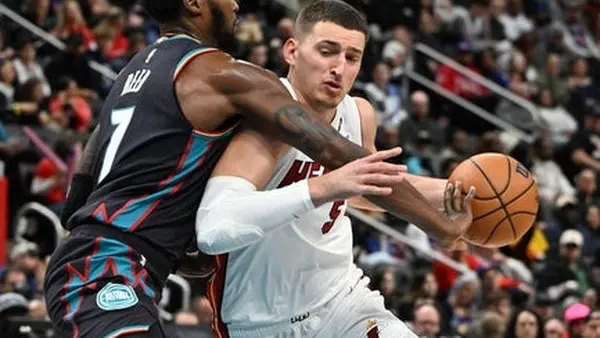
Miami is 12-5 at home and fresh off a dominant Norman Powell performance, but are they being undervalued as home dogs? Bash examines the point spread and delivers a sharp prediction on whether the Wolves can bounce back from their Atlanta nightmare.
The Setup: Timberwolves at Heat
Minnesota comes into Kaseya Center laying 2 points on the road, and on the surface, this number makes sense. The Timberwolves sit at 21-13 with Anthony Edwards averaging 29.1 points per game and Julius Randle providing secondary scoring at 22.3 per contest. Miami checks in at 19-15, riding a four-game winning streak with Norman Powell dropping 36 in their last outing against Detroit. Here’s the thing — this line exists because the market respects Miami’s 12-5 home record and recent momentum, but once you dig into the matchup data and what these teams actually do over 48 minutes, that 2-point cushion starts to look exploitable.
Let me walk you through why this line exists and where the value sits. Minnesota’s road record of 9-7 isn’t dominant, but they’ve got the offensive firepower to dictate tempo and efficiency against a Heat team that’s been excellent at home but shaky away from South Beach at 7-10. The Timberwolves bring two legitimate 20-plus point scorers and a third option in Jaden McDaniels averaging 14.8 points. Miami counters with Powell at 24.2, Tyler Herro at 23.2, and Bam Adebayo doing his usual all-around work at 17.7 points and 9.7 rebounds. The question isn’t talent — it’s how this matchup actually plays out when you factor in pace, efficiency, and the margin these numbers suggest.
Game Info & Betting Lines
Game Time: January 3, 2026, 5:00 ET
Venue: Kaseya Center
Records: Minnesota Timberwolves (21-13) at Miami Heat (19-15)
Current Betting Lines (MyBookie.ag):
- Spread: Timberwolves -2.0 (-110) / Heat +2.0 (-110)
- Moneyline: Timberwolves -130 / Heat +107
- Total: Over/Under 239.5 (-110)
Why This Line Exists
The market landed on Minnesota -2 because of three factors: Miami’s home court advantage at 12-5, the Heat’s current four-game winning streak, and Minnesota’s just-adequate 9-7 road performance. The oddsmakers are essentially saying these teams are close to even on a neutral floor, and Miami’s home environment is worth about 2-3 points. That’s standard math, and I get why the number exists.
But here’s where the line starts to crack when you apply context. Minnesota just got blown out 126-102 in Atlanta, a game where they trailed 70-49 at halftime despite Edwards scoring 30 points. That loss looks bad on paper, but it’s actually the kind of spot that sharpens focus for a team with playoff aspirations. Meanwhile, Miami’s winning streak includes that 118-112 victory over Detroit where Powell went nuclear for 36 points — an outlier performance that masks some underlying efficiency concerns.
The total sitting at 239.5 tells you the market expects pace and scoring. When you’re projecting nearly 240 combined points, you’re anticipating both teams pushing tempo and converting efficiently. That’s not just a stat — it’s how this game tilts. Minnesota has the personnel to score in bunches with Edwards and Randle, while Miami’s recent offensive surge with Powell and Herro suggests they’ll try to keep pace. The question becomes whether Miami can sustain that efficiency against a Minnesota team that, despite the Atlanta loss, still ranks sixth in the Western Conference for a reason.
Minnesota Breakdown: What You Need to Know
The Timberwolves’ identity is built around Edwards’ scoring volume and Randle’s versatility. Edwards at 29.1 points per game gives them a legitimate closer, while Randle’s 22.3 points, 7.0 rebounds, and 5.8 assists provide the secondary creation they need when defenses load up on Edwards. McDaniels at 14.8 points adds a third scoring option, which matters in tight road games where you need multiple guys to step up.
The main concern is that 9-7 road record and the recency of that Atlanta blowout. Getting outscored 37-23 in a single quarter and trailing by 21 at halftime isn’t just a bad quarter — it’s a systemic breakdown. But I keep coming back to this: Minnesota’s overall 21-13 record and sixth-place conference standing suggest they’re better than one bad road performance. The only injury concern is Terrence Shannon Jr., who’s out with a foot strain, but he’s not a rotation-altering piece for this matchup.
When you look at Minnesota’s offensive structure, they’ve got the shot creation and scoring balance to attack Miami’s defense. Edwards can get his own shot, Randle can operate in the mid-range and as a facilitator, and McDaniels provides spacing. That’s a formula that works in road environments when the execution is there.
Miami Breakdown: The Other Side
Miami’s four-game winning streak is real, and their 12-5 home record isn’t a mirage. Powell averaging 24.2 points gives them a legitimate go-to scorer, Herro at 23.2 provides secondary creation, and Adebayo’s 17.7 points with 9.7 rebounds anchors everything defensively and on the glass. That 118-112 win over Detroit showcased their ceiling — Powell going for 36 and Adebayo controlling the paint with 15 points and 14 rebounds.
But here’s the thing — that Powell performance was an outlier, and relying on him to repeat that level against a better defensive team is a stretch. Miami’s 7-10 road record tells you they’re significantly better at home, which supports the line, but it also exposes their limitations when they can’t control the environment. The injury report shows Pelle Larsson as questionable with an ankle sprain, while Nikola Jovic and Jaime Jaquez Jr. are probable. None of those are rotation-killers, but depth matters over 48 minutes.
Miami’s offensive efficiency in this recent stretch has been solid, but when you dig into the matchup data, they’re facing a Minnesota team that has the defensive personnel to slow down their primary scorers. Powell and Herro are volume scorers, but they’re not the kind of guys who consistently dominate against length and athleticism. That matchup dynamic narrows the margin more than the line suggests.
The Matchup: Where This Game Gets Decided
This game comes down to whether Miami can sustain their offensive efficiency against Minnesota’s defensive versatility. The Timberwolves have the size and length with McDaniels to make things difficult for Powell and Herro, while Randle can match up with Adebayo’s physicality. On the other end, Edwards is the best player on the floor, and when that’s the case in a tight game, it tilts the margin.
The total at 239.5 suggests both teams will score, but the efficiency gap is where Minnesota holds the edge. Edwards averaging 29.1 points gives them a consistent 30-point anchor, while Randle’s 22.3 and McDaniels’ 14.8 provide the secondary scoring. That’s three guys who can get you 15-plus on any given night. Miami counters with Powell, Herro, and Adebayo, but Powell’s 36-point explosion against Detroit isn’t sustainable, and Herro’s 23.2 average is solid but not elite.
When you do the math over 95-100 possessions, Minnesota’s scoring balance and Edwards’ ability to close games gives them the edge. Miami’s home court is worth something — probably 2-3 points — but I’ve accounted for the home court, and it still doesn’t get there. The Timberwolves’ 21-13 record against Miami’s 19-15 record reflects a team that’s slightly better, and that gap matters in a 2-point spread.
The main risk here is Miami’s momentum and home environment creating enough energy to steal possessions and keep this within a basket. But Minnesota’s offensive firepower and Edwards’ ability to take over in crunch time makes them the side I want in a tight number.
Bash’s Best Bet & The Play
The Play: Timberwolves -2.0 (-110) — 2 Units
I’m laying the 2 with Minnesota, and here’s why: Edwards is the best player on the floor, Randle and McDaniels provide the secondary scoring balance, and Miami’s recent surge is built on an unsustainable Powell performance. The Timberwolves’ 21-13 record reflects a team that’s better than their 9-7 road mark suggests, and that Atlanta loss is the kind of wake-up call that refocuses a playoff-caliber squad.
Miami’s 12-5 home record is legit, but when you factor in the efficiency gap and Minnesota’s ability to score in multiple ways, that 2-point spread feels light. The main risk is Miami’s home environment and momentum carrying them through, but I keep coming back to Edwards’ 29.1 points per game and the Timberwolves’ offensive balance. That’s the formula that wins close road games.
Minnesota covers the 2, and I expect a final margin in the 4-6 point range. Lock it in.