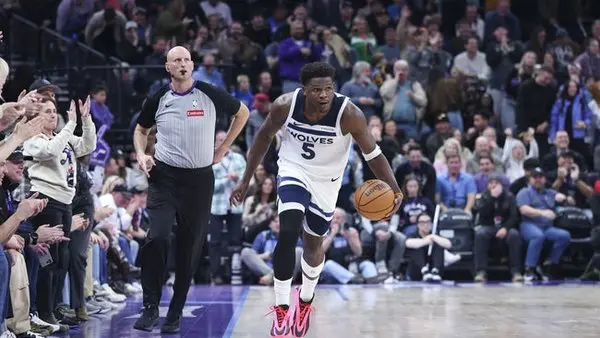
Minnesota is laying a heavy seven points on the road, but is the market overestimating a Timberwolves squad that has recently struggled away from home? Our NBA Picks investigate whether the Dallas Mavericks—bolstered by a respectable 14-12 home record—can exploit a potential “maintenance” absence from Anthony Edwards to stay within the number.
The Setup: Timberwolves at Mavericks
Minnesota laying 7 on the road against a Dallas team sitting 11th in the West feels steep until you examine what’s actually on the floor Wednesday night. The Mavericks are running without Anthony Davis (out with injury) and Kyrie Irving (still rehabbing from ACL surgery), which fundamentally changes their ceiling against a Timberwolves squad that’s 28-19 and holding the 7-seed in a competitive Western Conference. Anthony Edwards is questionable with right foot injury maintenance, but even if he sits, Minnesota’s rotation depth creates a mismatch Dallas can’t solve with Cooper Flagg and Naji Marshall carrying the offensive load. The market landed here because the Mavericks’ 14-12 home record keeps them respectable at American Airlines Center, but their 5-14 road split tells you everything about how they perform against quality competition away from home—and Minnesota qualifies as quality even on the second night of a back-to-back.
Game Info & Betting Lines
Game Time: January 28, 2026, 8:30 ET
Location: American Airlines Center
TV: Home: KFAA-TV, Mavs.com | Away: FanDuel SN North, NBA League Pass
Current Odds (MyBookie.ag):
- Spread: Timberwolves -7.0 (-110) | Mavericks +7.0 (-110)
- Moneyline: Timberwolves -270 | Mavericks +212
- Total: 232.0 (Over/Under -110)
Why This Line Exists
Seven points on the road typically signals either a massive talent gap or a situational advantage the market can’t ignore. This is both. Dallas sits 19-27 without their two best players from last season’s roster construction. Anthony Davis (20.4 PPG, 11.1 RPG) remains out, and Kyrie Irving hasn’t played all season while recovering from ACL surgery. That leaves Cooper Flagg (18.8 PPG, 6.4 RPG, 4.1 APG) as the primary creator alongside Naji Marshall (14.7 PPG)—a solid duo, but not one built to handle Minnesota’s two-way versatility when Julius Randle (22.2 PPG, 7.0 RPG, 5.4 APG) and Rudy Gobert anchor the paint.
The Timberwolves just dismantled Golden State 108-83 at home, with Gobert posting 15 points and 17 rebounds in a game missing Steph Curry and Draymond Green. That win margin matters less than the defensive execution—holding an opponent to 83 points demonstrates the rim protection and perimeter discipline Minnesota brings nightly. Dallas, meanwhile, just watched Luka Doncic drop 33 and 11 assists in a Lakers uniform during a 116-110 loss at home, erasing a 15-point lead in the final seven minutes. That collapse speaks to depth issues and late-game execution problems that don’t disappear against a disciplined Minnesota squad.
The market respects Dallas’s 14-12 home mark, which keeps this number from ballooning to double digits. But context matters: those home wins came against a mix of opponents, and their 5-14 road split exposes how they struggle against playoff-caliber teams. Minnesota at 28-19 qualifies as playoff-caliber, even if Edwards sits.
Timberwolves Breakdown: What You Need to Know
Minnesota’s offensive identity runs through Edwards (29.7 PPG, 5.2 RPG, 3.6 APG) and Randle, but their defensive foundation built around Gobert is what makes them dangerous in spots like this. Gobert’s 17-rebound performance against Golden State illustrates his ability to dominate the glass against undersized frontcourts—exactly what Dallas presents without Anthony Davis. Jaden McDaniels (14.8 PPG, 4.5 RPG, 2.9 APG) adds another dimension as a switchable wing who can disrupt Cooper Flagg’s pick-and-roll reads.
The Edwards injury situation creates uncertainty, but his questionable tag stems from maintenance rather than a new injury. He’s averaged 31.2 points, 5.7 rebounds, 4.1 threes, and 3.7 assists over 10 January appearances while shooting 44.1 percent from deep in 35.5 minutes per contest. If he plays, Dallas has no defensive answer. If he sits, Mike Conley and Bones Hyland absorb those minutes, and Minnesota’s offensive efficiency drops but doesn’t crater—they still have Randle and Gobert controlling the paint against a Mavericks team lacking interior resistance.
Minnesota’s 12-11 road record isn’t elite, but their 28-19 overall mark reflects consistency against Western Conference competition. They’re not unbeatable, but they’re structured to exploit matchups like this where the opponent can’t match their two-way depth.
Mavericks Breakdown: The Other Side
Dallas’s 19-27 record tells the story of a franchise in transition, managing without their two cornerstone pieces while Cooper Flagg develops into a legitimate offensive threat. Flagg’s 18.8 PPG and 4.1 APG demonstrate real playmaking chops, but asking a rookie to carry the offensive load against Minnesota’s defensive versatility is a tough assignment. Naji Marshall provides secondary scoring at 14.7 PPG, but he’s not a primary creator capable of bending defenses over 35 minutes.
The frontcourt situation creates the biggest problem. Without Anthony Davis, Dallas relies on Daniel Gafford, Dwight Powell, and Moussa Cisse to handle center duties—none of whom can match Gobert’s physicality or Randle’s scoring touch in the post. That size disadvantage compounds when Minnesota forces Dallas into half-court sets where Flagg has to create against set defenses rather than attacking in transition.
Dallas’s 14-12 home record provides some optimism, but their 5-14 road split exposes how they perform when facing quality opponents. The Lakers’ comeback win Saturday illustrated late-game execution issues that don’t disappear against a Minnesota squad built to control tempo and protect leads. Kyrie Irving remains out while rehabbing his ACL, and while reports suggest optimism for a pre-All-Star break return, he’s not helping Wednesday night. Dante Exum is out for the season following complications from knee surgery, further thinning their backcourt depth.
The Matchup: Where This Game Gets Decided
This game gets decided in the paint and on the glass. Minnesota’s frontcourt combination of Gobert and Randle creates a size mismatch Dallas can’t solve with their current personnel. Gobert’s 17 rebounds against Golden State demonstrated his ability to dominate possessions against undersized opponents—Dallas qualifies as undersized without Anthony Davis. When you control the glass, you control possessions, and when you control possessions against a Mavericks team averaging 19-27 on the season, you control the margin.
The perimeter matchup favors Minnesota even if Edwards sits. McDaniels can switch onto Flagg and disrupt his pick-and-roll timing, forcing Dallas into contested mid-range looks rather than clean rim attacks. Marshall provides secondary scoring, but he’s not efficient enough to carry the offensive load when Flagg faces defensive pressure. Minnesota’s defensive structure forces Dallas into exactly the type of half-court grind where their lack of shot creation becomes exploitable.
The total sitting at 232 reflects both teams’ defensive capabilities, but Minnesota’s ability to control tempo through Gobert’s rim protection and Randle’s post scoring keeps possessions manageable. Dallas needs transition opportunities to generate efficient offense—when Minnesota forces them into half-court sets, their scoring efficiency drops significantly. Over a 95-possession game, that efficiency gap compounds into an 8-10 point margin, which is exactly where this line sits.
The back-to-back factor for Minnesota deserves mention, but they’re traveling from Minneapolis to Dallas—manageable distance—and their rotation depth allows them to manage minutes without sacrificing defensive intensity. Dallas’s home court advantage matters, but not enough to overcome the talent and size disparity when Minnesota executes their defensive gameplan.
Bash’s Best Bet & The Play
Minnesota’s depth advantage and frontcourt dominance justify laying the road number here. Even if Anthony Edwards sits for maintenance, Julius Randle and Rudy Gobert create matchup problems Dallas can’t solve without Anthony Davis anchoring their defense. Cooper Flagg is talented, but asking him to carry the offensive load against Minnesota’s defensive versatility in a game where Dallas needs to stay within a possession is too much. The Mavericks’ 5-14 road split exposes how they perform against quality competition, and Minnesota at 28-19 qualifies as quality even on a back-to-back.
The main risk is Edwards sitting and Minnesota’s offensive efficiency dropping enough to keep this within the number. But Randle’s 22.2 PPG and Gobert’s interior dominance provide enough scoring punch to control tempo and build a manageable lead through the middle quarters. Dallas’s late-game execution issues—illustrated by the Lakers’ comeback Saturday—mean they’re not built to erase deficits against disciplined opponents.
BASH’S BEST BET: Timberwolves -7.0 for 2 units.
Minnesota’s size and depth create the type of mismatch that shows up in the final margin. Dallas fights, but they don’t have the firepower to stay within a possession when Gobert controls the paint and Randle exploits their undersized frontcourt. This number feels right, and the Timberwolves cover it on Wednesday night.