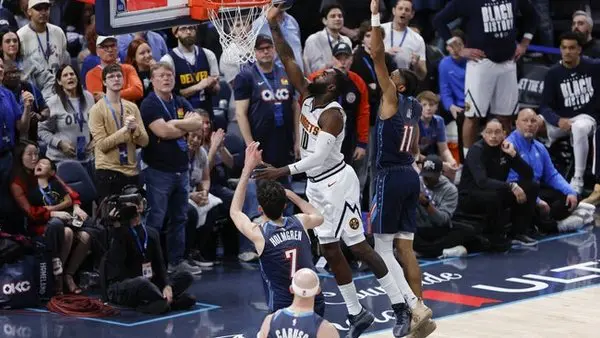
After crunched the rest-adjusted efficiency data and rotation charts, it’s clear why the visiting underdog has emerged as our preferred ATS pick for this Western Conference battle.
The Setup: Minnesota Timberwolves at Denver Nuggets
Denver’s laying 3 at home against a Minnesota squad that’s won five of six, and the projection says this line is basically priced correctly. the projection has Denver by 2.3 points—within a half-point of the market number—which tells you the efficiency gap between these teams is minimal. The Nuggets sit at a +4.7 net rating while Minnesota checks in at +4.1, a difference of just 0.6 points per 100 possessions. That’s within noise. But here’s where it gets interesting: Denver’s missing Aaron Gordon and Peyton Watson, two rotation pieces averaging a combined 32.6 points per game. The market’s giving you Denver -3 at home despite those absences, which means we need to dig into the pace blend and offensive mismatches to understand if there’s any real edge here.
The Timberwolves are coming off a grinding 94-88 win at the Clippers where Anthony Edwards dropped 31 and sealed it with a step-back three over two defenders. That’s five wins in their last six games, and they’re 3-1 since the All-Star break. Denver just took Oklahoma City to overtime Friday night in a chippy affair that saw Nikola Jokic post a 23-17-14 triple-double while Jamal Murray led all scorers with 39 points. The Nuggets lost that one 127-121, and now they’re turning around on zero rest to host a Minnesota team that’s had an extra day to prepare. The efficiency math says these teams are virtually identical, but the situational context and injury landscape change everything about how this game sets up.
Game Info & Betting Lines
Minnesota Timberwolves at Denver Nuggets
Date: Sunday, March 1, 2026
Time: 3:30 ET
Venue: Ball Arena
TV: ABC
Current Betting Lines (Bovada):
Spread: Denver Nuggets -3.0 (-110) | Minnesota Timberwolves +3.0 (-110)
Total: Over 240.0 (-110) | Under 240.0 (-110)
Moneyline: Denver Nuggets -150 | Minnesota Timberwolves +130
Why This Line Exists
The market landed on Denver -3 because the season-long efficiency numbers say these teams are essentially even. Denver posts a 120.4 offensive rating against Minnesota’s 116.5, while the defensive ratings sit at 115.7 for Denver and 112.4 for the Timberwolves. That net rating gap of 0.6 points per 100 possessions is negligible—it’s the kind of number that disappears over the course of a game. Add in a standard 2-point home court advantage, and you get a projected margin right around 2.3 points, which is exactly what the model spits out.
But here’s what complicates the narrative: Denver’s offense against Minnesota’s defense creates an 8.0-point mismatch per 100 possessions. That’s a strong edge. The Nuggets’ 120.4 offensive rating attacking the Timberwolves’ 112.4 defensive rating represents real scoring leverage. The flip side? Minnesota’s offense against Denver’s defense produces just a 0.8-point gap, which is within noise. So Denver has the offensive advantage in this matchup, but they’re also missing two key rotation players who contribute significantly to that offensive output.
The pace blend projects 100.3 possessions, which is right in the middle of these teams’ season averages. Minnesota runs at 101.6 possessions per game while Denver operates at 98.9. That pace blend drives the total projection to 233.1 points, a full 6.9 points below the market’s 240.0 number. The possessions math tells a different story than the market expects here. With Denver playing on zero rest after an overtime game and Minnesota controlling tempo with Rudy Gobert protecting the rim, this game sets up slower than the total suggests.
Minnesota Timberwolves Breakdown: What You Need to Know
Anthony Edwards is the engine, averaging 29.6 points on 49.3% shooting and 39.9% from three. He just torched the Clippers for 31 in a game where Minnesota held Los Angeles to 38 first-half points. That defensive identity—112.4 defensive rating, fifth-best pace control at 101.6—is what allows the Timberwolves to stay competitive against elite offensive teams. They shoot 59.5% true shooting as a team with a 56.3% effective field goal percentage, both marks that trail Denver by small margins but remain elite league-wide.
Julius Randle’s status is questionable with a back injury, and if he sits, Naz Reid slides into the starting lineup. Randle’s been worth 21.7 points and 6.8 rebounds per game, but Reid isn’t a significant drop-off at 14.1 points and 6.4 boards on 47.1% shooting. The Timberwolves’ offensive rebounding rate sits at 26.4%, a full 2.8 percentage points better than Denver’s 23.6% mark. That’s a medium-sized edge that translates to extra possessions and second-chance points, which matters in a game projected this close.
Minnesota’s clutch numbers show a 55.6% win rate in games decided by five points or fewer in the final five minutes. They’re 15-12 in clutch situations with a +0.6 plus-minus, shooting 48.0% from the field in those moments. If this game comes down to the final possessions—and the efficiency gap suggests it will—the Timberwolves have proven they can execute when it matters.
Denver Nuggets Breakdown: The Other Side
Nikola Jokic remains the best player on the floor in any game he plays, posting 28.7 points, 12.6 rebounds, and 10.5 assists on 57.0% shooting. Jamal Murray’s 25.3 points and 7.3 assists give Denver a two-man game that’s nearly impossible to stop when both are engaged. The Nuggets shoot 61.1% true shooting as a team with a 57.2% effective field goal percentage, both numbers that lead this matchup by 1.6 and 0.8 percentage points respectively. Those are small edges, not game-breakers.
The problem is depth. Aaron Gordon’s been out 14 straight games with a hamstring strain, and Peyton Watson just went down with a shoulder injury after a breakout season averaging 14.9 points and 41.7% from three. That’s 32.6 combined points per game missing from the rotation. Tim Hardaway Jr. and Julian Strawther are picking up minutes, but neither replicates the two-way impact of Gordon or Watson’s perimeter shooting. Denver’s 65.6% assist rate leads the league, but that ball movement requires healthy bodies to execute.
Denver’s clutch performance is a legitimate concern. They’re 14-16 in clutch situations with a -1.3 plus-minus, shooting just 43.3% from the field in close games. That’s an 8.9% clutch win rate gap compared to Minnesota, and in a game projected to finish within three points, that differential matters. The Nuggets also just played overtime Friday night, logging heavy minutes for Jokic and Murray with zero rest before this Sunday afternoon tip.
The Matchup: Where This Game Gets Decided
The efficiency gap is too narrow to trust Denver laying three points in this spot. Over 100.3 projected possessions, that 0.6 net rating advantage translates to roughly 0.6 total points of separation. Add in a 2-point home court bump, and you get to the 2.3-point projected margin. But that projection assumes full rosters and normal rest advantages. Denver’s playing on zero rest after an emotional overtime loss, missing two rotation players, and facing a Minnesota team that’s won five of six while controlling pace and defending at an elite level.
The 8.0-point offensive mismatch when Denver has the ball is real, but it’s built on season-long averages that include Gordon and Watson. Without them, Denver’s offensive rating takes a hit, and Minnesota’s ability to slow the game down with Gobert’s rim protection neutralizes some of Jokic’s interior dominance. The Timberwolves’ 2.8-percentage-point edge in offensive rebounding rate means more second-chance opportunities over 100 possessions, which translates to roughly three extra scoring chances.
The pace blend at 100.3 possessions favors Minnesota’s defensive identity. They want to grind possessions, limit transition, and force Denver into halfcourt sets where Gobert can protect the rim. Denver’s true shooting edge of 1.6 percentage points gives them a small shooting quality advantage, but not enough to overcome the situational disadvantages. This is exactly the spot where a tired home favorite burns you—the market assumes Denver’s home dominance continues, but the possessions math and rest dynamics tell a different story.
Bash’s Best Bet & The Play
BASH’S BEST BET: Minnesota Timberwolves +3.0 for 2 units
I’m taking the points all day long. The projection says Denver by 2.3, which puts the Timberwolves +3 in line with the market on paper. But that projection doesn’t fully account for Denver’s zero-rest situation after an overtime game or the absence of Gordon and Watson’s combined 32.6 points per game. Minnesota’s won five of six, they’re 17-12 on the road, and their clutch execution gives them an 8.9% win rate edge in tight games. The writing’s on the wall with this matchup—Denver’s injuries and fatigue level the efficiency gap, and Minnesota’s offensive rebounding advantage creates extra possessions that swing close games.
The main risk is Jokic going supernova and dragging Denver to a comfortable win through sheer individual dominance. He’s capable of 35-15-12 lines that render matchup analysis irrelevant. But Murray just played 42 minutes Friday night, Jokic logged 40, and asking them to carry that load again on zero rest against a top-10 defense is a tall order. Minnesota’s defensive rating of 112.4 and their ability to control pace at 101.6 possessions per game means they dictate the terms of this game. Give me the Timberwolves catching three points in a spot where the efficiency math says they should be within a possession either way.