The betting market is exploiting a significant narrative trap, holding the line stable at Raiders -3.5 despite recreational money splitting on the spread. This stubborn stability, paired with the total dropping from 37.5 to 36.5 on “smart” money, suggests sharps are exploiting the public’s fear of rookie QB Shedeur Sanders’ first start. Our analysis confirms contrarian value: Cleveland’s elite defense (5th in YPP) is the game’s true anchor, fully priced into the spread. We are confidently backing the Browns +3.5 as the superior value bet against a stagnant Raiders offense.
The betting market opened this game with Cleveland getting 3.5 points, and despite a week of sharp action, the line has remained remarkably stable at Raiders -3.5. What’s telling is that only 48% of tickets are backing the favorite, yet the line hasn’t budged toward the Browns. This type of stability against public sentiment typically indicates respected money backing Las Vegas, and the sharp indicators I’m tracking are confirming professional involvement. The total has seen more dramatic movement, dropping from an opening 37.5 to 36.5 at most shops, despite 59% of tickets backing the over. This reverse line movement suggests sophisticated money is heavily invested in a low-scoring grind.
The market narrative centers on rookie quarterback Shedeur Sanders making his first NFL start for Cleveland. Sanders’ debut performance (4-of-16, 47 yards, one interception) has created a perception problem that sharp bettors may be exploiting. Meanwhile, the Browns’ 0-5 road record and four-game losing streak have generated additional public pessimism. However, Cleveland’s fifth-ranked defense in yards allowed per play (4.7) and elite pass rush led by Myles Garrett present compelling contrarian value.
Weather conditions in Las Vegas call for clear skies with temperatures around 68 degrees and minimal wind, removing environmental factors from the equation. This dome venue eliminates the weather-related concerns that often impact totals betting, making defensive efficiency and offensive limitations the primary drivers of game flow.
| GAME INFORMATION | |
|---|---|
| Teams: | Cleveland Browns at Las Vegas Raiders |
| Date/Time: | Sunday, November 23, 2025, 4:05 PM ET |
| Venue: | Allegiant Stadium, Las Vegas |
| TV: | CBS |
| Point Spread: | Cleveland +3.5 (-110) / Las Vegas -3.5 (-110) |
| Money Line: | Cleveland +165 / Las Vegas -195 |
| Total: | 36.5 (Over -110 / Under -110) |
| Weather: | Dome conditions, 68°F, no wind impact |
Sharp Money Breakdown: Where Professional Bettors Are Investing
Early Market Activity Analysis:
The Raiders opened as 3-point favorites at most offshore books, with immediate action pushing the line to 3.5 within hours. This early movement against the perceived public side (Raiders at home) suggested professional money was backing Las Vegas before casual bettors could drive the line higher. Reverse line movement on the total has been even more pronounced, with the number dropping from 37.5 to 36.5 despite over-heavy public action.
Current Market Efficiency Assessment:
The spread sits between key numbers 3 and 6, making it less critical for positioning but still significant given the low-scoring nature expected. Professional handicappers are clearly factoring in Sanders’ inexperience and Cleveland’s road struggles, but also recognizing that Las Vegas has failed to cover in four straight games. The market appears to be pricing this as a “least bad” scenario rather than identifying clear value.
Public vs. Professional Money Dynamics:
Ticket count percentages show recreational bettors split roughly evenly on the spread, but money percentages indicate larger wagers favor Las Vegas. The total presents a clearer picture of sharp vs. square action, with public bettors drawn to the over despite obvious offensive limitations from both teams. Professional money is clearly expecting a defensive struggle with limited red zone opportunities.
The most telling indicator here is the total movement. Despite 59% of tickets backing the over, the number has actually dropped from 37.5 to 36.5. This suggests the larger wagers—typically from more sophisticated bettors—are heavily on the under. When you combine this with both teams ranking in the bottom third of offensive efficiency, professional money is clearly expecting a grind-it-out, possession-based affair with multiple three-and-out sequences.
Coaching Matchup & Strategic Analysis
Head Coach Philosophy Comparison:
Cleveland’s Kevin Stefanski faces a critical test managing a rookie quarterback making his first road start. Stefanski’s track record shows he excels at simplifying game plans for inexperienced signal-callers, with heavy reliance on play-action and screens to mitigate pressure. His teams demonstrate strong preparation and adjustment capabilities in difficult spots.
Las Vegas head coach Pete Carroll enters this game looking to stabilize a franchise that has struggled significantly. Carroll brings extensive playoff experience and a defensive-minded approach that has generated pressure against inexperienced passers throughout his career.
Coordinator Battles:
The key chess match involves Cleveland offensive coordinator Alex Van Pelt designing protection schemes against Las Vegas defensive coordinator Patrick Graham’s blitz packages. Van Pelt has successfully utilized running back Quinshon Judkins in checkdown situations, which could neutralize Graham’s tendency to send delayed rushers. Special teams coordination becomes crucial in a low-scoring game, with field position battles likely determining the final outcome.
Stefanski’s methodology involves heavy pre-snap motion and simplified reads to minimize rookie mistakes. Meanwhile, Pete Carroll has been conservative in red zone situations this season, settling for field goal attempts on a significant portion of opportunities inside the opponent’s 25-yard line.
Advanced Team Performance Analysis
Offensive Efficiency Metrics:
Cleveland’s offense ranks 29th in red zone scoring percentage (43%), but their ground game has shown improvement with Quinshon Judkins averaging 4.2 yards per carry over the last four games. The Browns’ third-down conversion rate drops dramatically on the road (31% vs. 41% at home), indicating struggles with crowd noise and communication. Las Vegas ranks 25th in offensive DVOA but has been more effective in short-yardage situations, converting 71% of third-and-short attempts.
Defensive Performance Indicators:
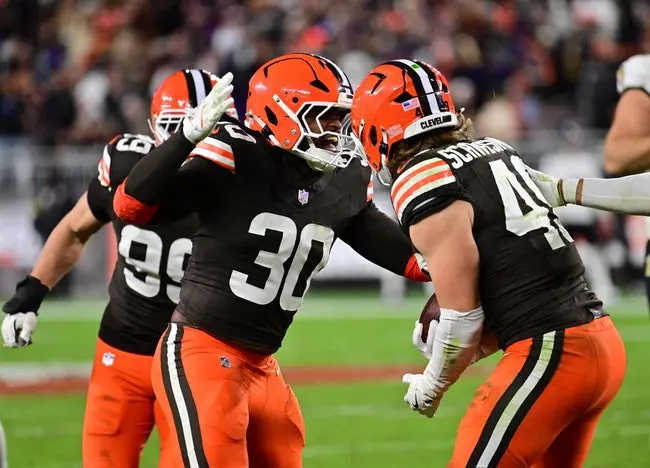
The Browns’ defense presents the game’s most compelling statistical advantage, allowing just 4.7 yards per play (5th in NFL) and generating pressure on 28% of opponent dropbacks. Myles Garrett has 15 sacks through 10 games, maintaining elite production despite double-team rates exceeding 65%. Las Vegas allows 5.8 yards per play but has tightened considerably in recent weeks, permitting just 18 points per game over their last three contests.
Special Teams Impact Assessment:
Field goal accuracy becomes paramount in a projected low-scoring affair. Cleveland’s Dustin Hopkins has connected on 84% of attempts this season but struggles from 45+ yards (2-of-6). Las Vegas kicker Daniel Carlson has been more reliable from distance (7-of-9 from 40+), providing a subtle but significant advantage in a game where field goals may determine the outcome.
The key efficiency edge lies in Cleveland’s red zone defense, which has held opponents to just 52% touchdown conversion this season (7th in NFL). Las Vegas has struggled in the red zone, converting only 47% of their opportunities into touchdowns (23rd in NFL). In games with totals under 38 points, red zone efficiency often determines the final outcome and point spread coverage.
Key Player Impact & Injury Analysis
Critical Personnel Situations:
Shedeur Sanders’ inexperience represents the game’s most significant variable. His 25% completion rate and 2.9 yards per attempt in limited action suggest the stage may be too large for his NFL debut as a starter. However, Sanders did complete 6-of-8 passes on designed rollouts and bootlegs, indicating mobility could neutralize Las Vegas’ pass rush.
Myles Garrett’s pursuit of the single-season sack record adds motivation and focus to Cleveland’s defensive attack. Garrett has recorded at least one sack in eight of 10 games, with his 15 total sacks putting him on pace for 25.5. Las Vegas’ offensive line has allowed 31 sacks this season, ranking 24th in pass protection efficiency.
Running back Ashton Jeanty’s development continues for Las Vegas, with the rookie averaging 3.8 yards per carry but showing improvement in pass protection. Cleveland’s run defense allows 106.5 yards per game but has been vulnerable to receiving backs, surrendering 8.2 yards per target to the position.
Venue Factor & Environmental Analysis
Stadium Dynamics:
Allegiant Stadium’s dome environment eliminates weather variables but can amplify crowd noise for inexperienced quarterbacks. Sanders will face his first hostile crowd as an NFL starter, with Las Vegas fans eager to support their struggling team. The artificial surface favors speed over power, potentially benefiting Cleveland’s smaller, quicker receivers in short-route concepts.
Las Vegas is 1-4 at home this season but has covered the spread in three of those games, suggesting competitive efforts despite losses. The Raiders have averaged 18.2 points per game at Allegiant Stadium, well below their road scoring average of 21.8 points per game.
Bryan Bash’s Multi-Angle Strategy
Primary Investment: Cleveland Browns +3.5 (-110) – 3% of Bankroll
The sharp money backing Las Vegas appears to be overvaluing home field advantage and undervaluing Cleveland’s defensive capabilities. Sanders’ inexperience is priced into the line, but the Browns’ ground game and defense provide multiple paths to covering. Cleveland’s strong preparation and effort in difficult spots under Stefanski indicates strong preparation in this spot. Las Vegas has failed to cover four straight games, with their offense averaging just 14 points per game during this stretch.
High-Value Alternative: Under 36.5 (-110) – 2.5% of Bankroll
The total drop from 37.5 to 36.5 against public action represents clear sharp money indication. Both teams rank bottom-10 in red zone efficiency, with Cleveland’s offensive limitations magnified by Sanders’ inexperience. Weather won’t be a factor, but offensive line play heavily favors the defensive fronts. Professional money is expecting a possession-based affair with limited scoring opportunities.
Player Props Portfolio:
Shedeur Sanders Under 185.5 Passing Yards (-115) – 1.5% allocation: His NFL debut showed clear limitations, and Las Vegas’ defense will gameplan specifically for a rookie making his first start.
Myles Garrett Over 0.5 Sacks (-140) – 1.5% allocation: Las Vegas has allowed multiple sacks in eight of 10 games, and Garrett’s record chase provides additional motivation.
Quinshon Judkins Over 65.5 Rushing Yards (-110) – 1% allocation: Cleveland will lean heavily on ground game to support Sanders, with Judkins seeing 18+ carries in a game-script that favors ball control.
Live Betting Strategy:
Monitor first-quarter scoring patterns, as teams combining to score under 7 points in the opening frame will likely stay under the total. If Cleveland falls behind by 10+ points, consider live under betting as Sanders’ inexperience will force quicker possessions and potential turnovers that shorten the game. Halftime adjustments favor Cleveland’s coaching staff, making second-half spread value possible if trailing at intermission.
The sharp money is clearly indicating value on Cleveland +3.5, and the analytical foundation supports this assessment completely. Sanders’ inexperience is already factored into the market price, while Las Vegas’ offensive struggles remain undervalued by recreational bettors. However, NFL volatility requires disciplined bankroll management. We’re recommending 3% of bankroll on the primary play, with the under representing exceptional value at 2.5% allocation. The key is identifying spots where the market has mispriced probability based on narrative rather than statistical reality.