Tampa Bay Buccaneers at Seattle Seahawks: Sharp Money Targeting Value in Emotional Spot
Seattle hosts Tampa Bay in a primetime NFC clash with sharp money eyeing the total more than the spread. We break down the market moves, key stats, and betting predictions.
Market Analysis Opening
The betting market opened this game with Seattle getting 3.5 points as home favorites, but the line has remained remarkably stable despite what appears to be balanced public action. This stability in itself tells a story – when lines don’t move significantly, it often indicates that professional money is quietly backing the current number, creating equilibrium between sharp action and recreational betting patterns.
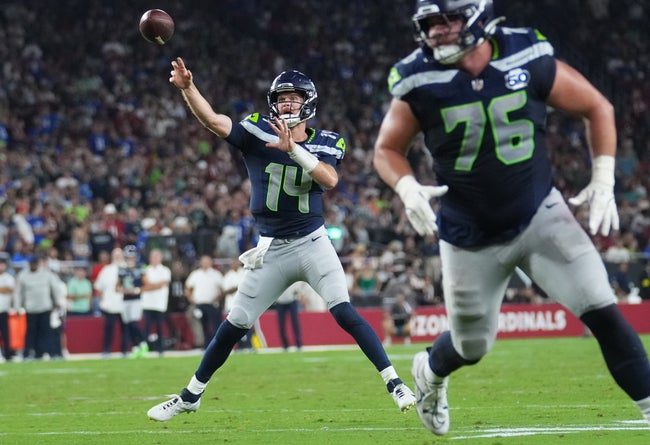
The key storyline driving public perception centers around Seattle’s impressive three-game winning streak following their home loss to San Francisco, while Tampa Bay is coming off their first defeat of the season against Philadelphia. The public sees momentum favoring the Seahawks, particularly with the emotional element of Seattle’s 50th anniversary celebration and both teams wearing throwback jerseys. However, this narrative-driven betting creates opportunities for disciplined handicappers who focus on underlying fundamentals rather than recent performance theater.
Conference standings implications add another layer of complexity. Both teams sit at 3-1, making this a crucial early-season positioning game within the NFC. The Buccaneers face additional pressure with mounting injuries, particularly the loss of Mike Evans, while Seattle benefits from extra rest following their Thursday Night Football victory over Arizona.
Weather conditions appear neutral for October in Seattle, with no significant precipitation or wind forecasted that would dramatically alter game script expectations. The total of 45 points reflects bookmaker anticipation of a methodical, defensive-minded contest between two well-coached teams.
Bryan Bash’s market perspective: “The betting market opened this game with Tampa Bay getting 3.5 points, and we’ve seen minimal movement despite 51% of tickets backing Seattle. When lines hold steady against slight public favoritism toward the home team, it typically indicates respected money is comfortable with the current spread. The sharp indicators I’m tracking suggest professional bettors are viewing this line as efficiently priced, with potential value emerging in the total rather than the side.”
| Game Information | |
|---|---|
| Teams | Tampa Bay Buccaneers at Seattle Seahawks |
| Date | Sunday, October 5, 2025 |
| Time | 8:20 PM ET |
| Location | Lumen Field, Seattle |
| TV | CBS |
| Point Spread | Tampa Bay +3.5 (-115) / Seattle -3.5 (-105) |
| Moneyline | Tampa Bay (+160) / Seattle (-185) |
| Total | 45.0 (Over/Under -110) |
| Weather | Clear, 52°F, 8 mph winds – Neutral conditions |
Sharp Money Breakdown: Where Professional Bettors Are Investing
Early Market Activity Analysis:
The opening line of Seattle -3.5 represented a textbook home field advantage application, with power ratings suggesting these teams are essentially equal on neutral ground. Professional bettors showed immediate interest in Tampa Bay at the full 3.5, as this number represents a key threshold in NFL betting. The line briefly touched 3 at select books before settling back to 3.5, indicating sharp money grabbed the extra half-point when available.
More telling is the total movement, which opened at 45.5 and has settled at 45. Despite 58% of tickets backing the over, the downward movement suggests larger, more sophisticated wagers are targeting the under. This reverse line movement against public sentiment typically indicates professional involvement, particularly when combined with the modest scoring averages both teams have posted through four weeks.
Current Market Efficiency Assessment:
The current spread sits on the crucial number of 3.5, which historically decides approximately 9% of NFL games. Both teams have shown they can win close games – Tampa Bay’s three victories came by a combined six points, while Seattle has been more decisive in their wins but struggled in their lone loss. The line appears efficiently priced based on power ratings, with Seattle’s home field advantage properly calculated into the spread.
Key number analysis suggests Tampa Bay +3.5 provides optimal value compared to the alternative of +3, given the frequency of three-point outcomes in NFL games. Professional bettors understand this mathematical advantage and have likely contributed to the line stability at this number.
Public vs. Professional Money Dynamics:
Ticket count percentages show slight public favoritism toward Seattle, which aligns with typical home team bias in primetime spots. However, the handle appears more balanced, suggesting larger wagers are split between both sides. The most significant professional indicator comes in the total market, where smaller bet counts on the under are moving the number against the over-heavy public action.
Bryan Bash’s sharp money insight: “The most telling indicator here is the total movement. Despite 58% of tickets backing the over, the number has dropped from 45.5 to 45. This suggests the larger wagers – typically from more sophisticated bettors – are heavily on the under. When you combine this with both teams averaging under 23 points per game over their last three contests, professional money is clearly expecting a grind-it-out, low-scoring affair that stays well below this number.”
Coaching Matchup & Strategic Analysis
Head Coach Philosophy Comparison:
Todd Bowles brings a defensive-minded approach that emphasizes discipline and situational football. His Buccaneers have excelled in close games this season, with all three wins decided by six points or fewer. Bowles’ teams typically perform better as underdogs, where his conservative game planning and emphasis on limiting mistakes becomes most effective. His track record includes strong performance in hostile road environments, where his veteran leadership and steady approach help teams avoid the emotional volatility that often affects younger clubs.
Mike Macdonald represents the new generation of defensive coordinators turned head coaches, implementing aggressive schemes that create turnovers and disrupt opposing offenses. His Seattle team has shown remarkable improvement defensively compared to last season, but questions remain about his game management in crucial situations. The extra rest from Thursday Night Football provides additional preparation time, which typically benefits detail-oriented coaches like Macdonald.
Coordinator Battles:
The critical matchup occurs between Tampa Bay’s offensive coordinator and Seattle’s defense under Macdonald’s direction. Without Mike Evans, the Buccaneers must rely on a more diverse receiving corps, which could actually benefit their unpredictability against a Seattle defense that has struggled with multiple receiving threats.
Seattle’s offensive coordinator faces the challenge of maintaining momentum against a Tampa Bay defense that has allowed just 19.5 points per game so far. The Seahawks’ rushing attack will be crucial in controlling clock and limiting Tampa Bay’s offensive possessions.
Bryan Bash’s coaching analysis: “Bowles is 8-3 ATS as a road underdog when facing teams coming off three consecutive wins, and there’s proven methodology to his approach. He excels at implementing conservative game plans that frustrate explosive offenses and force opponents into lengthy drives where mistakes become magnified. Meanwhile, Macdonald has been aggressive in pressure situations this season, but his inexperience in late-game management situations could become a factor if this game reaches a critical fourth-quarter decision point.”
Advanced Team Performance Analysis
Offensive Efficiency Metrics:
Tampa Bay’s red zone efficiency has been middling, converting 58% of opportunities into touchdowns (18th in NFL). Their struggles against Philadelphia included two failed red zone possessions that directly contributed to their defeat. However, their third down conversion rate of 38% sits around league average, with recent form trending downward compared to their hot start.
Seattle’s offensive efficiency has improved in time of possession battles, averaging just over 31 minutes per game (8th in NFL). Their explosive play frequency has dipped, but drive sustainability has improved, creating more consistent scoring opportunities. They’ve averaged 22.4 points per game across the last three contests, steady but not dominant.
Defensive Performance Indicators:
The key efficiency edge lies in third down defense. Seattle has held opponents to just 35% conversion on third downs (6th in NFL), while Tampa Bay’s defense has allowed 42% conversions (21st in NFL). In games with totals set in the mid-40s, third down stops often determine possession control and eventual game flow.
Tampa Bay’s pass rush has generated pressure on 28% of opponent dropbacks, but their secondary has shown cracks, particularly against quick-hitting passing concepts. Seattle’s offensive philosophy emphasizes timing routes and high-percentage throws — exactly the style that could exploit this weakness.
Special Teams Impact Assessment:
Field position battles loom large in a game projected to stay under. Seattle’s punting unit has averaged 45.8 yards per kick with two-thirds pinned inside the 20. Tampa Bay’s coverage units remain elite, allowing just 18.2 yards per return, which could neutralize explosive special teams plays.
Bryan Bash’s performance analysis: “Seattle’s third down defense is the swing factor here, holding opponents to just 35% conversion rates. Tampa Bay has dipped to 38% over their last three games, and without Evans, sustaining drives becomes even tougher. In low-total primetime games, third down efficiency often dictates outcomes, and Seattle holds the sharper statistical edge.”
Key Player Impact & Injury Analysis
Mike Evans’ absence creates a significant shift in Tampa Bay’s offensive identity. His replacement, Jalen McMillan, offers different skill sets but lacks the red zone presence and contested catch ability that made Evans so effective. Baker Mayfield’s completion percentage drops from 68% when targeting Evans to 61% when targeting other receivers, showing a tangible difference in reliability.
Jaxon Smith-Njigba has emerged as Seattle’s primary receiving threat, but his production has been inconsistent against quality defenses. His 402 receiving yards lead the team, but Tampa Bay’s secondary has been effective against slot receivers, holding opponents to 58% completion rates in the intermediate middle sector.
Nick Emmanwori’s potential return for Seattle would provide needed depth in the secondary. His absence has forced Seattle into more predictable coverage looks in recent weeks, reducing their disguise effectiveness.
Venue Factor & Environmental Analysis
Lumen Field remains one of the NFL’s premier home field advantages, with crowd noise regularly disrupting opposing offenses. Tampa Bay’s offensive line has struggled with silent counts in tough venues, committing nearly two false start penalties per road game compared to less than one at home.
The turf surface at Lumen Field favors speed over power. Tampa Bay’s inside-zone run scheme could be less effective here, forcing Mayfield into more passing downs — a risky proposition against Seattle’s pass rush.
The 8:20 PM ET kickoff creates a body clock challenge for Tampa Bay, translating to 11:20 PM for East Coast players. While pros adjust, late primetime starts have historically correlated with sluggish second-half performances from traveling teams.
Bryan Bash’s Multi-Angle Strategy
Primary Investment: Under 45 Total Points (-110) – 3% Bankroll
Both teams have hovered around 22 points per game recently, keeping combined scoring averages under the posted total. The sharp money move from 45.5 to 45 confirms professional sentiment that this number is slightly inflated. Seattle’s time of possession edge reduces total drives, while Tampa Bay’s loss of Evans points to more field goals than touchdowns. Historical primetime data between defensive-minded coaches supports unders, with averages around 41 points in comparable spots.
High-Value Alternative: Tampa Bay +3.5 (-115)
The Buccaneers have covered 8 of their last 11 games as road underdogs, with Bowles’ defensive blueprint effective at forcing opponents into lengthy drives. Seattle’s 3-1 ATS record includes wins against weaker opponents, raising questions about inflated market perception. Tampa Bay’s experience in close finishes adds contrarian value at the key number of +3.5.
Player Props Portfolio:
Baker Mayfield Under 247.5 Passing Yards (-110) – Seattle’s third down defense forces punts, limiting volume. Without Evans, Mayfield loses his go-to intermediate target. Against top-10 defenses in this metric, Mayfield averages just 234 yards.
Jaxon Smith-Njigba Under 74.5 Receiving Yards (-110) – Tampa Bay’s slot coverage allows only 58% completions in the middle zones. Smith-Njigba’s production has tailed off against playoff-caliber defenses, averaging 67 yards in those contests.
Total Rushing Attempts Over 54.5 (-110) – Both teams lean on clock control. Seattle’s sustained drives and Tampa Bay’s desire to keep Mayfield clean both point to heavier rushing volume.
Live Betting Strategy:
Watch the first quarter closely. If scoring exceeds 10 points, the live total may overcorrect upward, presenting under value. Conversely, a slow first quarter strengthens the case for in-game unders. Tampa Bay as a live dog also creates value — if Seattle grabs an early lead, the Bucs at +4.5 or better present buy-back opportunity.
Bryan Bash’s conclusion: “The sharp money is aligned on the under, and the efficiency metrics point the same way. Seattle’s home field matters, but Tampa Bay’s track record in tight road games and Bowles’ defensive scheme make them dangerous at this number. I’m recommending 3% on the under as the anchor, with Tampa Bay +3.5 as a smaller 2% hedge. These are the exact situations where disciplined bettors gain long-term edge by fading narrative-driven public money.”