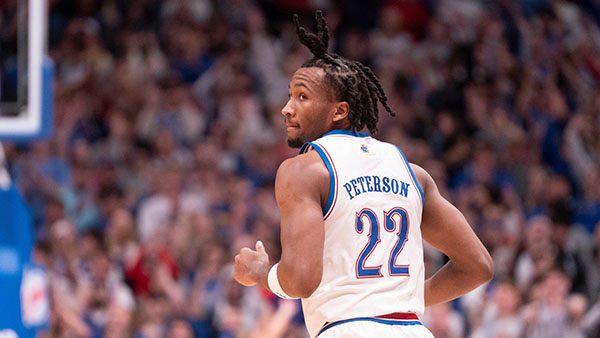
It’s a rare treat for college hoops fans as the projected top two picks in the 2026 NBA Draft go head-to-head at Allen Fieldhouse. Our preview breaks down whether BYU’s AJ Dybantsa can outduel Darryn Peterson and help the Cougars secure a massive ATS pick on the road.
The Setup: BYU at Kansas
Kansas is laying 4.5 points at Allen Fieldhouse against BYU, and this line tells you everything about how the market views these two Big 12 contenders. The Cougars roll in at 7-1 with the 9th-ranked offensive rating in the country at 139.8, while Kansas sits at 7-3 with a suffocating defense that ranks 8th nationally in adjusted defensive efficiency at 95.1. When you dig into the collegebasketballdata.com numbers, this isn’t just another conference matchup—it’s a legitimate clash of styles that should tell us whether elite offense or elite defense wins the day in Lawrence.
Here’s my thesis: This spread undervalues Kansas’ defensive dominance at home and BYU’s inability to crash the offensive glass. The Cougars rank 324th in offensive rebounding percentage at just 26.7%, and when you can’t generate second chances against a team that blocks 6.4 shots per game (6th nationally), you better hope your first looks are falling. Kansas doesn’t give you many of those.
Game Info & Betting Lines
Game: BYU @ Kansas
Date: January 31, 2026
Time: 4:30 PM ET
Venue: Allen Fieldhouse, Lawrence, KS
Spread: Kansas -4.5
Total: 158.5-159.5
Records: BYU 7-1, Kansas 7-3
Why This Number Makes Sense (or Doesn’t)
The 4.5-point spread reflects respect for BYU’s offensive firepower, but it doesn’t fully account for the pace and defensive environment this game will be played in. BYU operates at a glacial 60.9 possessions per game, ranking 340th nationally in pace. Kansas isn’t exactly running and gunning either at 66.9 (244th), but that six-possession difference matters when you’re projecting final scores.
Let’s do the math on adjusted efficiency. BYU’s adjusted offensive efficiency sits at 120.0 (21st) against Kansas’ adjusted defensive efficiency of 95.1 (8th). That’s a significant gap. On the flip side, Kansas’ adjusted offensive efficiency of 115.2 (63rd) faces BYU’s adjusted defensive efficiency of 98.4 (31st). The Jayhawks have the clear defensive advantage, while BYU holds a modest edge offensively when you adjust for competition.
The total sitting around 159 makes sense given the pace, but here’s where it gets interesting—BYU’s last five games have averaged 83.2 points per game in a conference that plays faster than this matchup suggests. Kansas has been holding opponents to 63.7 points per game (16th nationally). Something’s gotta give, and I’m betting on the defense in Allen Fieldhouse.
BYU Breakdown: The Analytical Edge
The Cougars are legitimately elite on offense, and it starts with their three-headed monster. AJ Dybantsa leads at 19.4 points per game (49th nationally), Richie Saunders adds 19.1 (53rd), and Robert Wright III contributes 17.0 (137th) while serving as the primary facilitator at 6.1 assists per game (19th). That’s balanced, efficient scoring—they’re shooting 49.5% from the field (47th) and 37.4% from three (46th).
BYU’s true shooting percentage of 60.5% (50th) tells you they’re getting quality looks and converting them. Their effective field goal percentage of 57.0% ranks 42nd nationally, which is outstanding. They also take care of the ball beautifully, turning it over just 9.6 times per game (22nd). In a slow-paced game, that discipline matters.
The problem? They’re getting absolutely destroyed on the defensive glass and can’t protect the rim. That 26.7% offensive rebounding rate is bottom-50 nationally, and they’re blocking just 4.0 shots per game (105th). Against Kansas’ length and athleticism, those weaknesses get exposed.
Kansas Breakdown: The Counterpoint
Kansas doesn’t blow you away offensively—they rank 245th in scoring at 74.6 points per game—but they absolutely suffocate you on defense. Opponents are shooting just 37.5% from the field (16th) and an absurd 24.9% from three-point range (6th). That perimeter defense is elite, and BYU lives on the perimeter.
Darryn Peterson leads the Jayhawks at 20.0 points per game, while Flory Bidunga provides interior presence with 14.7 points and 9.0 rebounds (44th nationally). Tre White adds 14.3 points and 7.1 boards, giving Kansas legitimate size and athleticism across the frontline. That matters when BYU can’t crash the glass.
The Jayhawks’ defensive rating of 95.5 (37th) is solid, but their adjusted defensive efficiency of 95.1 (8th) shows they’re even better when you account for competition. They’re holding teams to 63.7 points per game in an era where everyone’s trying to push pace. In Allen Fieldhouse, that defense becomes even more suffocating.
The Matchup: Where This Gets Decided
This game comes down to whether BYU can maintain their offensive efficiency against elite perimeter defense in a hostile environment. The Cougars are 9th in offensive rating at 139.8, but that number drops significantly when they face top-30 adjusted defenses. Kansas ranks 8th in adjusted defensive efficiency, and they’re particularly stingy on the three-point line.
BYU’s recent results tell the story—they lost to Arizona 83-86 and got throttled at Texas Tech 71-84. Those are their only two losses, and both came against teams that could match their offensive firepower and defend the perimeter. Kansas fits that profile perfectly, except they’re even better defensively than either of those teams.
The pace factor can’t be ignored. BYU wants to grind you down at 60.9 possessions per game, but Kansas is comfortable in that environment. The Jayhawks have won four straight, including an 86-62 demolition of Kansas State and an 84-63 beatdown of Iowa State. They’re peaking at the right time, and Allen Fieldhouse remains one of the toughest venues in college basketball.
Kansas’ ability to block shots (6.4 per game, 6th nationally) directly counters BYU’s inability to generate second chances. When the Cougars miss—and they will against this perimeter defense—they’re not getting offensive rebounds at 26.7% (324th). That’s a death sentence in a low-possession game.
Bash’s Best Bet
Kansas -4.5
I’m laying the points with Kansas at home. BYU’s offensive efficiency is impressive, but it’s built on getting clean looks from three and taking care of the basketball. Kansas defends the three-point line better than almost anyone in the country at 24.9% (6th), and they have the rim protection to deter drives. The Cougars can’t offset missed shots with offensive rebounds, and in a game projected for 75-80 possessions, every miss matters.
Allen Fieldhouse is worth at least 3-4 points, and Kansas is playing their best basketball of the season. BYU’s two losses came against teams that could defend and score—Kansas checks both boxes. Give me the Jayhawks to win by 7-9 in a game that stays under the total. This is what elite home-court defense looks like against a team that can’t generate second chances.