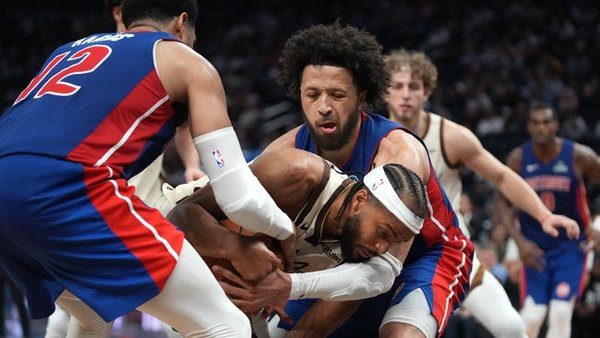
The East-leading Pistons host a Brooklyn squad that just found its rhythm in Utah, but the double-digit line at Little Caesars Arena suggests a massive talent gap. Bash breaks down the efficiency metrics to find a winning prediction for Sunday night.
The Setup: Brooklyn Nets at Detroit Pistons
Detroit lays 13 at home against a Brooklyn squad that just snapped a seven-game skid in Utah. The Pistons are 35-12 and sitting first in the East. The Nets are 13-34 and missing rotation pieces. This number screams mismatch, and for good reason—Detroit’s been one of the league’s best home teams at 18-5, while Brooklyn sits 7-17 on the road. But the spread isn’t just about talent disparity. It’s about how many possessions this game generates and whether Brooklyn’s offensive ceiling—led by Michael Porter Jr. averaging 25.6 points per game—can keep them within striking distance when the pace dictates margin. The line exists because Detroit controls tempo, plays elite defense, and has Cade Cunningham orchestrating everything at 9.7 assists per game. Brooklyn’s counter? They just watched Egor Demin go 6-for-12 from deep and set an NBA rookie record with his 34th straight game with a three-pointer. That kind of variance matters in a game where the Nets need every possession to count.
Game Info & Betting Lines
Brooklyn Nets (13-34) at Detroit Pistons (35-12)
Date: Sunday, February 1, 2026
Time: 6:00 ET
Venue: Little Caesars Arena
TV: Home: FanDuel SN DET | Away: NBA League Pass, YES
Current Betting Lines (MyBookie.ag):
- Spread: Nets +13.0 (-110) | Pistons -13.0 (-110)
- Moneyline: Nets +538 | Pistons -833
- Total: Over 215.5 (-110) | Under 215.5 (-110)
Why This Line Exists
Thirteen points at home reflects Detroit’s dominance and Brooklyn’s injury situation. The Pistons rank first in the East for a reason—Cunningham is probable despite hip soreness and just dropped 29 points with 11 assists on Golden State. Jalen Duren anchors the paint at 18.0 points and 10.7 rebounds per game. Tobias Harris adds 13.7 points as a third scoring option. That’s a complete offensive structure with a point guard who facilitates at an elite level and bigs who finish efficiently around the rim. Brooklyn counters with Porter Jr. at 25.6 per game, but they’re without Noah Clowney (lower back) and Ziaire Williams (left calf contusion). Cam Thomas chips in 16.1 points per game, but the depth chart thins quickly after that. The market priced in Brooklyn’s recent win over Utah—Demin’s 25 points and 10 rebounds showed they can still generate offense when the perimeter gets hot. But one win after seven straight losses doesn’t erase structural problems. Detroit’s 18-5 home mark tells you they protect Little Caesars Arena. Brooklyn’s 7-17 road record tells you they struggle away from Barclays. The line accounts for talent, depth, and home-court advantage. What it doesn’t fully account for is how many possessions this game produces and whether Brooklyn can exploit transition opportunities.
Brooklyn Nets Breakdown: What You Need to Know
The Nets live and die by perimeter shooting. Porter Jr. leads the way at 25.6 points per game, and when Demin catches fire—like his 6-of-12 performance from deep in Utah—they can hang around. Thomas provides secondary scoring at 16.1 per game, but his assist rate sits at just 3.1, meaning he’s not creating for others consistently. The problem is depth. Clowney’s absence removes 13.1 points and 4.3 rebounds from the rotation. Williams being out eliminates another body who can defend on the wing. The Nets are down to a thin seven or eight-man rotation, and that matters in a game where Detroit will push pace when they have transition opportunities. Brooklyn’s 7-17 road split isn’t just about talent—it’s about how they defend away from home. They don’t have the size to match up with Duren in the paint, and they don’t have the perimeter defenders to contain Cunningham when he’s running pick-and-roll. The Utah win showed they can score when the threes fall, but relying on volume shooting against a disciplined defensive team is a low-percentage strategy.
Detroit Pistons Breakdown: The Other Side
Detroit’s structure starts with Cunningham, who’s averaging 25.4 points and 9.7 assists while shooting efficiently. He’s probable with hip soreness, but he’s played through it and dropped 23.6 points and 9.6 assists over his last five games. Duren gives them interior presence at 18.0 points and 10.7 rebounds per game—he’s a lob threat and offensive rebounder who punishes smaller lineups. Harris adds 13.7 points as a veteran scorer who can operate in the mid-range. The Pistons’ 35-12 record isn’t a fluke. They control tempo, defend without fouling, and execute in half-court sets. Their 18-5 home mark reflects how well they protect their building. Caris LeVert is questionable after missing six straight, but Detroit’s been leaning on Daniss Jenkins in his absence. The depth chart is deep enough that one injury doesn’t crater the rotation. Tolu Smith is also questionable, but with Duren likely available, the frontcourt remains intact. Detroit’s advantage is structural—they have multiple scoring options, a facilitator who creates easy looks, and the defensive discipline to limit Brooklyn’s transition opportunities.
The Matchup: Where This Game Gets Decided
This game gets decided in half-court execution and how many possessions Brooklyn can generate. Detroit wants to control pace, run sets through Cunningham, and force Brooklyn into contested threes. The Pistons will exploit the paint—Duren against a Nets frontcourt that’s missing Clowney and lacks rim protection. Brooklyn needs to push tempo off makes and misses, get out in transition, and hunt threes before Detroit’s defense can set. The problem is Detroit doesn’t turn the ball over at high rates, and they defend the perimeter well enough to contest Brooklyn’s volume shooting. The total sits at 215.5, which suggests the market expects a controlled game. If Detroit dictates pace and limits Brooklyn to 95-100 possessions, the Nets don’t have the half-court firepower to stay within 13 without elite shooting. Porter Jr. and Demin need to combine for 50-plus points, and that’s asking a lot against a disciplined defense. The other factor is free throws—Detroit gets to the line and converts, while Brooklyn relies on jump shots. Over the course of 100 possessions, that free-throw discrepancy adds up to five or six points, which matters when you’re trying to cover a double-digit spread.
Bash’s Best Bet & The Play
I’m laying the 13 with Detroit. Brooklyn’s win in Utah was a nice story—Demin’s streak continues, they snapped a seven-game slide—but that doesn’t change the structural mismatch here. The Nets are missing Clowney and Williams, they’re 7-17 on the road, and they’re facing a Pistons team that’s 18-5 at home with Cunningham running the show. Detroit has the talent advantage, the depth advantage, and the home-court advantage. The pace favors them because they control tempo and force Brooklyn into half-court sets where the Nets don’t have the personnel to execute consistently. The total at 215.5 suggests a controlled game, and if Detroit keeps this around 105-110 possessions, Brooklyn needs to shoot lights-out to cover. I don’t trust their perimeter shooting enough to bank on that. The risk is Brooklyn getting hot from three and staying within 10-12, but even then, Detroit has the closing ability to extend late. Cunningham’s probable, Duren’s healthy, and the Pistons are protecting their home court. Thirteen points isn’t a gift—it’s the market telling you what this matchup looks like when you account for talent, depth, and execution.
BASH’S BEST BET: Detroit Pistons -13.0 for 2 units.