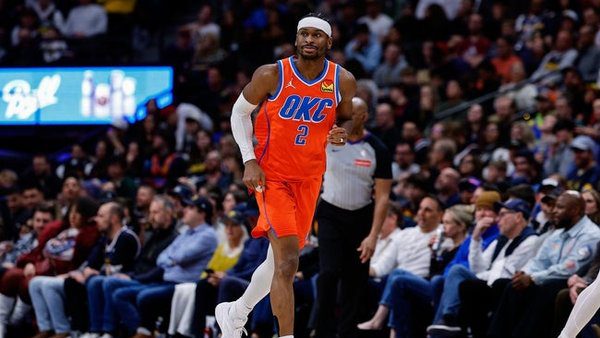
Expert handicapper Bash examines the “rotation math” for Tuesday’s showdown. This prediction focuses on Orlando’s 25th-ranked shooting efficiency and whether the Thunder’s league-leading offense can pull away early.
The Setup: Orlando Magic at Oklahoma City Thunder
The Thunder are laying 6.5 points at home against an Orlando squad that’s been gutted by injury. Oklahoma City sits at 39-11 and ranks first in the Western Conference, while the Magic limp in at 25-23 without Franz Wagner for the seventh straight game. That ankle sprain has limited Wagner to just two appearances over Orlando’s past 24 contests, and the absence shows in their efficiency profile. The spread reflects what happens when a top-tier offense faces a depleted rotation that’s lost its second-leading scorer. Shai Gilgeous-Alexander just dropped 34 points with 13 assists in Denver, and now he gets a Magic defense that’s been scrambling to replace Wagner’s two-way impact. This number sits at 6.5 because the market respects Orlando’s defensive identity, but the math tells a different story when you account for usage redistribution and pace advantages.
Game Info & Betting Lines
When: Tuesday, February 3, 2026, 8:00 ET
Where: Paycom Center
Watch: Home: FanDuel SN OK | Away: NBA League Pass, FanDuel SN FL
Current Betting Lines (MyBookie.ag):
- Spread: Oklahoma City Thunder -6.5 (-110) | Orlando Magic +6.5 (-110)
- Moneyline: Thunder -244 | Magic +196
- Total: Over/Under 219.5 (-110)
Why This Line Exists
The Thunder are 21-4 at home and just beat Denver on the road behind Gilgeous-Alexander’s 34 points and Cason Wallace’s career-high 27. They hit 19 threes in that game, and Wallace alone knocked down seven. That’s the offensive firepower that makes Oklahoma City dangerous—when SGA creates, the role players get clean looks. The Magic counter with a 10-13 road record and a rotation that’s been forced to lean harder on Paolo Banchero and Desmond Bane without Wagner’s 22.2 points per game. Banchero averages 21.7 points and 8.8 rebounds, but asking him to shoulder more usage against a Thunder defense that thrives on length and switching creates efficiency problems.
The total sits at 219.5 because Oklahoma City pushes pace when they have transition opportunities, and Orlando’s defensive structure has kept them competitive even while shorthanded. But the spread at 6.5 accounts for the talent gap and home-court advantage. The Thunder rank first in the conference for a reason—they defend at an elite level and have multiple creators who can exploit mismatches. Orlando’s eighth-place standing in the East reflects a team that competes hard but lacks the depth to hang with top-tier opponents over 48 minutes, especially on the road.
Orlando Magic Breakdown: What You Need to Know
The Magic are trying to stay afloat without their second-leading scorer, and it’s created a usage crunch. Banchero at 21.7 points and 8.8 rebounds remains their primary offensive hub, but he’s not a high-volume three-point shooter, which limits floor spacing. Desmond Bane provides perimeter scoring at 19.4 points per game, but he’s been asked to do more playmaking with Wagner sidelined. That’s not his natural role, and it shows in Orlando’s half-court execution against elite defenses.
The Magic just lost to San Antonio 112-103 despite Victor Wembanyama’s 25 points, eight rebounds, and five blocks. That game started five hours late due to travel issues, which adds context to Orlando’s fatigue level heading into this spot. They’re 10-13 on the road, and their offensive efficiency drops when they can’t control pace or get out in transition. Against a Thunder team that defends the paint with length and rotates aggressively on the perimeter, Orlando’s going to struggle to generate clean looks without Wagner’s ability to attack closeouts and create for others.
Oklahoma City Thunder Breakdown: The Other Side
Shai Gilgeous-Alexander is averaging 32.0 points, 6.4 assists, and 4.4 rebounds, and he’s the engine that makes this offense hum. He had 13 assists against Denver, which tells you everything about how defenses are loading up to stop his scoring. When SGA draws two defenders, shooters like Wallace get open looks, and the Thunder just proved they can knock them down at volume. Chet Holmgren at 17.7 points and 8.5 rebounds provides rim protection and floor spacing, though Jalen Williams’ absence with an undisclosed injury removes another playmaking option.
The Thunder are 21-4 at home, and that’s not just about talent—it’s about how they control pace and force opponents into uncomfortable possessions. They had lost three of four before beating Denver, but that win showed they’re back in rhythm. Wallace’s career-high 27 points gives them another scoring threat beyond SGA, and that depth matters against a Magic team that’s thin on the wing. Oklahoma City’s ability to switch defensively and contest shots at the rim creates problems for Banchero, who needs space to operate in the post and on drives.
The Matchup: Where This Game Gets Decided
This game comes down to offensive efficiency and how Orlando handles Oklahoma City’s defensive versatility. The Thunder can throw multiple bodies at Banchero and force him into tough finishes, while SGA operates against a Magic defense that’s missing Wagner’s length on the perimeter. That’s a massive mismatch when you consider usage rates and shot quality. Gilgeous-Alexander’s ability to create for himself and others means the Thunder can generate clean looks even when Orlando loads up defensively.
The total at 219.5 suggests a game that stays in the mid-110s for the winner, but Oklahoma City’s home splits and recent offensive output against Denver indicate they can push past 115 if they get out in transition. Orlando’s road struggles and depleted rotation make it hard to see them matching that pace over four quarters. The Magic are 14-8 at home but 10-13 on the road, and that split matters when you’re facing the conference’s top team in their building.
The Thunder’s 19 three-pointers against Denver came on good ball movement and open looks created by SGA’s penetration. If they replicate that shot selection against Orlando’s perimeter defense, the Magic won’t have the offensive firepower to keep up. Bane and Banchero can get buckets, but they’re not efficient enough without Wagner to sustain scoring runs against a defense that ranks among the league’s best in limiting second-chance opportunities and contesting shots at the rim.
Bash’s Best Bet & The Play
The Thunder at -6.5 feels right when you account for Orlando’s injury situation and road struggles. Wagner’s absence for seven straight games has cratered the Magic’s offensive efficiency, and asking Banchero to carry the load against Oklahoma City’s defensive length is a tough spot. The Thunder are 21-4 at home and just showed they can score in volume against a quality opponent in Denver. SGA’s 34 points and 13 assists in that game demonstrated his ability to create for himself and others, and Wallace’s career night gives them another dimension that Orlando can’t match.
The risk here is Oklahoma City’s tendency to let teams hang around when they build early leads, but the Magic don’t have the offensive firepower to capitalize on those windows without Wagner. The Thunder’s home dominance and depth advantage make this a spot where the better team covers. Orlando’s 10-13 road record and recent loss to San Antonio—compounded by travel delays—suggest they’re not in a position to steal a game in Oklahoma City.
BASH’S BEST BET: Thunder -6.5 for 2 units. The efficiency gap is too wide, and Oklahoma City’s home court gives them the edge they need to cover comfortably.