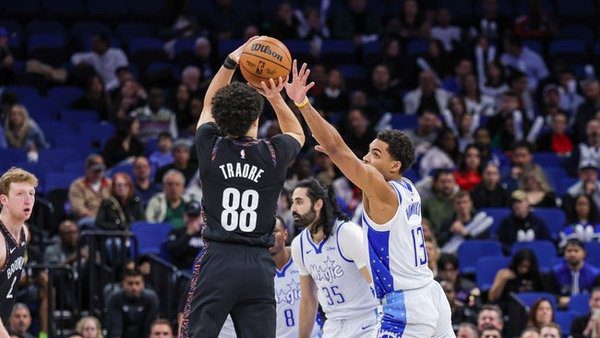
Washington just shocked the East with a win in Detroit while dressing only 10 players. We’re digging into the point spread to see if the Wizards’ gritty momentum makes them the best bet against a Brooklyn team that’s lost eight of its last ten at home.
The Wizards are getting 5 points Saturday afternoon at Barclays Center against a Nets team that’s barely better on paper. Brooklyn sits at -5 at home, and the market is pricing in home court and Michael Porter Jr.’s 25.1 points per game. But when you dig into the season-long numbers, Washington owns edges in nearly every efficiency category that matters—scoring, rebounding, shooting splits, and defensive activity. The Nets are 6-18 at home. The Wizards are 5-19 on the road. This isn’t a clean fade or a sharp-side hammer. It’s a matchup where the dog has legitimate statistical advantages, and 5 points feels like a cushion worth grabbing.
Washington just beat the Eastern Conference-leading Pistons 126-117 on Thursday with a skeleton crew—only 10 players dressed, three on two-way contracts. Will Riley dropped 20, Sharife Cooper added 18, and they found a way to execute without Trae Young or Anthony Davis. Brooklyn, meanwhile, got boat-raced by Orlando 118-98 in a game where they trailed by 20 and never threatened. This is a matchup between two lottery-bound teams, but the statistical profile favors the visitor in ways the spread doesn’t reflect.
Game Info & Betting Lines
Matchup: Washington Wizards at Brooklyn Nets
Date & Time: Saturday, February 7, 2026, 3:00 ET
Location: Barclays Center
TV: YES (Home), NBA League Pass, MNMT (Away)
Current Betting Lines (MyBookie.ag):
Spread: Brooklyn Nets -5.0 (-110) | Washington Wizards +5.0 (-110)
Moneyline: Brooklyn Nets -204 | Washington Wizards +164
Total: Over/Under 219.5 (-110)
Why This Line Exists
Brooklyn is laying 5 at home because the market respects Michael Porter Jr.’s scoring volume and assumes home court matters. Porter is averaging 25.1 points on 47.4% shooting and 38.7% from three—he’s the best player in this game by a mile. The Nets also carry a slightly better plus/minus (-8.0 vs Washington’s -10.2), which gives the oddsmakers a baseline for the spread. But that’s where the Nets’ advantages end.
Washington scores 5.4 more points per game (112.3 vs 106.9), shoots better from the field (45.8% vs 44.2%) and from three (35.6% vs 34.1%), and controls the glass with 3.4 more rebounds per game. The Wizards also generate more defensive activity—7.7 steals and 6 blocks per game compared to Brooklyn’s 7.5 steals and 4.2 blocks. The assist numbers are nearly identical, and both teams turn it over at the same rate (15.6 per game). So the line is built on Porter’s individual dominance and the assumption that Brooklyn’s home floor—where they’re 6-18—somehow tilts this matchup. It doesn’t.
The total sits at 219.5, which feels light given Washington’s 112.3 scoring average and the fact that both teams are bottom-five defensively. But Brooklyn’s offensive struggles (106.9 PPG) drag the number down. The market is pricing in Brooklyn’s inability to score consistently, even at home. That creates a scenario where the spread and total both hinge on whether Porter can carry the Nets offensively while Washington’s depth and efficiency grind out possessions.
Washington Wizards Breakdown: What You Need to Know
The Wizards are operating without Trae Young, Anthony Davis, and Cam Whitmore—all three are done for the season or sidelined long-term. Young is dealing with MCL and quad injuries and won’t debut for at least another month. Davis was traded from Dallas but won’t suit up until 2026-27. Whitmore is out for the season with a venous condition. That’s three rotation pieces gone, and yet Washington just dropped 126 on Detroit with a patchwork roster.
The scoring is distributed across a balanced rotation. Alexandre Sarr is averaging 17.3 points and 7.7 rebounds on 49.6% shooting. KyShawn George adds 15.1 points, 5.5 boards, and 4.9 assists. Tre Johnson chips in 12.9 points and shoots 39.3% from three. The Wizards don’t have a 25-point scorer like Porter, but they have five guys who can get you 12-20 on any given night. That depth matters in a game where Brooklyn’s rotation thins out after Porter, Cam Thomas, and Nicolas Claxton.
Washington’s rebounding edge (43.8 vs 40.4) is real. They grab 11.8 offensive boards per game compared to Brooklyn’s 11, and that extra possession volume adds up over 40-plus minutes. The Wizards also shoot better from everywhere—45.8% overall and 35.6% from three. Those efficiency numbers suggest they can score in the half-court without relying on transition, which is critical against a Nets team that doesn’t defend at a high level.
Brooklyn Nets Breakdown: The Other Side
Brooklyn is 13-37 overall and 6-18 at home, which tells you everything about their ability to protect Barclays Center. They’re a bottom-tier team with one elite scorer and a roster that struggles to generate consistent offense. Porter is averaging 25.1 points and 7.2 rebounds, but after him, the drop-off is steep. Cam Thomas adds 15.6 points on 39.9% shooting and 32.5% from three—he’s a volume scorer who doesn’t move the efficiency needle. Nicolas Claxton contributes 12.2 points, 7.3 boards, and 4 assists, but he’s not a creator.
The Nets score 106.9 points per game, which ranks near the bottom of the league. They shoot 44.2% from the field and 34.1% from three, both worse than Washington’s marks. Brooklyn’s assist numbers (25.2) match the Wizards, but they don’t generate the same quality of looks. The Nets also struggle on the glass—40.4 rebounds per game compared to Washington’s 43.8. That rebounding gap means fewer second-chance opportunities and fewer total possessions, which limits Brooklyn’s ability to overcome their offensive inefficiency.
Defensively, the Nets allow 114.9 points per game based on their -8.0 plus/minus. They don’t force turnovers at a high rate (Washington commits 15.6 per game, same as Brooklyn), and they block fewer shots (4.2 vs Washington’s 6). The Nets are relying on Porter to carry the offensive load while hoping their home crowd provides some intangible lift. But 6-18 at home suggests that crowd isn’t showing up, and the statistical profile doesn’t support a 5-point spread.
The Matchup: Where This Game Gets Decided
This game hinges on whether Porter can outscore Washington’s balanced attack. The Wizards don’t have a single player averaging more than 20 points, but they have five guys who can contribute in double figures on any given night. That depth forces Brooklyn to defend multiple actions and rotations, which they’re not equipped to do. The Nets rank near the bottom in defensive efficiency, and Washington’s 45.8% shooting percentage suggests they’ll find clean looks in the half-court.
The rebounding edge is critical. Washington grabs 3.4 more boards per game, including 0.8 more offensive rebounds. Over 90-plus possessions, that’s an extra 3-4 second-chance opportunities, which translates to 6-8 additional points. Brooklyn can’t afford to give up extra possessions when they’re already struggling to score 107 points per game. The Wizards also shoot better from three (35.6% vs 34.1%), which means they’re more efficient in catch-and-shoot situations and can punish Brooklyn’s rotations.
The assist numbers are nearly identical (Washington 25.4, Brooklyn 25.2), but Washington’s ball movement leads to better shots. The Wizards’ offensive efficiency—measured by their 112.3 scoring average—reflects a team that can execute in structured sets. Brooklyn’s 106.9 scoring average suggests they rely too heavily on Porter’s isolation scoring and Thomas’s volume. That’s not a sustainable formula against a Wizards team that can match Brooklyn’s assist rate while shooting better from everywhere.
The Nets’ home-court advantage is overstated. They’re 6-18 at Barclays Center, which means they lose at home more than 75% of the time. Washington is 5-19 on the road, but their statistical profile—better scoring, rebounding, shooting, and defensive activity—suggests they’re the more efficient team. The spread assumes Brooklyn’s home floor matters, but the season-long data says it doesn’t. The Wizards have the edges that matter, and 5 points is a lot of cushion in a matchup between two bottom-five teams.
Bash’s Best Bet & The Play
The Wizards are the play here. They score more, rebound better, shoot more efficiently, and generate more defensive activity than Brooklyn. The Nets are 6-18 at home, and their offensive struggles (106.9 PPG) make it hard to justify laying 5 points. Porter is elite, but he can’t carry this team against a Wizards squad that just beat Detroit with a skeleton crew. Washington’s depth and efficiency give them multiple ways to stay within this number, and the rebounding edge alone is worth 2-3 possessions per game.
The main risk is Porter going nuclear—if he drops 35-40 on high efficiency, Brooklyn can cover. But even in that scenario, Washington’s balanced attack and rebounding advantage keep them within striking distance. The Wizards don’t need to win outright; they just need to stay competitive, and their statistical profile says they will. Five points is too many in a matchup where the dog owns the efficiency edges.
BASH’S BEST BET: Washington Wizards +5.0 for 2 units.