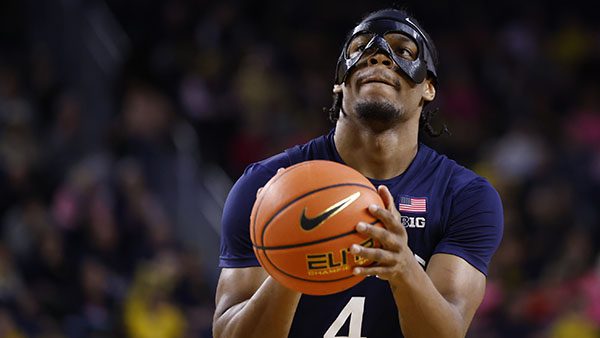
Two 8-1 squads collide in a Big Ten showdown as USC travels to face Penn State at the Bryce Jordan Center. Will the Trojans’ offensive efficiency be the deciding factor, or can the Nittany Lions’ elite ball security fuel a home prediction?
The Setup: USC at Penn State
USC is laying 3.5 points at Penn State in a Big Ten matchup that looks tighter on the surface than it should be. Both teams are 8-1, both teams can score, both teams have won some tight games lately. The market sees a coin flip. I see something different.
When you dig into the collegebasketballdata.com efficiency numbers, USC’s adjusted offensive efficiency of 118.9 ranks 28th nationally, while Penn State sits at 117.1—40th in the country. That’s close enough to warrant respect. But flip to the defensive side, and the gap widens considerably. USC’s adjusted defensive efficiency sits at 105.8, ranking 137th. Penn State? 108.0, good for 181st. Neither team is locking anyone down, but USC is demonstrably better on that end. The Trojans also hold a net efficiency advantage of 13.1 compared to Penn State’s 9.1, and that four-point gap matters when we’re talking about a 3.5-point spread.
This isn’t a perfect spot for USC—they’re coming off a tough stretch where they’ve dropped two of their last five—but the underlying numbers suggest they’re the better team in a game that should feature plenty of possessions and scoring opportunities.
Game Info & Betting Lines
Matchup: USC at Penn State
Date: February 8, 2026
Time: 12:00 PM ET
Venue: Bryce Jordan Center, University Park, PA
Spread: USC -3.5
Total: 155/155.5
Moneyline: USC -160, Penn State +135
Why This Number Makes Sense (or Doesn’t)
The 3.5-point spread feels light given the efficiency gap, but the market is respecting Penn State’s home court and their ability to take care of the basketball. The Nittany Lions rank 1st nationally in turnover ratio at 0.1, averaging just 8.2 turnovers per game—2nd in the country. That’s elite ball security, and it matters against a USC team that doesn’t force many turnovers (6.3 steals per game, 255th nationally).
The total sitting at 155 makes perfect sense when you factor in tempo and defensive limitations. USC plays at a pace of 69.6 possessions per game (143rd), while Penn State is even slower at 67.4 (222nd). Neither team is pushing tempo aggressively, but both teams can score efficiently when they get into their halfcourt sets. USC averages 89.0 points per game (26th nationally) while allowing 78.2 (278th in opponent scoring). Penn State puts up 83.1 (93rd) and allows 70.0 (111th).
The market sees two teams that can score but won’t run you out of the gym. The spread accounts for USC’s slight efficiency edge while giving Penn State credit for home court and ball security. I think the market is undervaluing USC’s overall profile, particularly their elite shot-blocking (6.6 blocks per game, 5th nationally) and three-point defense (29.4% allowed, 59th).
USC Breakdown: The Analytical Edge
The Trojans have two legitimate stars in Chad Baker-Mazara and Rodney Rice. Baker-Mazara is averaging 20.9 points per game (18th nationally), while Rice is putting up 20.3 (28th) along with 6.0 assists per game (24th). That’s a dangerous combination—a primary scorer who can get his own shot and a lead guard who can both score and facilitate.
USC’s offensive efficiency comes from shooting quality. They’re hitting 37.8% from three (36th nationally) with an effective field goal percentage of 54.6% (94th) and a true shooting percentage of 59.7% (68th). They’re not elite in any single shooting category, but they’re consistently good across the board. Ezra Ausar adds another 15.9 points per game as a third scoring option, giving USC multiple ways to attack.
Defensively, USC’s shot-blocking ability is their calling card. At 6.6 blocks per game (5th), they alter shots at the rim consistently. They also defend the three-point line well, holding opponents to 29.4% (59th). The weakness is opponent field goal percentage overall—41.6%, ranking just 106th—which suggests they give up quality looks in the midrange or allow too much penetration.
Penn State Breakdown: The Counterpoint
Penn State’s strength is ball security and shooting efficiency. That 8.2 turnovers per game (2nd nationally) and 0.1 turnover ratio (1st) means they’re not beating themselves. When you combine that with a 50.8% field goal percentage (26th) and 56.9% effective field goal percentage (44th), you’ve got a team that takes care of the ball and converts when they shoot.
The Nittany Lions are more balanced offensively, with Kayden Mingo leading at 15.0 points per game and four other players averaging double figures. That depth is valuable, but it also means they don’t have the star power USC brings. Mingo adds 4.2 assists per game (141st), making him a solid facilitator, but he’s not on Rice’s level as a distributor.
The concern for Penn State is their recent form. They’ve lost four of their last five, including blowout losses to Michigan (69-110), Northwestern (73-94), and Wisconsin (71-98). Those aren’t just losses—they’re beatdowns. Penn State’s adjusted defensive efficiency of 108.0 (181st) suggests they struggle to get stops against quality opponents, and their schedule has gotten considerably tougher.
The Matchup: Where This Gets Decided
This game comes down to whether Penn State can exploit USC’s defensive vulnerabilities while protecting the basketball. The Nittany Lions won’t turn it over, which neutralizes USC’s lack of steals. But can they score efficiently enough against a team that blocks shots and defends the three-point line?
Penn State’s 1.6 blocks per game (352nd) means they don’t protect the rim. USC scores 316 points in the paint through nine games and should be able to attack the basket with Baker-Mazara and Ausar. The Trojans also get to the free-throw line and convert at a respectable 72.8% (139th). Penn State’s 71.7% free-throw shooting (179th) is slightly worse, which could matter in a close game.
The pace favors Penn State’s style—slow, methodical, and mistake-free. But USC’s efficiency advantage on both ends should overcome that. The Trojans are better offensively (118.9 vs 117.1 adjusted) and defensively (105.8 vs 108.0), and they have the superior star power with Baker-Mazara and Rice.
Penn State’s recent struggles are also concerning. Getting blown out by 41 points at Michigan, 21 points against Northwestern, and 27 points against Wisconsin suggests a team that’s struggling to compete when the competition elevates. USC has lost close games to Iowa and Northwestern—not blowouts.
Bash’s Best Bet
USC -3.5
I’m laying the points with the Trojans. Penn State’s ball security is impressive, but it’s not enough to overcome the efficiency gap and recent form. USC has the better offense, the better defense, and the better top-end talent. Baker-Mazara and Rice should be able to exploit Penn State’s rim protection issues, and USC’s shot-blocking will make life difficult for a Nittany Lions team that relies on interior scoring (370 points in the paint).
The 3.5-point spread gives us value on the better team in a spot where Penn State’s home court isn’t enough to flip the script. USC wins this game by 6-8 points. Take the Trojans and don’t overthink it.