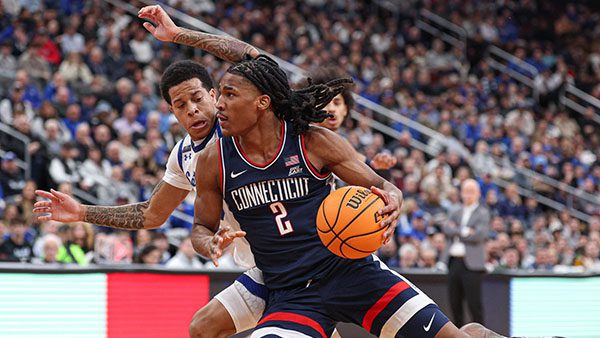
Butler is catching double digits at home, making them a tempting ATS pick for bettors banking on Finley Bizjack’s hot hand to keep things close against the disciplined UConn defense.
The Setup: UConn at Butler
UConn’s laying 11.5 points at Hinkle Fieldhouse on Wednesday night, and if you’re thinking this feels like a trap game, you’re not alone. The Huskies are 8-1, rolling through most of their Big East schedule like a buzz saw. Butler’s sitting at 7-2 but just dropped four straight, including a 22-point beatdown at St. John’s. So why isn’t this number bigger?
Here’s the thing: When you dig into the collegebasketballdata.com efficiency numbers, this line makes perfect sense. UConn ranks #10 nationally in adjusted net efficiency at 23.8, while Butler checks in at #42 with a 14.8 mark. That’s a nine-point gap in true talent level right there. Add in home court, and you’re staring at 11.5. The market nailed it.
But this isn’t just about efficiency splits. This is about pace, matchup dynamics, and whether Butler can exploit the one area where UConn’s shown vulnerability. The Huskies are allowing 60.4 points per game—#8 in the nation—but that defensive rating of 102.1 ranks just #125. Translation? They’re elite at limiting possessions, not necessarily elite at defending each one. That matters tonight.
Game Info & Betting Lines
Matchup: UConn (8-1) @ Butler (7-2)
Date: February 11, 2026
Time: 7:30 PM ET
Venue: Hinkle Fieldhouse, Indianapolis, IN
Point Spread: UConn -11.5
Over/Under: 144.5/145
Moneyline: UConn -800, Butler +525
Why This Number Makes Sense (or Doesn’t)
Let’s break down why this spread landed at 11.5 and not, say, 8 or 15. UConn’s adjusted offensive efficiency sits at 119.4 (#26), while their adjusted defensive efficiency ranks #10 at 95.6. Butler counters with a 117.0 adjusted offensive mark (#43) and a 102.2 adjusted defensive number (#66). That’s roughly an eight-point talent gap on a neutral floor.
Now factor in venue. Home court in college basketball is typically worth 3-4 points, and Hinkle Fieldhouse isn’t just any gym. But here’s where it gets interesting: The pace differential is massive. UConn plays at a 59.2 tempo (#353 nationally)—they’re slower than molasses in January. Butler runs at 72.9 (#46), nearly 14 possessions faster per game. That’s enormous.
When a slow team meets a fast team, the pace usually lands somewhere in the middle, closer to the slow team’s preference. UConn wants to grind this into a halfcourt slugfest. They’re scoring 135.3 points per 100 possessions (#14) in raw offensive rating, which means they’re brutally efficient when they control tempo. Butler’s putting up 120.3 per 100 possessions, but they’re generating that through volume and transition—148 fast break points compared to UConn’s 96.
The market’s essentially saying: UConn will dictate pace, limit Butler’s transition game, and win by double digits. I’m not sure I disagree, but there’s a path for Butler if they can push tempo early and force UConn into uncomfortable situations.
UConn Breakdown: The Analytical Edge
The Huskies are built to suffocate you. That 37.4% opponent field goal percentage (#14) and 26.8% opponent three-point mark (#17) tell you everything about their defensive identity. They’re long, disciplined, and they don’t give up clean looks. Tarris Reed Jr. anchors the paint with 15.5 points and 8.2 boards, while the Huskies are blocking 5.4 shots per game (#19).
Offensively, UConn’s shooting 49.1% from the floor (#51) and posting a 55.5% effective field goal percentage (#72). They’re not lighting it up from three at 33.3%, but they don’t need to. With a 30.1% offensive rebounding rate, they’re generating second chances and controlling possessions. Solo Ball’s averaging 14.6 points, Alex Karaban’s chipping in 13.4, and Silas Demary Jr. is the facilitator at 5.6 assists per game (#45).
The turnover numbers are pristine: 9.6 per game (#19). UConn doesn’t beat themselves. They just slowly, methodically break you down over 40 minutes. That’s championship DNA.
Butler Breakdown: The Counterpoint
Butler’s lost four straight, but don’t let that fool you—three of those losses came on the road or against top-tier competition. The Bulldogs can score. They’re putting up 87.6 points per game (#39) and shooting 39.4% from three (#21 nationally). That’s elite perimeter shooting, and it’s their best weapon against UConn’s pack-line defense.
Finley Bizjack is the engine, averaging 18.0 points (#90), while Michael Ajayi is a double-double machine at 16.2 points and 11.6 rebounds (#4 nationally). Ajayi’s rebounding prowess gives Butler a fighting chance on the glass, where they’re pulling down 42.7 boards per game (#20) with a 33.1% offensive rebounding rate (#114).
The problem? Butler’s turning it over 12.7 times per game (#220), and against a UConn defense that forces mistakes and converts them into points, that’s a death sentence. Butler’s also allowing 72.2 points per game, and while their defensive rating of 98.9 ranks #74, they’re not built to slow down elite halfcourt offenses. They need chaos. They need transition. They need UConn to play faster than they want to.
The Matchup: Where This Gets Decided
This game will be won or lost in the first 10 minutes. If Butler can push pace early, force UConn into some early turnovers, and get out in transition, they can build confidence and turn this into a track meet. But if UConn establishes their tempo—grinding possessions down to 25 seconds, pounding the ball inside to Reed, and making Butler execute in the halfcourt—it’s over.
The three-point line is Butler’s equalizer. At 39.4%, they’re one of the best shooting teams in the country. UConn’s allowing just 26.8% from deep, but Butler has the firepower to test that. If Bizjack and company get hot early, this could stay within single digits deep into the second half.
But here’s the reality: UConn’s adjusted efficiency numbers suggest they’re the better team by a significant margin. They’re #10 in adjusted net efficiency for a reason. They don’t have weaknesses you can exploit unless you can speed them up, and even then, they’re disciplined enough to adjust. Butler’s four-game losing streak isn’t a coincidence—they’re a good team that’s been exposed by great teams. UConn is a great team.
The rebounding battle will also be critical. Butler’s #20 in rebounds per game, but UConn’s length and discipline on the glass will limit second-chance opportunities. If UConn controls the boards, Butler’s path to covering shrinks considerably.
Bash’s Best Bet
I’m laying the points with UConn at -11.5. Yeah, it’s a big number on the road, and yeah, Butler’s capable of making this interesting if they get hot from three. But the efficiency gap is real, the pace advantage favors UConn, and Butler’s turnover issues are going to get exposed against this defense.
UConn’s won four of the last five meetings, including a 19-point beatdown earlier this season. They know how to play at Hinkle, and they know how to slow Butler down. I’m expecting a 78-64 type game where UConn builds a double-digit lead in the first half, Butler makes a run in the second, and the Huskies close it out by 13-14.
The Pick: UConn -11.5
Trust the efficiency. Trust the tempo control. Trust the Huskies to do what they do best: grind you into dust.