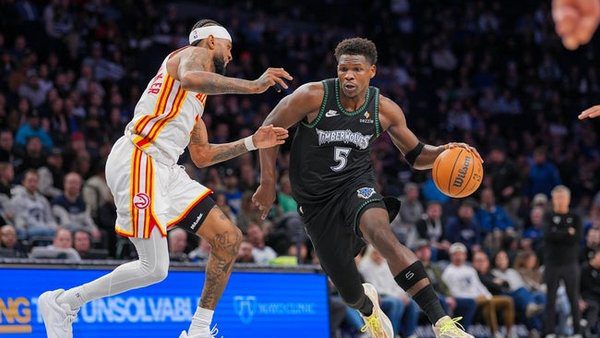
The market is banking on a Timberwolves blowout, but we’ve got Bash’s top bet on the spread line – find out who and why with his free breakdown of a Portland team that has covered in 8 of 12 games as a heavy underdog this season.
The Setup: Trail Blazers at Timberwolves
Minnesota lays 7.5 at home against a Portland squad that just dropped 135 on Philadelphia but remains 10-15 on the road this season. The Timberwolves are 18-10 at Target Center and carry advantages across nearly every efficiency metric—48.3% shooting versus Portland’s 45.1%, 37.4% from three compared to 34.1%, and a turnover profile that’s significantly cleaner at 14.5 per game against the Blazers’ 17.1. Anthony Edwards just dropped 30 in a dominant win over Atlanta, and this Minnesota roster is clicking with seven players in double figures. Portland’s offensive explosion Monday was impressive, but Toumani Camara’s career-high 30 points on 8-of-10 from deep isn’t a repeatable baseline. The question isn’t whether Minnesota should be favored—it’s whether 7.5 points properly reflects the gap between these rosters when you account for shooting efficiency and ball security.
Game Info & Betting Lines
Portland Trail Blazers (26-28) at Minnesota Timberwolves (33-22)
Date: Wednesday, February 11, 2026
Time: 8:00 ET
Venue: Target Center
TV: FanDuel SN North (Home), KUNP 16, BlazerVision, NBA League Pass (Away)
Current Betting Lines (MyBookie.ag):
Spread: Timberwolves -7.5 (-110) | Trail Blazers +7.5 (-110)
Moneyline: Timberwolves -313 | Trail Blazers +239
Total: Over/Under 238.0 (-110)
Why This Line Exists
The market set this at 7.5 because Minnesota owns meaningful edges in the categories that directly correlate with winning basketball. The Timberwolves shoot 3.2% better from the field and 3.3% better from three, which compounds over 90-plus possessions. They also protect the ball better by 2.6 turnovers per game, and that’s not a minor detail—that’s 5-6 extra possessions Minnesota keeps versus what Portland typically surrenders. The +4.6 plus/minus for Minnesota against Portland’s -1.9 tells you this isn’t a coin flip dressed up as a home favorite situation. It’s a legitimate talent and execution gap.
Portland’s 135-point outburst against Philadelphia looks impressive until you remember the 76ers played without Joel Embiid and Camara went supernova from distance. That’s not a sustainable offensive profile for a team shooting 34.1% from three on the season. Minnesota just put up 138 against Atlanta with Edwards leading the charge, and that performance came with seven players contributing double figures—a sign of offensive depth that Portland can’t match consistently on the road.
The total at 238 reflects two teams averaging 116.1 and 119.4 points per game, but it also accounts for Minnesota’s ability to generate efficient looks and Portland’s tendency to turn the ball over. The Blazers’ 17.1 turnovers per game create transition opportunities for a Timberwolves squad that converts at a high rate.
Trail Blazers Breakdown: What You Need to Know
Portland’s offense runs through Deni Avdija, who’s averaging 25.5 points, 7.2 rebounds, and 6.7 assists while shooting 46.7% from the field and 35.4% from three. He had 26 points and 10 boards against Philadelphia, and he’s the primary creator for a team that needs him involved in nearly every possession. Shaedon Sharpe adds 21.4 points per game at 45.6% shooting, and Jerami Grant chips in 19.0 per game at 44.1% with the ability to shoot 38.0% from deep.
The problem is consistency away from home. Portland is 10-15 on the road, and the efficiency numbers explain why. The Blazers turn it over 17.1 times per game, which ranks among the higher totals in the league, and they shoot just 34.1% from three—a number that makes it difficult to overcome deficits or extend leads. Jrue Holiday provides steady playmaking at 6.5 assists per game, but the defensive activity isn’t where it needs to be with just 8.1 steals and 4.9 blocks as a team.
Portland does own a rebounding edge at 45.9 boards per game compared to Minnesota’s 44.8, with 14.1 offensive rebounds creating second-chance opportunities. But that advantage doesn’t offset the shooting and turnover gaps when you’re facing a team that converts at Minnesota’s rate.
Timberwolves Breakdown: The Other Side
Anthony Edwards is the engine here, averaging 29.6 points per game on 49.2% shooting and 39.7% from three. He dropped 21 of his 30 points in the first half against Atlanta, and when he’s aggressive early, Minnesota’s offense flows. Julius Randle adds 22.0 points and 7.0 rebounds while shooting 48.9% from the field, giving the Timberwolves a second scoring option who can attack mismatches in the post or from the mid-range.
The depth is what separates Minnesota from Portland. Ayo Dosunmu is shooting 51.6% from the field and 45.1% from three while averaging 15.1 points. Jaden McDaniels contributes 14.9 per game at 51.8% shooting and 45.0% from deep, and Naz Reid provides 14.2 points and 6.4 rebounds off the bench. That’s five players averaging double figures with elite efficiency, and it’s why Minnesota had seven players in double digits against Atlanta.
Defensively, the Timberwolves generate 8.7 steals and 5.7 blocks per game, creating extra possessions and transition opportunities. They commit just 14.5 turnovers, which keeps their offense on schedule and limits the easy buckets Portland needs to stay competitive. At 18-10 at home, Minnesota knows how to protect Target Center, and the efficiency numbers suggest they’re not giving this game away.
The Matchup: Where This Game Gets Decided
This comes down to shooting efficiency and ball security over 95-100 possessions. Minnesota shoots 48.3% from the field and 37.4% from three, while Portland checks in at 45.1% and 34.1%. That’s a 3.2% gap from the field and a 3.3% gap from deep, and when you apply those percentages across 85-90 field goal attempts, you’re looking at 6-8 additional made shots for Minnesota. Multiply that by two points per make, and the Timberwolves are already building a 12-16 point cushion before accounting for anything else.
Portland’s 17.1 turnovers per game against Minnesota’s 14.5 creates another 2-3 extra possessions for the Timberwolves. If Minnesota converts those at even 50%, that’s another 3-4 points added to the margin. The Blazers’ offensive rebounding edge at 14.1 per game versus 11.4 gives them 2-3 extra possessions, but those second-chance opportunities don’t carry the same value when you’re shooting 34.1% from three and turning it over at a high rate.
Edwards and Randle will attack Avdija and Grant in isolation situations, and Portland doesn’t have the perimeter defenders to consistently slow down Minnesota’s efficiency. The Timberwolves’ depth means they can rotate fresh bodies and maintain offensive pressure for 48 minutes, while Portland leans heavily on Avdija, Sharpe, and Grant to carry the scoring load. That imbalance becomes more pronounced in the second half when legs get tired and execution matters most.
The total at 238 feels reachable given both teams’ scoring averages, but Minnesota’s ability to control tempo and limit Portland’s transition opportunities could keep this game closer to 230-235. The Blazers need to win the turnover battle and generate extra possessions through offensive rebounds to stay within the number, and their road profile suggests that’s not a reliable outcome.
Bash’s Best Bet & The Play
Minnesota should win this game by double digits. The efficiency gaps are too significant, the home-road splits favor the Timberwolves, and Portland’s turnover issues create the kind of extra possessions that turn a 5-6 point game into a comfortable 12-14 point margin. Edwards is playing at an elite level, the depth chart is fully operational with seven players contributing, and the Blazers don’t have the defensive personnel to slow down Minnesota’s ball movement and shooting.
The risk is Portland’s offensive rebounding and Avdija going off for 30-plus points in a game where the Blazers shoot above their season averages. But that’s not the percentage play. Minnesota is 18-10 at home, Portland is 10-15 on the road, and the shooting and turnover edges point to a comfortable Timberwolves win.
BASH’S BEST BET: Timberwolves -7.5 for 2 units.
Minnesota covers this number because the efficiency math says they should win by 10-12, and the home court at Target Center adds another possession or two in their favor. Portland’s road struggles are real, and this line doesn’t fully account for the gap between these rosters when the Timberwolves are clicking. Lay the points and expect Edwards to put this game away in the second half.