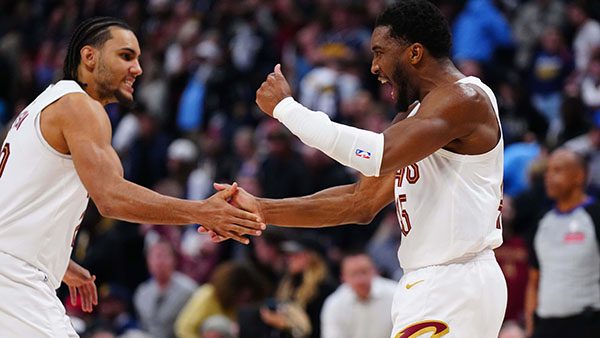
The Cavaliers are opening as massive home favorites at Rocket Arena, and you should read on to get our capper’s ATS pick to see if the James Harden and Donovan Mitchell backcourt can out-execute a Washington squad missing its two biggest stars.
The Setup: Wizards at Cavaliers
The Cavaliers are laying 18 points at Rocket Arena on Wednesday night against a Wizards squad that’s been gutted by injuries and trades. Cleveland sits at 33-21, fourth in the East, while Washington limps in at 14-38 with a league-worst road record of 5-20. The Cavs average 119.6 points per game compared to Washington’s 112.1, and that 7.5-point scoring edge becomes even more pronounced when you factor in the Wizards playing without Trae Young and Anthony Davis. This line feels massive, but the efficiency gap and rotation depth tell you exactly why the market landed here. Cleveland’s rolling with Donovan Mitchell and James Harden running the show, while Washington’s depleted roster is asking Alexandre Sarr and KyShawn George to carry an offensive load they’re not built to sustain over 48 minutes.
The total sits at 238, which factors in Cleveland’s offensive firepower but also acknowledges Washington’s defensive limitations. The Wizards are giving up points in bunches—they just got torched 132-101 by Miami on Sunday—and Cleveland’s averaging nearly 120 per night. The math here isn’t complicated. When a 33-21 team with two elite guards faces a 14-38 squad missing its top two players, you’re looking at a talent mismatch that creates coverage opportunities if the rotations hold up.
Game Info & Betting Lines
Game Time: February 11, 2026, 7:00 ET
Location: Rocket Arena
TV: FanDuel SN OH (Home), MNMT, NBA League Pass (Away)
Current Betting Lines (MyBookie.ag):
- Spread: Cavaliers -18.0 (-110) | Wizards +18.0 (-110)
- Moneyline: Cavaliers -1667 | Wizards +843
- Total: Over 238.0 (-110) | Under 238.0 (-110)
Why This Line Exists
The market’s pricing in a 14.2-point swing in overall team quality based on plus/minus differentials alone. Washington’s sitting at -10.7 per game while Cleveland checks in at +3.7. That’s a 14.4-point gap before you even factor in home court or injury context. Add in the Wizards playing without Trae Young—who was averaging 19.3 points and 8.9 assists before going down with the knee injuries—and Anthony Davis, who put up 20.4 and 11.1 before the trade and subsequent shutdown, and you’re looking at roughly 40 points and 20 assists per game that Washington’s trying to replace with deeper rotation players.
Cleveland’s offensive efficiency shows up in the shooting splits. The Cavs hit 47.5% from the field and 35.7% from three, while Washington’s at 45.8% and 35.5%. That two-percentage-point gap in overall field goal percentage translates to roughly four extra made buckets over 80 possessions, which is an eight-point swing right there. The Cavaliers also commit 1.4 fewer turnovers per game and generate 3.4 more assists, which speaks to offensive execution and ball security. When you’re laying 18, you need clean possessions and efficient scoring. Cleveland’s built for both.
The injury situation on Cleveland’s side matters but doesn’t crater the thesis. Evan Mobley’s out with the calf strain, and Dean Wade’s siding with an ankle issue. That’s 17.9 points and 8.8 rebounds from Mobley that need replacing, but the Cavs still have Mitchell averaging 29.0 points, Harden at 25.3 points and 8.1 assists, and Jarrett Allen providing 14.5 and 8.3 boards while shooting 61.5% from the floor. The depth chart takes a hit, but the star power remains intact. Washington’s missing its entire top tier.
Wizards Breakdown: What You Need to Know
Washington’s offense runs through Alexandre Sarr and KyShawn George now, and while both players have shown flashes, they’re not equipped to carry a 48-minute offensive load against a playoff-caliber defense. Sarr’s averaging 17.2 points and 7.8 rebounds on 49.6% shooting, which is solid, but he’s also turning it over 1.7 times per game and his usage isn’t built for primary scoring responsibilities. George adds 15.1 points and 4.9 assists, but he’s coughing it up 2.8 times per game, which becomes a problem when you’re asking him to handle more possessions.
The Wizards are turning it over 15.7 times per game as a team, and that number’s likely to spike when you’re relying on secondary playmakers to run the offense. Tre Johnson’s chipping in 12.9 points on decent shooting splits—44.4% from the field and 39.3% from three—but he’s averaging just 2.2 assists, which tells you he’s not a primary creator. The recent blowout loss to Miami, where Washington got demolished 132-101, shows what happens when this depleted roster faces quality opposition. Kasparas Jakucionis went 6-for-6 from three for Miami, and the Wizards had no answers defensively.
Washington’s road record of 5-20 is one of the worst in the league, and the underlying numbers explain why. The Wizards are getting outscored by double digits most nights, and their defensive activity—7.7 steals and 6.0 blocks per game—doesn’t create enough extra possessions to offset the offensive limitations. When you’re missing 40 points per game from your top two scorers, you need elite defense to stay competitive. Washington doesn’t have it.
Cavaliers Breakdown: The Other Side
Cleveland’s offensive firepower starts with Mitchell and Harden, and the pairing’s been exactly what the Cavs needed. Mitchell just dropped 32 points in Denver on Monday, including two clutch free throws with 0.9 seconds left to seal the win. Harden added 22 points and 10 rebounds in his second game with Cleveland, and the early returns suggest the backcourt chemistry’s clicking. Mitchell’s averaging 29.0 points and 5.9 assists on 48.5% shooting and 37.7% from three, which gives Cleveland a legitimate 30-point scorer every night. Harden’s at 25.3 and 8.1 assists, and while his efficiency’s a tick below Mitchell’s, the playmaking and veteran savvy create easy looks for everyone else.
Jarrett Allen’s 61.5% field goal percentage is elite, and his 14.5 points and 8.3 rebounds give Cleveland a consistent interior presence even with Mobley sidelined. Jaylon Tyson’s emerged as a rotation piece, averaging 14.0 points on 51.6% shooting and 47.7% from three, which is absurd efficiency for a role player. That shooting percentage from deep on meaningful volume means Cleveland’s spacing holds up even when the defense collapses on Mitchell and Harden.
The Cavaliers are generating 28.6 assists per game, which ranks among the league leaders and speaks to offensive connectivity. They’re also creating 9.0 steals per game, which leads to transition opportunities and easy buckets. Cleveland’s home record of 17-11 isn’t dominant, but it’s solid, and the recent win in Denver shows this team can execute in close games. The plus/minus of +3.7 confirms they’re winning the possession battle most nights.
The Matchup: Where This Game Gets Decided
The efficiency gap becomes a blowout when you run the possessions math. Cleveland’s scoring 7.5 more points per game, committing 1.4 fewer turnovers, and generating 3.4 more assists. Over a typical 95-possession game, that efficiency advantage translates to roughly 10-12 extra quality shots and 4-6 fewer empty possessions. When you’re already laying 18, you need those margins to hold up, and the underlying numbers say they will.
Washington’s defensive activity—13.7 combined steals and blocks per game—doesn’t match Cleveland’s 14.1, and that matters when you’re trying to create extra possessions to stay competitive. The Wizards need turnovers and transition buckets to offset their halfcourt offensive limitations, but Cleveland’s taking care of the ball at a high level. The Cavs’ 14.3 turnovers per game is better than league average, and Harden’s veteran ball security means Washington’s not getting easy runouts.
The rebounding battle slightly favors Cleveland—44.5 boards per game compared to Washington’s 43.5—but the offensive glass tells a different story. Washington’s grabbing 11.6 offensive rebounds per game compared to Cleveland’s 12.1, which means second-chance points won’t swing this game. The real mismatch is in shooting efficiency and execution. Cleveland’s hitting shots at a higher clip from every spot on the floor, and Washington doesn’t have the offensive firepower to keep pace.
The total of 238 factors in Cleveland’s ability to score in bunches, but it also assumes Washington can crack 110 points without Young and Davis. That’s asking a lot from a team that just scored 101 against Miami’s defense. If the Wizards struggle to reach 105, Cleveland only needs 133 to push this over, and that’s well within range given the Cavs’ offensive efficiency. The under becomes the sharper play if you believe Washington’s offensive limitations keep this in the 110-120 range for Cleveland.
Bash’s Best Bet & The Play
The number’s bloated, but the talent gap justifies it. Washington’s missing 40 points per game from Young and Davis, and the remaining rotation isn’t built to hang with a Cleveland team that’s rolling with Mitchell, Harden, and Allen. The Wizards’ 5-20 road record and recent 31-point blowout to Miami show what happens when this depleted roster faces quality opposition. Cleveland’s coming off a clutch win in Denver, and the home crowd at Rocket Arena gives them another edge.
The main risk is Cleveland taking its foot off the gas in the fourth quarter if this turns into a blowout early. The Cavs don’t need to run up the score to win comfortably, and garbage-time lineups could shave points off the final margin. But the efficiency gap and rotation depth suggest Cleveland controls this wire-to-wire. The under also has merit if you believe Washington’s offensive limitations keep the final score in the 115-100 range, but I’m trusting Cleveland’s firepower to push the pace and exploit the Wizards’ defensive breakdowns.
BASH’S BEST BET: Cavaliers -18.0 for 2 units.
The math says Cleveland wins by 20-plus if the starters play normal minutes. Lay the points and trust the talent.