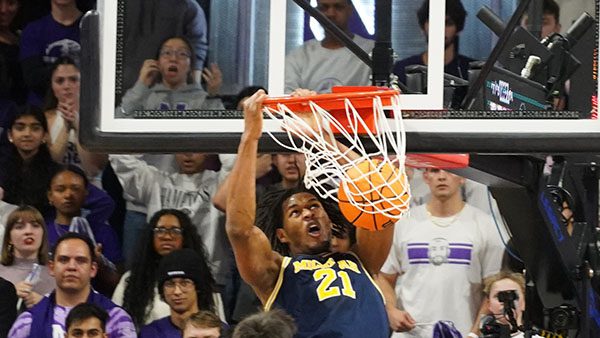
Michigan has been an absolute buzzsaw this season, but laying 15.5 points against a ranked Bruins team is a tall order even for the nation’s #2 squad. After digging into Michigan’s recent 1-4 ATS record at home, it’s clear that the value in this prediction lies with the underdog’s ability to turn the Crisler “White Out” into a half-court grind.
The Setup: UCLA at Michigan
Michigan’s laying 15.5 at home against UCLA on Saturday, and I’m already seeing the casual takes roll in. “Wolverines by double digits in Crisler? Easy money.” Look, I get it. Michigan’s 23-1, ranked #2 in both polls, and riding a wave of dominance that’s made them the betting public’s darling. But when you dig into the collegebasketballdata.com efficiency numbers, this spread is telling you something important: the market respects what UCLA brings to the table, even if their 17-7 record doesn’t scream “dangerous road opponent.”
Here’s what matters: Michigan owns the #1 adjusted defensive efficiency rating in the country at 89.6, paired with the #2 offensive efficiency at 127.9. That’s a 38.3 net rating that ranks first nationally. UCLA? They’re no slouch at #38 overall with a +18.4 net rating, sitting #43 offensively and #55 defensively. The gap is real—19.9 points in net rating—but the Bruins have the offensive firepower to make this a fight if Michigan’s defense slips even slightly.
Game Info & Betting Lines
Game Time: February 14, 2026, 12:45 ET
Location: Crisler Center, Ann Arbor, MI
Rankings: #25 UCLA (AP), #19 (Coaches) at #2 Michigan (both polls)
Spread: Michigan -15.5
Total: 152.5
Moneyline: Michigan -1600, UCLA +800
Why This Number Makes Sense (or Doesn’t)
The market landed at 15.5 for a reason, and it’s not arbitrary. Michigan’s been an absolute buzzsaw at home, going 15-1 straight up with a 10-6 ATS record. They’re averaging 90.8 points per game overall—6th nationally—and their defensive metrics are suffocating. That 37.0% opponent field goal percentage ranks 2nd in the country, and they’re blocking 6.0 shots per game (5th nationally). When you combine elite rim protection with the ability to score 90+ on most nights, you get a team that should handle business by double digits against most opponents.
But here’s where it gets interesting: UCLA plays at a 64.9 pace (281st nationally), one of the slowest tempos in college basketball. Michigan wants to push at 71.7 possessions (24th), but they’ll have to drag UCLA into that faster rhythm. The projected pace blend sits around 68 possessions, which means fewer opportunities for Michigan to flex their offensive muscle. That matters when you’re trying to cover 15.5.
The Bruins also take care of the basketball at an elite level—9.3 turnovers per game ranks 12th nationally, with a turnover ratio that sits 10th in the country. Michigan’s turnover rate isn’t nearly as clean at 12.3 per game (240th), and their assist-to-turnover ratio of 1.57 actually trails UCLA’s 1.69. If UCLA can control tempo and limit transition opportunities, this spread becomes a grind.
UCLA Breakdown: The Analytical Edge
The Bruins don’t beat you with one thing—they beat you by not beating themselves. That 120.1 adjusted offensive efficiency (43rd nationally) is built on smart shot selection and elite three-point shooting. They’re hitting 38.5% from deep (17th), and their 58.5% true shooting percentage (62nd) tells you they’re getting quality looks. Tyler Bilodeau leads the way at 15.6 points per game, but the real engine is Donovan Dent, who’s dishing 6.4 assists per game (13th nationally) and running the show with precision.
Defensively, UCLA’s 101.7 adjusted rating (55th) is solid, not spectacular. But they defend the three-point line exceptionally well, holding opponents to 29.8% (25th nationally). If Michigan’s perimeter game goes cold—and they’re only shooting 35.3% from three (108th)—the Bruins can hang around.
The concern? Rebounding. UCLA grabs just 32.9 boards per game (306th nationally), and Michigan dominates the glass at 42.1 per game (6th). That’s a 9-rebound gap that could turn into second-chance points and extended possessions for the Wolverines.
Michigan Breakdown: The Counterpoint
Michigan’s efficiency profile is elite across the board. That 127.9 adjusted offensive rating pairs a 51.0% field goal percentage (9th) with a 58.5% effective field goal percentage (10th). They’re not just shooting well—they’re getting great looks inside. Yaxel Lendeborg (15.8 PPG) and Morez Johnson Jr. (14.2 PPG) provide a powerful inside-out punch, and Aday Mara’s 8.9 rebounds per game (52nd nationally) anchors the glass.
The defense is where Michigan separates itself. That 89.6 adjusted defensive efficiency is historically good, and the 94.6 defensive rating (9th) backs it up. They force bad shots, protect the rim, and make life miserable in the half-court. UCLA’s slow pace actually plays into Michigan’s hands—fewer possessions mean each defensive stop carries more weight, and Michigan rarely gives up easy buckets.
But here’s the catch: Michigan’s 2-6 ATS on the road and 1-4 ATS in their last five home games. They win, but they don’t always blow teams out when the market expects them to. Against Nebraska, they won by just 3 as 11.5-point favorites. Against Northwestern recently, they won by 12 but failed to cover 15.5. The pattern is clear—Michigan wins close games, but covering big numbers has been a struggle.
The Matchup: Where This Gets Decided
This game hinges on two factors: tempo and turnovers. If Michigan forces UCLA into 72+ possessions, the Wolverines win going away. But if UCLA can grind this down to 65-67 possessions and protect the basketball, every possession becomes a battle. The Bruins’ 9.3 turnovers per game gives them a legitimate chance to stay within striking distance, especially if Michigan’s 12.3 turnovers per game becomes a factor.
The rebounding gap is real—Michigan’s 42.1 boards per game versus UCLA’s 32.9—but UCLA’s offensive rebounding percentage of 30.7% (187th) is actually respectable. If they can crash the glass and generate second chances, they can offset some of Michigan’s size advantage.
The three-point battle matters too. UCLA shoots it better (38.5% to 35.3%), but Michigan’s volume and offensive rebounding can create more attempts. If the Bruins can force Michigan into contested threes and protect the arc defensively (29.8% opponent three-point percentage), they keep this within range.
Bash’s Best Bet
UCLA +15.5 (-110)
I’m not here to tell you Michigan won’t win. They will. But 15.5 points is a massive number in a conference game between two ranked teams, and UCLA’s got the profile to keep this closer than the market thinks. The Bruins are 5-2 ATS in their last seven trips to Ann Arbor, and Michigan’s 1-4 ATS in their last five home games. The pace differential works in UCLA’s favor, and their elite ball security (9.3 turnovers per game) means they won’t gift Michigan easy transition buckets.
Michigan’s going to grind out an 82-70 type of win, but that’s a 12-point margin. Give me the points with a UCLA team that’s built to hang around in ugly, half-court slugfests. The Bruins cover at Crisler.