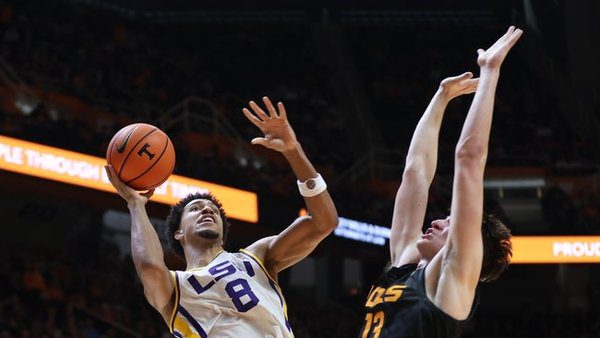
Tennessee entered as an 11.5-point favorite, and while Oklahoma’s #29 offensive efficiency looked dangerous on paper, the Vols’ defense was the ultimate equalizer. Ja’Kobi Gillespie set a program record with eight steals, anchoring an ATS pick that saw Tennessee outscore the Sooners 31-7 in points off turnovers to secure a commanding 89-66 win.
The Setup: Oklahoma at Tennessee
Tennessee’s laying 11.5 at home against Oklahoma on Wednesday night, and the market’s telling you this is a comfortable home win for the Vols. But when you dig into the collegebasketballdata.com efficiency numbers, this spread feels like it’s missing something. Tennessee checks in at #20 nationally in adjusted net rating (+24.2) while Oklahoma sits at #60 (+12.8) — that’s an 11.4-point gap favoring the home side. Add in a 3.5-point home court advantage, and you’re looking at a theoretical 15-point spread. So why is the market only asking for 11.5?
Here’s what matters: Tennessee’s elite #15 adjusted defensive efficiency (96.0) is the story everyone’s buying. They hold opponents to 40.4% shooting and just 29.9% from three — both top-30 marks nationally. Oklahoma’s 13-12 record screams fade material, especially with that 3-8 road mark. But the Sooners are #29 in adjusted offensive efficiency (121.6), and that’s not some fluky number. They’re scoring 120.1 points per 100 possessions with a true shooting percentage of 58.7%. This isn’t a pushover offense walking into Knoxville.
The question isn’t whether Tennessee should be favored — they absolutely should be. The question is whether this number properly accounts for Oklahoma’s offensive firepower against a Tennessee defense that’s allowed 75.3 points per game in SEC play. That’s a far cry from their overall 69.3 defensive average.
Game Info & Betting Lines
Game: Oklahoma Sooners (13-12) at #25 Tennessee Volunteers (18-7)
Date: Wednesday, February 18, 2026
Time: 7:00 PM ET
Venue: Food City Center, Knoxville, TN
Conference: SEC matchup
Spread: Tennessee -11.5 (Bovada) / -10.5 (DraftKings)
Total: 150.5 (Bovada) / 149.5 (DraftKings)
Moneyline: Tennessee -850 / Oklahoma +550
Why This Number Makes Sense (or Doesn’t)
The market’s essentially pricing Tennessee as a 15-point better team when you factor in home court, but they’re only asking you to lay 11.5. That’s respect for Oklahoma’s offensive capabilities, and it should be. The Sooners rank #40 nationally in offensive rating despite their mediocre record, and they’re particularly dangerous from deep — 35.7% from three with an effective field goal percentage of 54.9%.
But here’s where Tennessee earns this spread: their defensive efficiency gap is massive. Oklahoma’s #170 adjusted defensive rating (108.8) means they’re giving up 112.1 points per 100 possessions in raw terms. Tennessee’s #41 adjusted offensive efficiency (120.2) isn’t elite, but it doesn’t need to be when you’re facing a defense that leaky. The Vols score 81.0 per game overall, but they’ve been more methodical in conference play at 77.9 PPG.
The pace is critical here — both teams play in the mid-to-low 60s in tempo. Oklahoma’s at 68.4 possessions per game (#125 nationally), Tennessee at 66.3 (#216). This isn’t going to be a track meet. The blended pace projects around 67 possessions, which means every possession matters. Tennessee’s 36.5% offensive rebounding rate (#6 nationally) against Oklahoma’s mediocre defensive glass could be the difference between a 10-point win and a 16-point blowout.
The total at 150.5 feels low given Oklahoma’s offensive firepower, but Tennessee’s grinding it out lately — four of their last five have stayed under, including 73-63 against LSU and 73-64 at Mississippi State. In conference play, these teams are averaging a combined 155 points per game, which puts us right on the number.
Oklahoma Breakdown: The Analytical Edge
The Sooners are 3-9 in SEC play, but that record doesn’t tell the efficiency story. They’re #29 nationally in adjusted offensive efficiency, which means they’re creating quality shots even when they’re not winning games. Nijel Pack leads the way at 17.2 PPG, with Tae Davis (13.3 PPG, 6.8 RPG) and Xzayvier Brown (13.1 PPG) providing secondary scoring.
Oklahoma’s turnover rate is elite — they rank #10 nationally in turnover ratio, coughing it up just 10.0 times per game. That’s massive against a Tennessee defense that forces 12.6 turnovers per game but isn’t particularly aggressive (just 7.4 steals per game). The Sooners’ 1.45 assist-to-turnover ratio suggests they’re not beating themselves with careless possessions.
The problem is obvious: they can’t stop anyone. That #283 defensive rating (112.1) is bottom-tier nationally, and they’re allowing 77.7 PPG overall — 83.5 in conference games. They’re giving up 44.9% shooting and 34.5% from three, both bottom-third marks. On the road, it’s even worse: 84.5 PPG allowed in away games this season.
But they just hung 94 on Georgia and 92 at Vanderbilt in their last two wins. When the offense clicks, they can score with anyone.
Tennessee Breakdown: The Counterpoint
The Vols are 18-7 and ranked #25 in the AP poll for a reason — that #15 adjusted defensive efficiency is legit. They’re holding opponents to 40.4% shooting and 29.9% from three, and they dominate the glass with 43.3 rebounds per game (#3 nationally). That 36.5% offensive rebounding rate creates second-chance opportunities that grind opponents down.
Ja’Kobi Gillespie (17.3 PPG, 5.4 APG) runs the show, while Nate Ament (16.3 PPG, 7.1 RPG) provides inside-out versatility. The supporting cast — J.P. Estrella, Jaylen Carey, Felix Okpara — all contribute on the boards and defensively. This is a team built to win ugly, and they’re comfortable in low-possession games.
But the offensive efficiency isn’t elite. Tennessee’s #41 in adjusted offensive rating (120.2), and they’re scoring just 77.9 PPG in conference play. That 56.8% true shooting percentage ranks #134 nationally — not bad, but not dominant. They’re 69.8% from the free throw line (#263), which means they’re leaving points at the stripe.
The ATS record is concerning: 10-15 overall, 6-10 at home. They’ve failed to cover in four of their last six home games, including as a 14.5-point favorite against LSU. When the market asks Tennessee to cover double digits, they’ve struggled to deliver.
The Matchup: Where This Gets Decided
This game comes down to whether Oklahoma can score enough to stay within range. Tennessee’s going to get theirs — the Vols are 8-1 straight up in their last nine home games, and that defensive efficiency isn’t a mirage. But Oklahoma’s offensive efficiency suggests they can push 75-80 points if they execute.
The rebounding battle is massive. Tennessee’s +4.3 advantage in offensive rebounding rate could be the killer. Oklahoma grabs just 32.2% of available offensive boards (#124 nationally), and when Tennessee gets second chances, they’re deadly. The Vols have 960 points in the paint this season compared to Oklahoma’s 786 — they live inside.
Oklahoma’s best path to covering is protecting the ball and hitting threes. They’re 35.7% from deep, and if Pack and Brown get hot, they can keep pace. But Tennessee’s 29.9% opponent three-point percentage is elite, and they force tough shots. The pace favors Tennessee — slower games mean fewer possessions for Oklahoma to make up ground.
The head-to-head history is brutal for Oklahoma: Tennessee won 70-52 last season, shooting 60.4% while holding the Sooners to 32.1%. That’s a 35-rebound to 21-rebound beatdown. If Tennessee dominates the glass again, this could get ugly fast.
Bash’s Best Bet
I’m taking Oklahoma +11.5 and playing the Over 150.5. Here’s why: Tennessee’s ATS struggles at home are real, and Oklahoma’s offensive efficiency is too good to ignore. The Vols are 6-10 ATS at home this season, and they’ve failed to cover as double-digit favorites multiple times. Oklahoma’s going to score — they’re #29 in adjusted offensive efficiency, and Tennessee’s allowing 75.3 PPG in SEC play.
The total feels like a gift. Oklahoma’s averaging 83.4 PPG, Tennessee 81.0. Even accounting for slower pace and Tennessee’s defense, I’m projecting something in the 82-74 range, which clears 150.5 comfortably. Oklahoma’s last five road games have gone over four times, and Tennessee’s defense isn’t the same lockdown unit in conference play.
Tennessee wins this game — probably by 8-10 points. But 11.5 is too many against an offense this efficient. Ride the Sooners and the over.