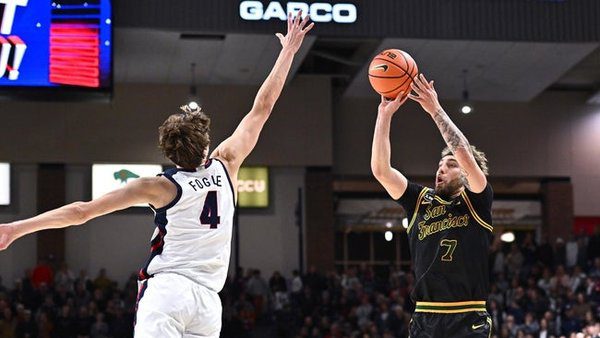
The market’s 14.5-point line is respect for the venue, but San Francisco’s 1-6 ATS home record suggests the Dons are consistently overvalued by oddsmakers. Looking at the efficiency math, Gonzaga is a high-value best bet considering they’ve won 10 straight in this series by an average of double digits.
The Setup: Gonzaga at San Francisco
Gonzaga’s laying 14.5 at San Francisco on Wednesday night, and if you’re wondering whether the Zags can cover that number in a late-night WCC tilt at Chase Center, let me walk you through why this spread actually undersells the talent gap. The #11 Bulldogs are rolling at 25-2 with a +30.9 net rating that ranks 6th nationally, while the Dons sit at 15-13 with a pedestrian +4.8 mark that lands them 119th. When you dig into the collegebasketballdata.com efficiency numbers, this isn’t just another conference game—it’s a mismatch of elite execution against middling performance, and the 26.1-point net rating chasm tells you everything about how this should play out.
The model projects Gonzaga by nearly 25 points, which means the market is actually giving you value on the favorite here. San Francisco’s 1-6 ATS mark at home tells you bettors keep expecting competitive basketball that simply hasn’t materialized, and Gonzaga’s 4-1 ATS road record suggests they’ve been handling business away from Spokane. This number makes sense until you realize it might not be big enough.
Game Info & Betting Lines
Game Time: February 18, 2026, 11:00 PM ET
Venue: Chase Center
Spread: Gonzaga -14.5
Total: 149.5
Moneyline: Gonzaga -1400 | San Francisco +750
Why This Number Makes Sense (or Doesn’t)
The 14.5-point spread feels like the market hedging against recency bias and late tipoff chaos, but the underlying efficiency data suggests this line is actually soft. Gonzaga’s adjusted offensive efficiency ranks 20th nationally at 122.8, while their defensive efficiency sits 5th at 91.9. San Francisco checks in at 90th offensively (113.8) and 176th defensively (109.0). That’s not just a gap—that’s a canyon.
Here’s where tempo matters: The pace blend projects around 67 possessions, which favors San Francisco’s preferred crawl at 63.6 possessions per game (327th nationally). But even in a slower game, Gonzaga’s per-possession dominance is overwhelming. The Zags score 122.4 points per 100 possessions while allowing just 93.5—that’s elite two-way basketball. San Francisco’s 116.1 offensive rating drops to 112.2 defensively, meaning they can’t score efficiently enough to keep pace and can’t defend well enough to slow Gonzaga down.
The total at 149.5 reflects that slower pace, but with Gonzaga averaging 87.6 points per game (14th nationally) and San Francisco allowing 72.7 (148th), the Bulldogs should have no trouble reaching the 80s. The real question is whether the Dons can crack 70 against a Gonzaga defense that ranks 31st in opponent scoring at 67.2 points allowed per game.
Gonzaga Breakdown: The Analytical Edge
The Bulldogs are shooting 51.5% from the floor (6th nationally) with a 56.6% effective field goal percentage that ranks 25th. That shooting quality combined with an 18.5 assists per game (11th) tells you this is a connected, efficient offense that doesn’t settle for bad shots. Braden Huff leads the way at 17.0 points per game, while Graham Ike adds 16.4 points and 8.1 rebounds. That frontcourt duo gives Gonzaga a physical advantage inside that San Francisco simply can’t match.
Defensively, the Zags are holding opponents to 40.0% shooting (20th) and 30.9% from three (45th). They force just 10.0 turnovers per game but maintain a ridiculous 1.85 assist-to-turnover ratio that ranks 10th nationally. This isn’t a team that beats itself—they execute, they defend, and they win by controlling both ends of the floor. The 8.9 steals per game (25th) suggests opportunistic defense that can turn San Francisco’s 10.9 turnovers into easy transition points.
Gonzaga’s 10-0 straight-up record against San Francisco in the last 10 meetings isn’t just dominance—it’s systematic dismantling. They’ve averaged 84.8 points in those games while shooting 50.3% from the floor.
San Francisco Breakdown: The Counterpoint
The Dons are struggling to find any offensive rhythm, shooting just 43.8% from the floor (263rd nationally) with a 51.7% effective field goal percentage that ranks 190th. Ryan Beasley leads at 13.0 points per game, but nobody else is consistently creating offense. Mookie Cook adds 11.7 points and 6.0 rebounds, but this roster lacks the firepower to trade buckets with an elite team.
San Francisco’s 4-6 record in their last 10 games includes three brutal losses where they’ve allowed 79, 90, and 84 points while shooting 28.1%, 38.3%, and 32.0% from the floor. That’s not variance—that’s a team getting exposed by quality competition. Their 1.29 assist-to-turnover ratio ranks 147th, meaning they’re not taking care of the ball or creating good looks for teammates.
The Dons’ 5-10 ATS mark in conference play tells you they’re consistently falling short of expectations when facing WCC competition. Their home defense allows 72.1 points per game, and Gonzaga’s offensive firepower should shred that number without much resistance.
The Matchup: Where This Gets Decided
This game comes down to whether San Francisco can survive the shooting efficiency gap. Gonzaga’s 56.6% effective field goal percentage against San Francisco’s 43.8% opponent field goal percentage allowed creates a massive advantage on every possession. The Bulldogs should generate high-quality looks all night, while the Dons will struggle to find clean scoring opportunities against a defense that ranks 5th in adjusted efficiency.
The rebounding battle slightly favors Gonzaga at 41.2 boards per game (13th) versus San Francisco’s 36.8 (106th), but the real edge comes in offensive execution. Gonzaga’s 18.5 assists per game against San Francisco’s 13.9 tells you which team is moving the ball and creating open shots. The Bulldogs’ 59.4% true shooting percentage (45th) versus the Dons’ 56.1% (173rd) confirms that Gonzaga simply scores more efficiently from everywhere on the floor.
San Francisco’s best path to covering involves slowing the game to a crawl and hoping Gonzaga goes cold from outside—the Zags shoot just 34.2% from three (170th nationally). But even in a rock fight, Gonzaga’s interior presence with Huff and Ike should dominate the paint against San Francisco’s 233rd-ranked shot-blocking unit.
Bash’s Best Bet
I’m laying the 14.5 points with Gonzaga and feeling comfortable about it. The efficiency gap is too massive, the head-to-head history too one-sided, and San Francisco’s recent form too concerning to think they’ll suddenly find competitive basketball against the 6th-ranked net rating team in the country. Gonzaga’s 4-1 ATS mark on the road this season tells you they’ve been handling business in true road environments, and while Chase Center provides a neutral-ish setting, the Bulldogs’ systematic advantages should produce a comfortable double-digit win.
The model projects Gonzaga by nearly 25, which means you’re getting 10 points of cushion on a team that’s won 10 straight against this opponent by an average of 10.8 points per game. San Francisco’s 1-4 ATS mark at home against Gonzaga in the last five meetings confirms they consistently fail to keep these games close. Take the Zags, lay the points, and expect Mark Few’s squad to assert their dominance in a conference game that shouldn’t be particularly competitive.