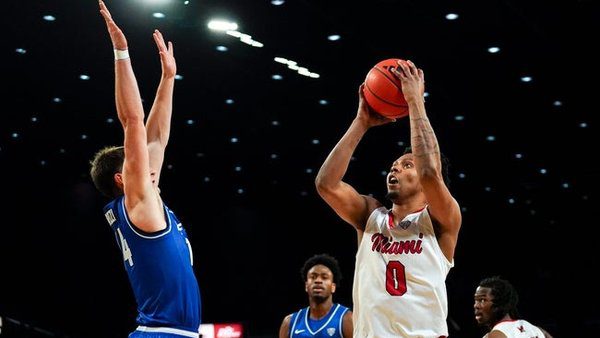
After digging into the transition data, the play here is to evaluate the nation’s most efficient offense against a top-tier MAC defense. Bryan Bash explores why Miami’s home-court dominance might outweigh the spread.
The Setup: Bowling Green at Miami (OH)
Miami (OH) is laying 7.5 at home against Bowling Green on Friday night, and this number feels light when you consider what we’re actually looking at here. The RedHawks are 26-0, ranked #22 in the AP poll, and sitting on the nation’s best offensive rating at 137.8. They’re shooting 53.5% from the field—tops in the country—and 40.2% from three. Meanwhile, Bowling Green checks in at 16-11 with an adjusted net rating of just +3.6. According to collegebasketballdata.com, Miami’s adjusted offensive efficiency ranks 53rd nationally while their defense sits 138th. That’s a team built to outscore you, not stop you. The Falcons bring a respectable 70th-ranked adjusted defense, but their offense ranks 215th in adjusted efficiency. This is a classic MAC clash between an elite offensive machine and a defensive-minded squad trying to stay competitive. The question isn’t whether Miami should be favored—it’s whether 7.5 points captures the full gap between these programs.
Game Info & Betting Lines
Game Time: 8:30 PM ET, Friday, February 20, 2026
Location: Millett Hall, Oxford, OH
TV: N/A
Spread: Miami (OH) -7.5
Total: 153/153.5
Moneyline: Miami (OH) -400, Bowling Green +300
Why This Number Makes Sense (or Doesn’t)
Here’s where this gets interesting. The market landed on 7.5, but the underlying efficiency metrics suggest this spread is undervaluing Miami’s home dominance. The RedHawks hold an 8.1-point net rating advantage over Bowling Green when you compare adjusted efficiencies. Factor in a standard 3.5-point home court advantage, and you’re looking at a double-digit spread territory. The model projects Miami by 12.8 with a 10% conference game boost already applied, which means the market is giving you 5.3 points of value if you’re willing to back the Falcons.
But let’s dig into why the market might be hesitant to push this number higher. Miami’s defensive rating of 110.6 ranks 242nd nationally—that’s legitimately concerning for a ranked team. They’re allowing 74.4 points per game, and while they’re winning games by outscoring opponents, Bowling Green’s defense ranks 18th in defensive rating at 97.6. The Falcons force tempo at 71.3 possessions per game (27th nationally), while Miami prefers a slower 64.4 pace (301st). The projected pace blend sits at 67.8 possessions, which actually favors Bowling Green’s preference to speed things up and create chaos. If the Falcons can push tempo and force Miami into uncomfortable possessions, this number suddenly looks more reasonable.
Bowling Green Breakdown: The Analytical Edge
The Falcons do two things exceptionally well: they defend, and they steal the basketball. Bowling Green ranks 3rd nationally in steals per game at 10.4, which creates transition opportunities and disrupts offensive rhythm. Their defensive rating of 97.6 is elite, holding opponents to just 42.8% shooting from the field. Guard Javontae Campbell leads the charge at 17.0 points per game, while forward Sam Towns provides interior presence at 12.2 points and 6.7 rebounds. The problem? Their adjusted offensive efficiency ranks 215th, and they shoot just 34.0% from three (182nd nationally).
Bowling Green’s recent results show the volatility: they beat Toledo 80-70 and Ball State 77-52, but got demolished 91-54 at Arkansas State. Their true shooting percentage of 58.1% is solid but nowhere near Miami’s elite 66.0% mark. The Falcons generate 1,116 points in the paint, which suggests they’ll need to attack the rim against Miami’s vulnerable interior defense. If they can force turnovers and convert in transition, they’ve got a puncher’s chance to keep this within the number.
Miami (OH) Breakdown: The Counterpoint
Miami’s offensive numbers are absurd. They rank 1st nationally in effective field goal percentage at 62.4%, 1st in true shooting at 66.0%, and 2nd in points per game at 92.3. This isn’t just hot shooting—it’s systematic efficiency. Evan Ipsaro leads at 14.8 points per game, but the scoring is beautifully distributed with five players averaging double figures. Brant Byers (12.6 PPG, 4.6 RPG) and Peter Suder (12.4 PPG, 3.9 APG) provide versatility, while the RedHawks assist on 17.0 buckets per game (39th nationally).
The concern is that 242nd-ranked defensive rating. Miami allows 74.4 points per game and doesn’t generate turnovers at an elite rate (7.7 steals per game ranks 85th). Their offensive rebounding percentage of 23.2% ranks 357th, meaning they’re not creating second-chance opportunities. They win by executing in the halfcourt and shooting lights out, but against a team like Bowling Green that forces 10.4 steals per game, can they maintain their pristine efficiency? Their recent wins show consistency—they’ve beaten Ohio 90-74, Marshall 90-74, and Northern Illinois 85-61—but none of those opponents brought Bowling Green’s defensive intensity.
The Matchup: Where This Gets Decided
This game comes down to pace and possession quality. Bowling Green wants to push tempo, create turnovers, and force Miami into transition defense where their 242nd-ranked defensive rating becomes exploitable. Miami wants to slow things down, execute in the halfcourt, and leverage their massive shooting advantage (7.9 percentage points in true shooting, 8.6 points in effective field goal percentage). The projected 67.8 possessions splits the difference, which means both teams will get some of what they want.
The offensive-defensive mismatch heavily favors Miami: their adjusted offense against Bowling Green’s adjusted defense projects a +15.5 advantage. Meanwhile, Bowling Green’s offense against Miami’s defense shows just a -0.3 edge, essentially neutral. That’s a 15.8-point swing in Miami’s favor when you isolate the matchups. The RedHawks also hold a rebounding edge of -5.2 percentage points, though Bowling Green’s offensive rebounding at 28.4% (289th) isn’t a strength anyway.
The total of 153 feels spot-on given the pace projection and efficiency gaps. Miami’s elite offense should generate points, but Bowling Green’s 18th-ranked defense will force them to earn every bucket. If the Falcons can get Campbell and Towns going inside and convert turnovers into transition points, they’ll push this total over. If Miami controls tempo and executes their halfcourt offense, we’re looking at a cover and a comfortable under.
Bash’s Best Bet
I’m taking Miami (OH) -7.5 and feeling confident about it. Yes, the model suggests 5.3 points of value on Bowling Green, but that projection doesn’t fully account for Miami’s home dominance and the psychological weight of protecting an undefeated season in conference play. The RedHawks are 26-0 for a reason—they execute at an elite level and don’t beat themselves. Bowling Green’s defense is legit, but their 215th-ranked adjusted offense simply doesn’t have the firepower to hang with a team shooting 62.4% effective field goal percentage.
The pace advantage for Bowling Green is real, but Miami’s been controlling games all season at their preferred tempo. I expect the RedHawks to dictate terms at Millett Hall, limit transition opportunities, and methodically break down the Falcons’ defense in the halfcourt. Campbell and Towns will get theirs, but Miami’s balanced attack and elite shooting efficiency should create enough separation by the final media timeout. Lay the points with the undefeated home favorite.