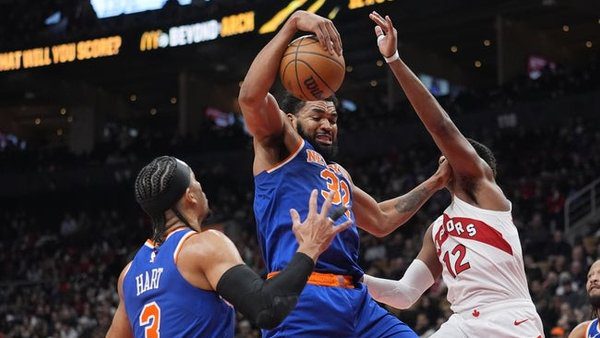
The situational spot here heavily favors the visitors. The Knicks are reeling from a loss to the Pistons, while Kevin Durant is playing like an MVP, making this a prime ATS pick to back the Rockets.
The Setup: Rockets at Knicks
The Knicks are laying 3.5 points at Madison Square Garden against a Rockets squad that’s been quietly efficient all season, and this line doesn’t add up once you run the efficiency math. New York sits at 35-21 with a dominant 21-8 home mark, while Houston comes in at 34-20 and a respectable 16-13 on the road. The projection has this game landing at Knicks by 2.4 points, which creates a 1.1-point edge toward Houston covering that 3.5-point spread. The market’s disrespecting the Rockets here, and the numbers tell me why that’s a mistake.
New York’s offensive rating advantage over Houston’s defense sits at +6.9 points per 100 possessions — that’s a strong mismatch favoring the Knicks’ attack. But flip the script and Houston’s offense versus New York’s defense creates a +3.9 edge for the Rockets. The net rating differential between these teams is just +0.8 per 100 possessions in New York’s favor — basically priced correctly when you account for home court. At 3.5 points, this spread assumes a gap that simply isn’t there in the season-long data.
Kevin Durant dropped 35 points in Houston’s last outing against Charlotte, hitting two clutch free throws with 3.2 seconds left to seal a 105-101 win. Meanwhile, the Knicks got torched by Cade Cunningham for 42 points and 13 assists in a 126-111 home loss to Detroit — their third straight defeat to the Pistons this season. Miles McBride’s sports hernia will keep him out until early April at the earliest, which shifts rotation minutes but doesn’t fundamentally change New York’s efficiency profile.
Game Info & Betting Lines
Game Time: February 21, 2026, 8:30 ET
Location: Madison Square Garden
TV: ABC
Current Spread: New York Knicks -3.5 (-115) | Houston Rockets +3.5 (-105)
Moneyline: Knicks -165 | Rockets +140
Total: 216.5 (Over/Under -110)
Why This Line Exists
The market landed on Knicks -3.5 because of the obvious factors: New York’s 21-8 home record, their superior offensive rating of 118.8 versus Houston’s 116.9, and the general perception that Madison Square Garden provides a meaningful home-court edge. The Knicks also shoot the ball more efficiently — a 58.7% true shooting percentage compared to Houston’s 56.9%, with an effective field goal percentage gap of +2.0 points in New York’s favor.
But here’s where the possessions math tells a different story. The pace blend for this matchup projects at 97.6 possessions — a deliberate, grinding game that favors the team with better ball security and fewer wasted possessions. New York turns the ball over at just 11.9% compared to Houston’s 13.2%, creating a +1.3-percentage point turnover edge for the Knicks. That’s real, but it’s not enough to justify an extra point and a half on the spread.
The efficiency gap is too narrow to support this number. My model projects the final margin at Knicks by 2.4 points after factoring in a standard 2.0-point home-court adjustment. That leaves 1.1 points of value on Houston +3.5. The net rating differential of +0.8 per 100 possessions is within noise — these teams are essentially equals when you strip away the home/road splits and look at pure efficiency.
What’s propping up this line is narrative: the Knicks’ home dominance and the Rockets’ road inconsistency. But Houston’s 16-13 road record isn’t a disaster, and their 116.9 offensive rating ranks among the league’s better units. The market’s pricing in perception over production, and that creates opportunity.
Rockets Breakdown: What You Need to Know
Houston runs at a 96.5 pace — one of the slower tempos in the league — which keeps games tight and limits the number of possessions where variance can swing outcomes. Kevin Durant’s averaging 26.0 points on 51.0% shooting and 40.4% from three, giving the Rockets a legitimate closer in tight situations. Alperen Sengun adds 20.5 points and 9.2 rebounds while facilitating at a high level with 6.3 assists per game.
The Rockets’ clutch numbers reveal a team that competes but doesn’t dominate late: 14-15 in clutch situations with a -0.3 plus/minus in games decided by five points or fewer in the final five minutes. They shoot just 42.3% from the field and 29.6% from three in those moments, which suggests they can hang around but struggle to close consistently.
Steven Adams is out for the season with a Grade 3 ankle sprain, which shifts backup center duties to Clint Capela and Dorian Finney-Smith behind Sengun. That’s a rotation concern but not a dealbreaker — Sengun’s the engine, and he’s healthy. Amen Thompson provides 17.5 points, 7.6 rebounds, and 5.3 assists with versatile defense, while Jabari Smith Jr. and Reed Sheppard round out a balanced second unit.
Houston’s defensive rating of 111.9 is solid but not elite, and they’ll face challenges slowing down Jalen Brunson’s pick-and-roll attack. The Rockets grab offensive rebounds at a 35.4% rate — one of the league’s best marks — which creates second-chance opportunities and extends possessions even in a slower-paced game.
Knicks Breakdown: The Other Side
New York runs at a 98.7 pace, slightly faster than Houston but still below league average, and they thrive on efficiency rather than volume. Jalen Brunson’s 27.1 points and 6.1 assists anchor an offense that posts a 118.8 offensive rating — top-10 in the league. Karl-Anthony Towns adds 19.8 points and 11.9 rebounds, giving the Knicks size and shooting versatility at the five.
The Knicks’ shooting quality is legitimately better: 58.7% true shooting and 55.4% effective field goal percentage reflect an offense that generates clean looks and converts at a high rate. OG Anunoby and Mikal Bridges provide two-way value, combining for 32.2 points with elite perimeter defense. Bridges is shooting 50.4% from the field and 38.2% from three, making him a consistent connector in New York’s half-court sets.
Miles McBride’s absence with a sports hernia removes a rotation piece who was averaging 12.9 points on 42.0% three-point shooting, but the Knicks have enough depth with Tyler Kolek and Jordan Clarkson absorbing those minutes. The bigger issue is defensive consistency — New York’s 113.0 defensive rating is middle-of-the-pack, and they just allowed 126 points to Detroit at home.
In clutch situations, the Knicks are 12-10 with a +0.9 plus/minus, shooting 46.3% from the field and 42.7% from three when games tighten up. That’s a legitimate edge over Houston’s clutch struggles, and it matters in a game projected to stay within one possession.
The Matchup: Where This Game Gets Decided
This game gets decided in the half-court, where both teams prefer to operate. The pace blend of 97.6 possessions means we’re looking at roughly 195 total possessions between both sides — a grind-it-out Saturday night on ABC where every possession carries weight. New York’s +6.9 offensive mismatch against Houston’s defense is the strongest edge in this game, and it’s real. Brunson and Towns will get clean looks in pick-and-roll and pick-and-pop actions.
But Houston’s +3.9 offensive edge against New York’s defense keeps them competitive. Durant’s ability to score in isolation and Sengun’s passing out of the post create problems for a Knicks defense that’s been inconsistent at home. Over 97.6 possessions, that medium-level mismatch translates to roughly 3-4 extra points for Houston’s offense — enough to keep this game within the number.
The rebounding battle tilts Houston’s way. The Rockets grab offensive boards at a 35.4% rate compared to New York’s 29.4%, creating a -6.1-point gap in offensive rebounding. That’s a strong edge for Houston and one that extends possessions in a slower-paced game. If the Rockets can convert those second chances, they’ll stay within striking distance even if New York’s shooting quality gives them the efficiency edge.
New York’s ball security advantage is worth noting — that +1.3-percentage point turnover edge means fewer empty possessions and more opportunities to execute in the half-court. But it’s not a game-breaking gap, especially when Houston’s offensive rebounding can offset some of those lost possessions.
The writing’s on the wall with this matchup: it’s going to be close, methodical, and decided by execution in the final five minutes. New York’s clutch shooting gives them the edge to win outright, but 3.5 points is too many to lay when the efficiency gap is this narrow.
Bash’s Best Bet & The Play
I’m taking the points all day long. The projection has this game at Knicks by 2.4, which leaves 1.1 points of value on Houston +3.5. The net rating differential is within noise, the pace keeps variance low, and Houston’s offensive rebounding gives them a path to stay competitive even if New York’s shooting quality wins out over 48 minutes.
The risk here is obvious: New York’s home dominance is real, and their clutch shooting could push this to a comfortable four or five-point win if they execute late. But over 97.6 possessions, I trust Houston’s efficiency and Durant’s scoring to keep this within a possession. The Knicks just got torched at home by Detroit, and the market’s overreacting to New York’s home record without accounting for how tight these efficiency numbers actually are.
BASH’S BEST BET: Houston Rockets +3.5 for 2 units.
this number points to inflated home favorite, and the possessions math backs up the Rockets’ ability to cover. I’ve seen this movie before — a quality road team getting disrespected against a home favorite with a shiny record but pedestrian underlying numbers. Houston keeps it close, and 3.5 points is the cushion we need.