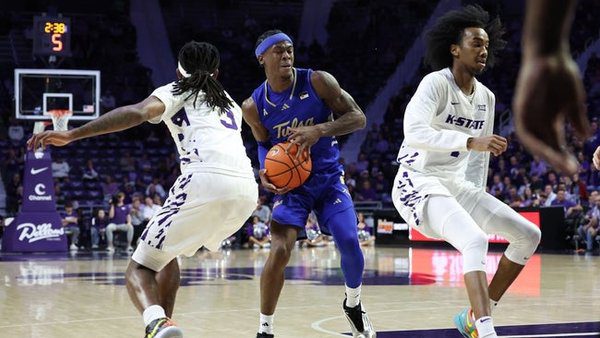
Sunday afternoon’s AAC matchup features a significant talent discrepancy, and given UTSA’s bottom-tier scoring metrics, Tulsa remains the authoritative ATS pick for bettors. While the Roadrunners attempt to win through offensive rebounding volume, Tulsa’s #11 national ranking in true shooting percentage ensures a level of execution that the visitors simply cannot match.
The Setup: UTSA at Tulsa
Tulsa’s laying 22.5 at home against UTSA on Sunday afternoon, and if you’re hesitating because that’s a big number, you’re not alone. But when you dig into the collegebasketballdata.com efficiency metrics, this isn’t some inflated trap line—it’s a reflection of two programs heading in completely opposite directions. Tulsa checks in at #52 nationally in adjusted net rating with a +14.0 mark, while UTSA sits at #345 with a brutal -19.5. That’s a 33.5-point chasm in efficiency, which is exactly the kind of gap that produces blowouts when the better team is at home. The Golden Hurricane are elite offensively (#25 in adjusted offensive efficiency at 122.5) and shoot the lights out (61.8% true shooting, #11 nationally). UTSA? They’re #336 offensively with a 98.5 rating and can’t shoot straight—45.5% effective field goal percentage ranks #358 nationally. This is a mismatch on paper, and the number reflects it.
Game Info & Betting Lines
Game Time: February 22, 2026, 4:00 ET
Venue: The Super Pit
Records: UTSA (5-21) at Tulsa (21-6)
Conference: American
Spread: Tulsa -22.5
Total: 157.5/158.5
Moneyline: Tulsa -10000, UTSA +1600
Why This Number Makes Sense (or Doesn’t)
The market landed on 22.5 for a reason—these teams are worlds apart. Tulsa’s offensive rating of 128.6 ranks #4 nationally in raw efficiency, while their defense sits at 110.4. That’s not lockdown territory (#236 defensively), but when you’re scoring that efficiently, you don’t need to be elite on the other end. UTSA’s defensive rating of 114.3 (#314) means they’re getting torched regularly, and their offensive rating of 98.3 (#353) means they can’t keep pace. The pace blend projects around 68 possessions, which is moderate—neither team is going to sprint this into a track meet. Tulsa prefers 66.3 possessions (#214), while UTSA plays faster at 70.0 (#58), so we’re splitting the difference.
The model projection has Tulsa winning by 25 points with the home court boost factored in, which means the market at 22.5 is actually giving you 2.5 points of value on UTSA if you believe the efficiency numbers. But here’s the thing—when you’re this bad offensively, those extra possessions don’t help. UTSA’s true shooting percentage of 49.1% (#363) is catastrophic. They can’t finish at the rim, they can’t shoot threes (28.9%, #360), and their effective field goal percentage is bottom-30 nationally. Tulsa’s 12.7-point true shooting advantage is massive, and that’s where this game gets decided.
UTSA Breakdown: The Analytical Edge
Let’s be clear—there’s no analytical edge for UTSA here. They’re 5-21 for a reason, and their last five games tell the story: losses to Florida Atlantic (52-60), East Carolina (72-88), North Texas (58-81), and South Florida (88-109), with a lone win at Charlotte (88-79). Jamir Simpson is their only legitimate offensive weapon, averaging 18.8 points per game (#63 nationally), but he’s surrounded by zero help. Dorian Hayes and Austin Nunez are both hovering around 8-9 points per game, and neither can create consistent offense.
The one area where UTSA shows life is offensive rebounding—34.1% offensive rebound rate ranks #45 nationally. That’s their only path to extra possessions and second-chance points. They also block shots at a decent clip (4.3 per game, #58), which means they have some rim protection. But when you’re shooting 39.5% from the field (#362) and turning the ball over 12.3 times per game, those advantages evaporate quickly. Their assist rate is abysmal (10.8 per game, #350), which tells you everything about their offensive flow—or lack thereof.
Tulsa Breakdown: The Counterpoint
Tulsa’s offensive efficiency is legitimate. They’re shooting 48.1% from the field (#40), 38.7% from three (#13), and 78.5% from the free throw line (#10). That’s elite shooting across the board, and their 56.9% effective field goal percentage (#20) confirms they’re getting quality looks. David Green leads the way at 14.6 points per game, but this is a balanced attack—Miles Barnstable (14.3 ppg), Tylen Riley (13.1 ppg), and Myles Rigsby (9.0 ppg) all contribute. Riley’s 3.8 assists per game (#207) keeps the offense humming, and their 15.1 assists per game (#108) shows they’re moving the ball.
The concern? Tulsa’s defense isn’t elite, and they’ve dropped three of their last five—losses to Wichita State (77-81), UAB (63-68), and South Florida (74-80). They’re not dominant at home right now, and their defensive rating of 110.4 suggests they can be scored on. But against a UTSA team that ranks #353 in offensive rating? That defensive vulnerability doesn’t matter. Tulsa’s 29.5% offensive rebounding rate (#240) is below average, but they don’t need second chances when they’re converting at 61.8% true shooting.
The Matchup: Where This Gets Decided
This game comes down to shooting quality, and Tulsa holds every advantage. The 12.7-point true shooting gap is enormous—that’s the difference between elite efficiency and bottom-tier offense. UTSA’s 45.5% effective field goal percentage means they’re taking bad shots and missing them, while Tulsa’s 56.9% eFG% means they’re getting open looks and knocking them down. The three-point shooting disparity is equally stark: Tulsa at 38.7% (#13) versus UTSA at 28.9% (#360). That’s a 10-point gap in three-point efficiency, and in a 68-possession game, that adds up fast.
The pace factor works in Tulsa’s favor. They control tempo at 66.3 possessions, which means they’ll slow this down and execute in the halfcourt. UTSA wants to push (70.0 pace), but when you can’t shoot, faster pace just means more missed shots. Tulsa’s turnover rate is slightly better (10.7 per game vs. 12.3), and while UTSA’s offensive rebounding gives them a puncher’s chance at extra possessions, they’re not converting those opportunities into points. The model projects a 150.6-point total, which is 6.9 points under the market’s 157.5. That tells you this could be uglier than expected.
Bash’s Best Bet
I’m on Tulsa -22.5, and I’m not overthinking this. The efficiency gap is too large, the shooting disparity is too significant, and UTSA has zero answers offensively. Tulsa’s 122.5 adjusted offensive rating against UTSA’s 118.0 adjusted defensive rating is a mismatch, and when you flip it—UTSA’s 98.5 adjusted offense against Tulsa’s 108.5 adjusted defense—it’s a complete shutdown scenario. The model sees 2.5 points of value on UTSA, but I’m fading that because UTSA’s offensive incompetence is real. They’re shooting under 46% effective field goal percentage and can’t make threes. Tulsa covers this by 25-plus.
If you want a secondary play, I’m looking at Under 157.5. The model projects 150.6, and with Tulsa controlling pace and UTSA struggling to score, this stays under the number. Tulsa doesn’t need to run up the score—they’ll execute, get stops, and cruise. Give me the favorite and the under in a game that shouldn’t be close.