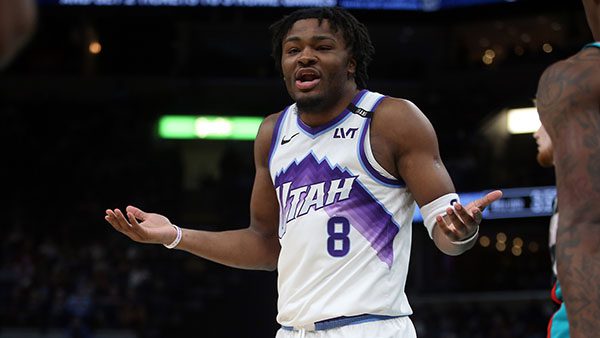
In a matchup between two lottery-bound squads, Utah’s superior 48.0% clutch win rate makes them the preferred ATS pick against a New Orleans team that consistently falters in tight fourth-quarter windows.
The Setup: New Orleans Pelicans at Utah Jazz
The Pelicans are laying 4.5 points on the road Thursday night at the Delta Center, and I’ve seen this movie before. New Orleans sits at 17-42 with a 6-21 road mark, yet the market’s asking them to cover nearly five points in hostile territory against an 18-40 Jazz squad that’s actually 11-18 at home. The projection puts this game at Utah +0.9 after factoring in home court, which means the market’s handing us 5.4 points of edge on the Jazz side. That’s not a small gap—that’s the market fundamentally mispricing what should be a coin-flip game between two lottery-bound teams. Both clubs are bleeding defensively, but the efficiency math tells a different story once you account for pace and possessions. Utah’s actually been slightly better in clutch situations this season (48.0% win rate versus New Orleans’ 34.4%), and when games tighten up late, that matters. The writing’s on the wall with this matchup: the Pelicans are getting too much respect for a road team that’s won six games away from home all season.
Game Info & Betting Lines
Game Time: February 26, 2026, 9:00 ET
Location: Delta Center
TV: Home: KJZZ-TV, Jazz+ | Away: GCSEN, Pelicans.com, NBA League Pass
Current Betting Lines (MyBookie.ag):
- Spread: New Orleans Pelicans -4.5 (-110) | Utah Jazz +4.5 (-110)
- Total: Over 240.0 (-110) | Under 240.0 (-110)
- Moneyline: New Orleans Pelicans -189 | Utah Jazz +152
Why This Line Exists
The market landed on Pelicans -4.5 because New Orleans just beat Golden State 113-109 at home with Zion Williamson dropping 26 and Dejounte Murray returning after nearly 13 months away. That recency bias is real—bettors see a win over the Warriors and assume momentum. But let’s run the efficiency math here. New Orleans posts a -5.4 net rating this season compared to Utah’s -7.6, which gives the Pelicans a 2.2-point edge per 100 possessions on paper. That’s a small gap, not a dominant one. Factor in the standard two-point home court advantage for Utah, and you’re looking at a projected margin of just 0.9 points in favor of the Jazz. The pace blend sits at 102.2 possessions, which means we’re getting an up-tempo game that should generate scoring opportunities—but it doesn’t explain why New Orleans is favored by nearly five on the road.
Here’s what the market’s missing: Utah’s offensive rating of 113.1 actually edges New Orleans’ 112.4, and while both defenses are atrocious (Utah 120.7, New Orleans 117.9), the Pelicans don’t have enough firepower to blow teams out consistently. New Orleans is 6-21 on the road for a reason—they can’t defend, they can’t close, and they’re without Trey Murphy III (out, no timetable) and Yves Missi (out for fifth straight game). Utah’s dealing with significant injuries too—Walker Kessler, Jaren Jackson Jr., Jusuf Nurkic, and Vince Williams Jr. are all done for the season—but Keyonte George is questionable and could return after missing five games. If George plays, that’s a massive boost for a Jazz offense that averages 29.9 assists per game (70.7% assist rate). This line doesn’t add up once you run the efficiency math and account for venue.
New Orleans Pelicans Breakdown: What You Need to Know
The Pelicans generate offense at 112.4 per 100 possessions, which is respectable, but their 117.9 defensive rating is bottom-five territory. Zion Williamson (21.9 PPG, 58.5% FG) remains a force in the paint when healthy, and Saddiq Bey has been solid lately—he scored 18 in the Warriors win, including a clutch reverse layup with under two minutes left. Jordan Poole added 12 in that game, though his season-long 37.3% shooting and 33.9% from three suggest he’s more volume scorer than efficient weapon. Without Murphy (22.1 PPG, 37.8% from three), the Pelicans lose their most consistent perimeter threat and have to lean harder on Poole and rookie Jeremiah Fears (13.1 PPG, 31.4% from three).
New Orleans shoots 56.4% true shooting and 52.5% effective field goal percentage, both decent marks, but they turn the ball over on 12.2% of possessions and don’t crash the offensive glass hard enough (26.9% OREB rate). In clutch situations—last five minutes, score within five—they’re just 11-21 with a -1.9 plus/minus and shoot 27.7% from three. That’s brutal. This is exactly the spot where New Orleans burns you: they look competent for three quarters, then can’t execute down the stretch on the road.
Utah Jazz Breakdown: The Other Side
Utah scores 118.0 per game and posts a 113.1 offensive rating, slightly better than New Orleans. The problem? Their 120.7 defensive rating is the worst in this matchup and one of the league’s worst overall. But at home, the Jazz are 11-18—not great, but not catastrophic either. Lauri Markkanen leads the way with 26.7 PPG and 47.7% shooting, though he’s questionable with a right ankle sprain and hip impingement suffered in Wednesday’s practice. If Markkanen sits, this line would move significantly, but as of now he’s listed questionable, not out.
The real story is Utah’s ball movement: 29.9 assists per game and a 70.7% assist rate, both elite marks. Even without Kessler, Jackson, and Nurkic, the Jazz share the ball and generate open looks. Brice Sensabaugh (12.7 PPG, 45.4% FG) has stepped up, and if George returns, he brings 23.8 PPG and 6.5 APG back into the rotation. Utah shoots 58.0% true shooting and 53.9% effective field goal percentage, both better than New Orleans. The turnover rate is higher (13.5% versus 12.2%), but in clutch situations, Utah’s actually positive: 12-13 record, +1.0 plus/minus, and 35.4% from three in crunch time. That’s a 13.6% clutch win rate gap over New Orleans, and it matters in tight games.
The Matchup: Where This Game Gets Decided
The pace blend of 102.2 possessions drives everything here. Over that many possessions, small efficiency gaps get magnified. New Orleans’ offense versus Utah’s defense projects to a -8.3 mismatch favoring the Pelicans—that’s a strong edge. But Utah’s offense versus New Orleans’ defense shows a -4.8 mismatch, meaning the Jazz should struggle slightly more to score. The net result? My model projects a total of 237.2 points, which sits 2.8 points below the 240.0 total. That’s a medium edge toward the under, and it makes sense: both teams are inefficient defensively, but neither has the firepower to consistently blow past 120 in a road/home split.
The shooting efficiency gap favors Utah by 1.6 percentage points in true shooting and 1.4 points in effective field goal percentage. Those are small edges, but they compound over 102 possessions. Utah’s turnover rate is slightly worse (1.3 percentage points higher), which means they’ll give New Orleans a few extra possessions—but the Pelicans haven’t shown they can capitalize consistently on the road. The rebounding edge is basically priced correctly, within noise. What tips this game is venue and clutch execution. Utah’s 48.0% clutch win rate versus New Orleans’ 34.4% tells you who’s more comfortable in close games, and this number points to tight finish. The possessions math tells a different story than the spread suggests: this should be a one-possession game, not a blowout.
Bash’s Best Bet & The Play
BASH’S BEST BET: Utah Jazz +4.5 for 2 units.
I’m taking the points all day long here. The market’s disrespecting Utah at home, and the 5.4-point edge versus the spread is too wide to ignore. New Orleans is 6-21 on the road and can’t close games in hostile environments—their -1.9 clutch plus/minus and 27.7% three-point shooting in crunch time are disqualifying. Utah’s 11-18 at home with better shooting efficiency, better ball movement, and a positive clutch profile. Even if Markkanen sits, the line would adjust, and we’d still have value. If he plays through the ankle issue, we’re getting a star at home as an underdog. The projection puts this at Utah +0.9, meaning the Jazz should win outright more often than the market suggests. Worst case, we lose a tight one by five. Best case, Utah wins straight up and we cash a +152 dog. The risk is New Orleans catching fire from three and Zion dominating the paint for 35 minutes, but their road profile doesn’t support that outcome. Give me the home team with the better shooting, better clutch execution, and nearly a full touchdown in cushion.
Lean: Under 240.0 for 1 unit. The projection sits at 237.2, and while both defenses are porous, neither offense is explosive enough to consistently push past 120 on their own. This game stays in the 230s.