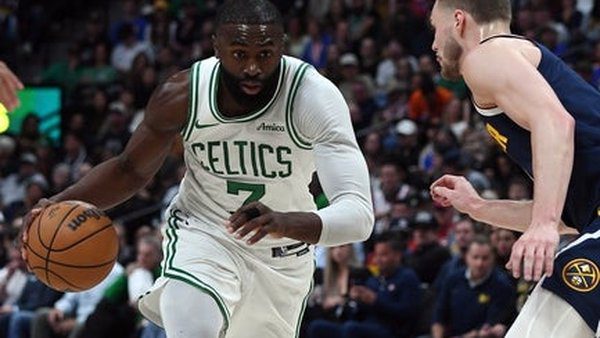
The public is rushing to lay nearly 20 points with the Celtics, but Bryan Bash is smelling a trap and grabbing the +18.0 with a Brooklyn team that still has enough professional scoring to avoid a total embarrassment.
The Setup: Brooklyn Nets at Boston Celtics
Boston’s laying 18 points at home against a Brooklyn team that’s lost six straight, and the market’s treating this like a scheduled demolition. The Celtics are rolling at 38-20, the Nets are lottery-bound at 15-43, and the efficiency gap is real. But here’s the issue—the projection tells a different story than this bloated number suggests. My model projects Boston by 9.6 points, which creates an 8.4-point edge on Brooklyn +18. That’s not a small disagreement with the market. This line doesn’t add up once you run the efficiency math against the pace this game will actually play at. The Nets are bad, no question, but they’re not getting run out of TD Garden by three possessions when you account for how both teams operate.
The writing’s on the wall with this matchup—Boston’s the better team by a wide margin, but the market’s disrespecting Brooklyn’s ability to keep this competitive into the fourth quarter. The +15.6 net rating gap is substantial, but when you blend these pace profiles together at 96.3 possessions, you’re looking at a deliberate, halfcourt game that naturally compresses margins. Brooklyn’s playing slow, Boston’s playing slower, and that possession math matters when you’re trying to cover 18.
Game Info & Betting Lines
Game Time: February 27, 2026, 7:30 ET
Location: TD Garden
TV: Home: NBC Sports BO | Away: YES, NBA League Pass
Current Betting Lines (Bovada):
- Spread: Boston Celtics -18.0 (-105) | Brooklyn Nets +18.0 (-115)
- Total: Over 208.0 (-110) | Under 208.0 (-110)
- Moneyline: Boston Celtics -1600 | Brooklyn Nets +800
Why This Line Exists
The market landed on 18 because the surface-level narrative screams blowout. Boston’s a legitimate contender sitting second in the East at 38-20, they’re 18-9 at home, and they just went 3-1 on a Western Conference road trip. Brooklyn’s 15-43, they’ve dropped six straight, and they just got handled by San Antonio’s second unit in a 16-point loss where Victor Wembanyama barely had to work. The Nets are 7-22 on the road, they rank 14th in the conference, and their -8.0 net rating screams tanking operation.
But here’s where the efficiency math complicates things. Boston’s +7.6 net rating creates that +15.6 gap when you stack them against Brooklyn, which is legitimately strong. The Celtics score 119.5 points per 100 possessions while holding opponents to 111.9. Brooklyn’s offense limps along at 109.7 while surrendering 117.8 on the other end. That’s a talent chasm, no argument.
What the market’s missing is the pace blend. Brooklyn plays at 97.0 possessions per game, Boston at 95.5. When you blend those together, you’re projecting 96.3 possessions in this game—one of the slower environments you’ll see this season. The possessions math tells a different story when you’re working with fewer trips. Every possession matters more, sure, but you’re also capping the ceiling on how ugly this can get. Boston projects to score 114.3 points, Brooklyn 106.7. That’s a 7.6-point margin before you even add home court, which pushes the projection to 9.6. That’s nearly nine points shy of the closing number.
Brooklyn Nets Breakdown: What You Need to Know
The Nets are bad, but they’re not completely devoid of NBA-level talent. Michael Porter Jr. is having a solid season at 24.6 points and 7.2 boards per game on 47.0% shooting and 36.9% from three. He dropped 24 points and 14 rebounds against the Spurs despite the loss. Nicolas Claxton gives them 12.6 points, 7.2 rebounds, and 4.1 assists while shooting 59.2% inside. That’s legitimate rim pressure when he’s engaged.
The problem is everything around them. Noah Clowney’s shooting 39.8% overall and 33.1% from three. Egor Demin’s at 39.8% from the field. Ziaire Williams is giving you 9.4 points on 40.5% shooting. This is a roster built to lose games, and they’re executing that plan perfectly at 15-43.
Offensively, they’re scoring 107.0 points per game with a 109.7 offensive rating. Their 56.2% true shooting and 52.5% effective field goal percentage are below league average but not catastrophic. They turn it over on 14.0% of possessions, which is decent ball security for a bad team. The real issue is defense—that 117.8 defensive rating is bottom-five territory. They can’t guard anybody consistently, and in clutch situations they’re 5-20 with a -2.6 plus/minus.
Boston Celtics Breakdown: The Other Side
Boston’s operating without Jayson Tatum, who’s still working back from Achilles surgery and targeting a March return. That’s a massive piece missing, but they’ve compensated by turning Jaylen Brown into a legitimate MVP candidate. Brown’s averaging 29.1 points, 7.1 rebounds, and 4.8 assists on 47.9% shooting. He just dropped 23 points in Denver after missing Tuesday’s game with a knee contusion, and he’s the clear alpha without Tatum.
The supporting cast is deep and balanced. Payton Pritchard’s giving them 17.2 points and 5.4 assists on 46.2% shooting and 36.3% from three. Derrick White’s at 17.1 points, 5.7 assists, and 1.5 blocks. Nikola Vucevic provides 16.0 points and 8.8 boards while shooting 49.9% overall and 36.8% from deep. Neemias Queta’s a rim-running energy guy at 9.8 points and 8.3 rebounds on 63.9% shooting.
The Celtics score 114.4 points per game with a 119.5 offensive rating—elite efficiency even without their best player. They shoot 57.7% true shooting and 54.9% effective field goal percentage, which is 2.4 percentage points better than Brooklyn’s shot quality. They turn it over on just 11.0% of possessions compared to Brooklyn’s 14.0%, creating a 3.0 percentage point turnover edge. They crash the offensive glass at 29.4% compared to Brooklyn’s 24.8%, giving them a 4.5-point offensive rebounding advantage. That’s significant—more possessions, more second chances, more margin for error.
The Matchup: Where This Game Gets Decided
This game gets decided in the halfcourt, where Boston’s structural advantages should grind Brooklyn down over 96 possessions. The efficiency gap is too wide to ignore here—that +15.6 net rating differential is the foundation of why Boston wins. When you project that gap over the 96.3-possession pace blend, Boston should outscore Brooklyn by roughly 15 points per 100 possessions, which translates to about 14.5 points over the actual game length. Add the 2.0-point home court advantage, and you’re looking at a projected margin around 9.6 points.
The offensive rebounding gap matters more in a slow game. Boston’s +4.5-point edge in offensive rebounding rate means they’re generating extra possessions in an environment where possessions are scarce. Over 96 trips, that’s potentially 4-5 additional scoring opportunities. The +2.4-point effective field goal percentage advantage means Boston’s getting better looks on every possession. The +3.0 percentage point turnover edge means Brooklyn’s giving the ball away more often, which turns into transition opportunities even in a slow game.
Where Brooklyn keeps this closer than 18 is in the halfcourt execution. They’re not a good team, but Porter Jr. can get his shot against anyone, and Claxton’s rim pressure forces Boston to help and rotate. The Celtics are 12-14 in clutch games with just a +0.2 plus/minus in those situations, which tells you they’re not blowing teams out consistently. Brooklyn’s 20% clutch win rate is ugly, but they’ve been in 25 clutch situations this season—that’s 25 games that stayed within five points in the final five minutes. This is exactly the spot where Boston wins comfortably but doesn’t annihilate.
Bash’s Best Bet & The Play
I’m taking the points all day long. Brooklyn +18 is the play, and I’m putting 2 units on it. The math is clear—my model projects a 9.6-point Boston win, the market’s asking you to lay 18, and that creates an 8.4-point cushion. That’s too much air in this number when you account for the pace and the possession-by-possession grind this game will become.
Boston should win. They’re the better team, they’re at home, and they have every structural advantage. But covering 18 in a 96-possession game requires dominance on both ends that the Celtics haven’t shown consistently without Tatum. They beat Denver by 19 on Wednesday, sure, but Jamal Murray left that game after eight minutes with an illness. Before that, they were winning by single digits on the road against quality opponents.
The risk is Boston getting hot from three and turning this into a laugher by halftime. They shoot 36.1% from deep as a team, and if Brown, Pritchard, and Vucevic all catch fire, this number could look smart. But I’ve seen this movie before—slow pace, bad road team, inflated spread. The efficiency gap is real, but it’s not 18-point real when you’re only getting 96 possessions to work with.
BASH’S BEST BET: Brooklyn Nets +18.0 for 2 units.