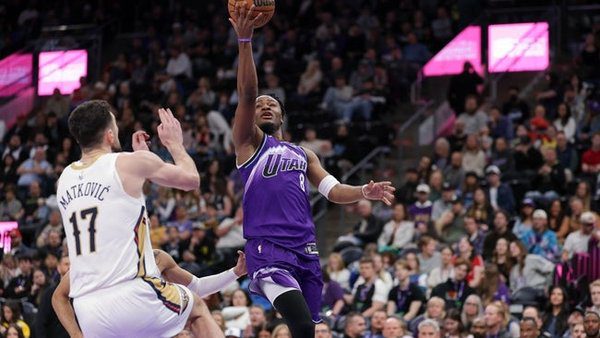
When a 12-point line meets a Denver squad navigating a significant injury crisis, the value rests in determining if Utah’s high-variance pace can bridge the talent gap.
The Setup: Nuggets at Jazz
Denver rolls into Salt Lake City on Monday night laying 12 points against a Jazz squad that’s been obliterated by injuries but still plays at a pace that creates variance. The Nuggets are 37-24 and clinging to fifth in the West after dropping Sunday’s game to Minnesota, while Utah sits at 18-42 and firmly in lottery territory. The projection here lands at Denver by 4.2 points, which means the market’s asking you to believe in a blowout that the efficiency math doesn’t fully support. That +7.8 edge versus the spread is substantial—this line doesn’t add up once you run the possessions math against what these teams actually do on the floor.
Denver’s dealing with its own injury crisis. Aaron Gordon remains out for a 15th straight game with a hamstring strain, Peyton Watson just hit the shelf with a hamstring issue of his own, and Cameron Johnson is doubtful with ankle inflammation after struggling through Sunday’s loss. That’s three rotation pieces missing or compromised, and it shows up in the efficiency gap. Utah’s lost Walker Kessler, Jaren Jackson Jr., and Jusuf Nurkic for the season, plus Lauri Markkanen is out with a foot injury and Kevin Love gets the night off. But here’s the thing: the Jazz still push pace at 103.1 possessions per game, and in a projected 101-possession environment, that creates enough scoring opportunities to keep this game closer than 12 points suggests.
Game Info & Betting Lines
Game Time: March 2, 2026, 9:00 ET
Location: Delta Center
TV: Home: KJZZ-TV, Jazz+ | Away: Altitude Sports, NBA League Pass
Current Betting Lines (Bovada):
- Spread: Nuggets -12.0 (-110) | Jazz +12.0 (-110)
- Total: 243.5 (Over -110 | Under -110)
- Moneyline: Nuggets -675 | Jazz +460
Why This Line Exists
The market’s hanging this 12-point spread on a -12.2 net rating gap between these teams—Denver at +4.5, Utah at -7.7. That’s a legitimate chasm in season-long efficiency, and it’s the foundation for why the Nuggets are heavy road favorites. But the projection accounts for that gap and still lands at just 4.2 points after factoring in a modest home-court bump. The difference between what the market’s asking and what the efficiency math projects is that 7.8-point cushion favoring Utah.
Here’s where it gets interesting: Denver’s offensive rating of 120.2 is elite, but they’re running into a Utah team that still generates offense at 113.0 per 100 possessions despite the roster carnage. The pace blend sits at 101 possessions, which is up-tempo enough to create volatility. More possessions mean more opportunities for both teams to score, and in a game where the Nuggets are missing key rotation depth, that variance works against laying double digits on the road.
The total at 243.5 also feels inflated. My model projects 237.2 points, giving us a -6.3 edge toward the under. Even with the pace pushing triple digits, the shooting quality gap here is real—Denver’s effective field goal percentage sits at 57.1% compared to Utah’s 53.6%, a 3.5-percentage-point advantage. But Utah’s offensive rebounding rate is actually 2.5 points better than Denver’s, which means second-chance opportunities could keep possessions alive and mitigate some of that shooting efficiency edge.
Nuggets Breakdown: What You Need to Know
Nikola Jokic is doing everything humanly possible to carry this team. He’s averaging 28.8 points, 12.6 rebounds, and 10.5 assists with a ridiculous 57.0% field goal percentage and 40.1% from three. He dropped 35 points, 13 rebounds, and nine assists on Minnesota on Sunday and still couldn’t get the win. Jamal Murray added 25 points on 9-of-22 shooting, but the supporting cast is thinning out fast.
Without Gordon, Watson, and potentially Johnson, Denver’s rotation depth is compromised. Tim Hardaway Jr. and Bruce Brown are being asked to absorb more minutes on the wing, and while Hardaway’s shooting 40.9% from three, he’s not the two-way presence that Watson provides. The Nuggets rank fifth in offensive rating at 120.2, but their defensive rating of 115.7 isn’t elite—it’s just solid. Against a Jazz team that can push pace and generate open looks, that defense needs to hold up for 48 minutes to justify a 12-point spread.
Denver’s clutch record sits at 14-16 with a -1.3 plus-minus in close games, which tells you they’re not consistently closing out tight contests. If Utah hangs around—and the pace suggests they will—the Nuggets don’t have the clutch track record to guarantee they pull away late.
Jazz Breakdown: The Other Side
Utah’s a mess on paper, but they’re not rolling over. Keyonte George is averaging 23.6 points and 6.5 assists, and he’s shooting 45.6% from the field with 37.1% from three. He’s the primary playmaker now with the frontcourt decimated, and he’s capable of keeping this game competitive through sheer shot volume. Brice Sensabaugh adds 12.8 points per game, and Kyle Filipowski is stepping into extended minutes with Kessler, Jackson, and Nurkic all done for the season.
The Jazz defense is a disaster at 120.7 points allowed per 100 possessions, which is why they’re 18-42. But their offensive rebounding rate of 26.3% is actually better than Denver’s 23.7%, and that’s going to matter in a fast-paced game. Utah’s getting 11.9 offensive rebounds per game, which creates extra possessions and keeps the score ticking up even when initial shots don’t fall.
Utah’s clutch record is 12-13 with a +1.0 plus-minus, which is better than Denver’s. They’ve actually been competitive in tight games despite the awful record, and at home—even at 11-20—they’ve got enough familiarity with the building to avoid complete blowouts against short-handed opponents.
The Matchup: Where This Game Gets Decided
The possessions math tells a different story than the 12-point spread suggests. At 101 projected possessions, every point of efficiency matters, and the gap here isn’t wide enough to support a double-digit margin. Denver’s true shooting percentage of 61.1% is excellent, but Utah’s 57.8% isn’t terrible—that’s a 3.3-percentage-point gap that translates to maybe 6-7 points over the course of a full game, not 12.
The offensive rebounding edge for Utah is real. That 2.5-percentage-point advantage means the Jazz are going to get extra cracks at the rim, and against a Denver team missing defensive stoppers like Gordon and Watson, those second-chance points add up. The efficiency gap is too wide to ignore in terms of who should win this game—Denver’s the better team by every metric—but it’s not wide enough to lay 12 on the road with a depleted rotation.
Denver’s offense runs through Jokic, and Utah has no one who can guard him. But the Nuggets are going to have to score in the 120s to cover this number, and that requires Murray to be efficient and the role players to hit open threes. If Utah pushes pace and forces Denver into a track meet, the variance created by 101 possessions keeps this game within striking distance.
The writing’s on the wall with this matchup: Denver wins, but Utah’s pace and offensive rebounding keep them competitive enough to stay inside the number. This is exactly the spot where a heavy road favorite burns you—not because they lose outright, but because the game stays close enough that 12 points is too many to ask.
Bash’s Best Bet & The Play
I’m taking the points all day long. The projection has Denver by 4.2, and the market’s asking for nearly three times that margin. The 7.8-point edge versus the spread is substantial, and it’s backed by the efficiency math that accounts for pace, shooting quality, and rebounding. Denver’s missing too many rotation pieces to confidently blow out a Jazz team that’s going to push tempo and crash the offensive glass.
The risk here is obvious: Jokic goes nuclear and Denver’s shooting gets hot enough to pull away in the third quarter. But the Nuggets’ clutch struggles and Utah’s ability to hang around in close games gives me enough confidence that this stays within two possessions deep into the fourth quarter. Even if Denver wins by 8 or 9, we cash the ticket.
The under at 243.5 also has merit with a 6.3-point edge, but I’m more confident in the spread. Utah’s offensive rebounding and pace push the score higher than you’d expect from a team missing its entire frontcourt, and Denver’s capable of hitting 120 on any given night.
BASH’S BEST BET: Jazz +12.0 for 2 units.
Denver wins, but the market’s disrespecting Utah’s ability to keep this competitive through pace and effort. The possessions math doesn’t support a blowout, and I’ve seen this movie before—short-handed road favorites laying double digits against bad teams that still play hard. Give me the points and let’s cash a ticket in the Delta Center.