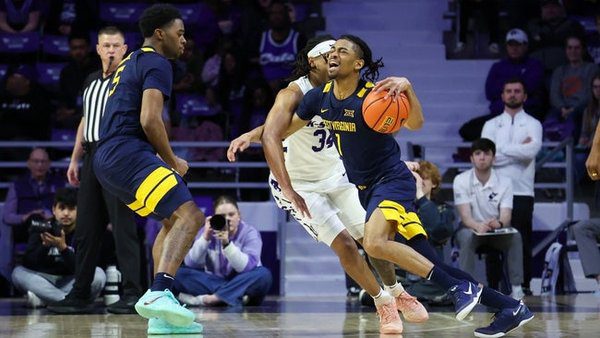
Bash sees a market overreacting to West Virginia’s home record while ignoring the Mountaineers’ offensive limitations against a UCF squad that’s proven it can score in hostile Big 12 environments.
The Line That Doesn’t Add Up
West Virginia’s laying 3.5 points at home against #25 UCF on Friday night, and I’m already hearing the narrative: Mountaineers are 14-4 at home, they own this matchup historically, and UCF’s defense is porous. But when you dig into the collegebasketballdata.com efficiency numbers, this spread feels inflated by at least a possession. The Knights rank #35 nationally in adjusted offensive efficiency (121.0) while West Virginia checks in at a pedestrian #134 (111.3). That’s a 9.7-point gap in offensive firepower, and it matters more than home court when you’re talking about a team that averages just 69.6 points per game.
The Mountaineers’ defensive prowess is real—#22 in adjusted defensive efficiency (97.8)—but UCF has been scoring on everyone. They’re averaging 82.9 PPG with a true shooting percentage of 58.2% and they’ve hit 38.2% from three all season. West Virginia’s offense, meanwhile, is shooting 44.2% from the field and a brutal 67.2% from the charity stripe. That’s #341 nationally in free throw shooting, and it’s the kind of weakness that gets exposed in close games.
Why the Market Landed Here
The spread opened at West Virginia -3.5, and it makes sense on the surface. The Mountaineers are 14-4 at home, they beat UCF 74-67 in Orlando just three weeks ago, and they’ve won four of the last five meetings. But context matters. That February 14th win came during a stretch where UCF was 3-3 in their last six—they’ve since gone 5-5 in their last ten, but two of those losses were one-possession heartbreakers (87-86 to Baylor, 104-111 to Oklahoma State in a shootout).
West Virginia’s home dominance is built on defense, not offense. They’re holding opponents to 64.7 PPG (9th nationally) and limiting teams to 41.5% shooting. But their offensive rating at home is still just 108.0, and they’ve scored more than 70 points just twice in their last five games. The KenPom prediction has this game at 72-69 West Virginia with a 61% win probability, which suggests a tighter contest than the spread implies. The total of 141.5 feels low given UCF’s offensive firepower, but West Virginia’s glacial pace (62.6, #343 nationally) is dragging the projected tempo down to 65 possessions.
Warren Nolan’s strength of schedule data adds another layer: UCF’s SOS ranks 25th nationally compared to West Virginia’s 92nd. The Knights have been battle-tested in Big 12 play with a 5-6 Q1 record, while the Mountaineers are 5-8 in Q1 games. UCF knows how to hang in elite environments.
The Bubble Factor and Late-Season Motivation
This is a conference game with massive implications for both teams, but the urgency levels are different. UCF sits at #35 in RPI with a 20-9 record and a respectable 5-6 Q1 mark. They’re safely in the tournament conversation, but another quality road win would solidify their resume. West Virginia, at #100 in RPI and 17-13 overall, is squarely on the bubble. They need this game desperately.
Here’s where I get contrarian: desperation doesn’t always translate to execution, especially when your offense is as limited as West Virginia’s. The Mountaineers are 4-6 in their last ten and averaging just 64.4 PPG in that stretch. They’ve scored fewer than 65 points in four of their last five games. Honor Huff (16.6 PPG) is their only consistent scoring threat, and UCF can throw multiple defenders at him. I trust UCF’s offensive firepower more than I trust West Virginia’s ability to grind out possessions in the mid-60s.
One injury note worth monitoring: UCF’s Jeremy Foumena is listed as questionable with an ankle injury sustained in the Oklahoma State game. He’s not a primary scorer, but he’s a key rotational big. If he sits, UCF’s rebounding could take a hit—they’re already just +2.1 per game on the boards. West Virginia’s not a dominant rebounding team either (34.5 RPG, #236 nationally), so I don’t see this as a dealbreaker.
The Matchup Chess Match
This game hinges on pace and shot quality. West Virginia wants to slow this down, shorten the game, and turn it into a defensive slugfest. UCF wants to push tempo (69.5 pace, #68 nationally) and create transition opportunities. The Knights have 358 fast break points this season compared to West Virginia’s 226. That’s a massive gap.
UCF’s assist-to-turnover ratio (1.45) is significantly better than West Virginia’s (1.16), which tells me the Knights are more efficient in halfcourt sets. Themus Fulks is the engine here—he’s dishing 7.4 assists per game (#4 nationally) and orchestrating an offense that ranks #27 in adjusted efficiency per KenPom. West Virginia’s forced turnover rate (18.1%) is solid but not elite, and UCF’s turnover rate of just 15.8% suggests they’ll protect the ball.
The head-to-head history favors West Virginia (4-1 in the last five), but those games were decided by an average of 9.8 points. UCF’s improved offensive efficiency this season—they’re shooting 47.8% from the field compared to 35.4% in the last five meetings—suggests they’re better equipped to compete. The Mountaineers’ 3-point shooting advantage in those games (45-for-127 vs. UCF’s 31-for-115) won’t be as pronounced this time around given UCF’s 38.2% three-point shooting this season.
Breaking Down the Efficiency Gap
| Metric | UCF | West Virginia | Edge |
|---|---|---|---|
| KenPom Rank | #48 | #60 | UCF |
| RPI (Warren Nolan) | #35 | #100 | UCF |
| Strength of Schedule | #25 | #92 | UCF |
| Q1 Record | 5-6 | 5-8 | UCF |
| Adj. Offensive Rating | 121.0 (#35) | 111.3 (#134) | UCF +9.7 |
| Adj. Defensive Rating | 107.9 (#148) | 97.8 (#22) | WVU +10.1 |
| Net Rating | +13.1 (#60) | +13.4 (#58) | WVU +0.3 |
The net rating gap is just 0.3 points, which screams coin flip. But the style clash favors UCF’s strengths. West Virginia’s defense will keep this competitive, but their offense is too limited to pull away. The projected tempo of 65 possessions means fewer opportunities for the Mountaineers to capitalize on home court, and UCF’s superior offensive efficiency should shine through.
The over/under of 141.5 is intriguing. KenPom projects 144.6, and my model has it at 144.6 as well. West Virginia’s home games have gone under in five of their last six, but that’s largely because they can’t score. UCF’s road games have been volatile—17 overs in their last 25 on the road, but six unders in their last nine. I lean toward the over given UCF’s firepower, but the pace concerns are real.
The Bottom Line
I’m fading West Virginia’s home mystique and backing the more complete offensive team. UCF has the metrics, the efficiency edge, and the shot-making ability to cover 3.5 points on the road. The Mountaineers’ offense is too one-dimensional, and their free throw shooting (67.2%) is a liability in close games. The primary risk is West Virginia’s elite defense grinding this into a rock fight, but even then, I trust UCF to execute in the halfcourt.
BASH’S BEST BET: UCF +3.5 for 2 units.
The Knights have proven they can score in hostile Big 12 environments, and I’ll take the better offensive team getting points in a game that projects as a possession-by-possession battle. If Foumena plays, even better. If not, UCF’s perimeter shooting and ball movement are enough to keep this within striking distance—and I expect them to win outright.