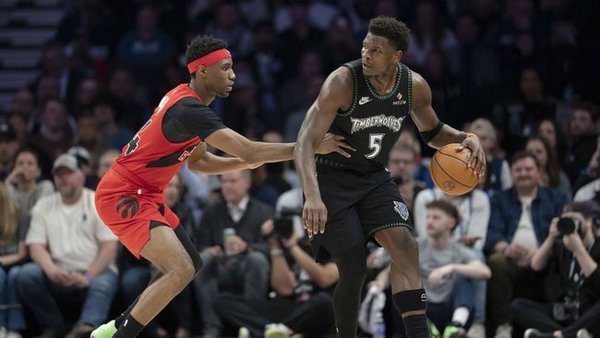
Minnesota enters as a heavy home favorite, but the underlying efficiency metrics suggest a much tighter window at Target Center. While the Wolves are rolling, our prediction identifies a significant 2.5-point discrepancy between the market spread and the actual projected margin.
The Setup: Magic at Timberwolves
Minnesota’s laying 6.5 points at home against an Orlando squad that just gutted out a dramatic win over Dallas, and the projection tells a different story than this number suggests. The Timberwolves are rolling with five straight wins and sit third in the West at 40-23, but the efficiency math points to a 4.0-point margin when you account for home court. That’s a 2.5-point gap between what the market’s asking and what the possessions math actually supports. Orlando’s dealing with Franz Wagner’s absence, sure, but this Magic team just proved they can execute in crunch time without him—Wendell Carter’s game-winner Thursday wasn’t a fluke, it was a product of their 64.5% clutch win rate that leads this matchup. The Timberwolves are the better team on paper, but this line doesn’t add up once you run the efficiency math against the actual talent gap.
Minnesota’s +4.3 net rating against Orlando’s +0.3 creates that 4.0-point foundation, but the market’s tacked on an extra two-plus points that I’m not seeing in the underlying numbers. The pace blend sits at 100.8 possessions, which means we’re getting a slightly faster game than Orlando typically plays but nothing that dramatically shifts the scoring environment. When you project this out over those possessions, you’re looking at Minnesota around 116 and Orlando around 114—competitive basketball, not a blowout waiting to happen.
Game Info & Betting Lines
Orlando Magic (33-28) at Minnesota Timberwolves (40-23)
When: Saturday, March 7, 2026, 3:00 PM ET
Where: Target Center
Watch: Prime Video
Current Lines (MyBookie.ag):
Spread: Timberwolves -6.5 (-110)
Total: 226.5 (Over/Under -110)
Moneyline: Timberwolves -278 | Magic +218
Why This Line Exists
The market’s giving Minnesota this extra cushion because of what the eye test shows—Anthony Edwards dropping 41 on Memphis, then 22 more against Toronto with that poster dunk over RJ Barrett that had Target Center losing its mind. The Wolves are hot, they’re home, and they’re facing a Magic team missing their second-leading scorer. That’s the narrative, and it’s worth about 6.5 points to the betting public.
But here’s what the numbers actually say: Minnesota’s 116.5 offensive rating against Orlando’s 113.3 defensive rating creates a +3.2 mismatch when the Wolves have the ball. Flip it around, and Orlando’s 113.7 offense against Minnesota’s 112.2 defense gives you a +1.5 edge for the Magic possessions. Neither of those gaps screams six-plus-point blowout territory. The pace blend at 100.8 possessions means you’re getting about 101 chances for each team to execute their offense—that’s enough possessions for variance to matter, enough possessions for Orlando’s clutch execution to show up if this game stays tight.
The shooting quality gap is real—Minnesota’s +3.7 percentage point edge in effective field goal percentage represents legitimate shot-making superiority. That’s the Wolves’ biggest weapon here, the ability to generate better looks possession after possession. But over 100 possessions, that 3.7% gap translates to maybe 7-8 extra points if everything holds to form. Add in Minnesota’s +1.3 edge in offensive rebounding rate, and you’ve got the makings of that 4-point projected margin. What you don’t have is the makings of a 6.5-point spread.
Orlando Magic Breakdown: What You Need to Know
The Magic just proved something important Thursday night: they can win without Wagner when it matters most. Jalen Suggs hit the clutch three, Carter finished with the dagger dunk, and suddenly you’ve got a team that’s 20-11 in clutch situations this season. That’s not accidental. Paolo Banchero’s putting up 22.0 points and 8.5 boards per game, Desmond Bane’s at 20.2 points on 48.5% shooting, and Tristan da Silva just led them with 19 in that Dallas win. The offensive firepower exists even with Wagner sidelined.
The efficiency profile tells you Orlando’s basically a league-average team—113.7 offensive rating, 113.3 defensive rating, +0.3 net—but that undersells their ability to execute in tight games. Their 57.3% true shooting is solid, their 12.0% turnover rate keeps possessions alive, and they’re grabbing 24.8% of available offensive rebounds. They’re not elite anywhere, but they’re competent everywhere, and competent teams with clutch DNA can cover 6.5 on the road when the matchup’s right.
The road record sits at 13-15, which isn’t inspiring, but dig into the context: they’re +0.4 in plus/minus overall, meaning they’re playing competitive basketball in most environments. Jonathan Isaac’s questionable status matters for defensive versatility, but this team just held Dallas to a one-point game without him. They’ll find minutes for whoever’s available.
Minnesota Timberwolves Breakdown: The Other Side
Edwards is doing MVP-caliber things—29.5 points per game on 49.5% shooting and 40.6% from three—and the supporting cast is humming. Julius Randle’s at 21.5 and 6.9 boards, Jaden McDaniels is shooting 43.9% from deep, and the bench has Naz Reid providing 13.9 points and 6.4 rebounds. This is a deep, talented roster that’s 22-11 at home for good reason.
The Timberwolves’ 116.5 offensive rating ranks among the league’s best, built on that 59.6% true shooting and 56.5% effective field goal percentage. They’re getting quality looks, converting at elite rates, and grinding out possessions with 26.1% offensive rebounding. The 112.2 defensive rating keeps opponents honest, and the +4.3 net rating reflects a team that’s genuinely good on both ends.
But here’s the thing about this five-game win streak: they beat Toronto by eight, Memphis by seven, and the margins haven’t been massive against quality competition. Their 57.1% clutch win rate trails Orlando’s, and that +0.6 clutch plus/minus suggests they’re winning close games without dominating them. Kyle Anderson’s questionable with knee soreness, which could trim some frontcourt depth, but this roster has enough talent to absorb that loss.
The Matchup: Where This Game Gets Decided
This is exactly the spot where pace and efficiency create a narrower margin than the spread suggests. Over 100.8 possessions, Minnesota’s offensive advantage materializes through that +3.7 effective field goal percentage edge—better shot selection, better conversion rates, more points per attempt. That’s real, and it’s why the Wolves project to win this game. But Orlando’s not getting blown off the floor on their possessions. That +1.5 offensive rating advantage when the Magic have the ball means they’re scoring efficiently enough to stay within striking distance.
The possessions math tells a different story than the 6.5-point spread. If Minnesota’s winning by 4 in the projection and the game’s playing at 101 possessions, you need the Wolves to either force more turnovers than usual or completely dominate the glass to push this past six points. The turnover rates are basically identical—Minnesota’s 12.8% to Orlando’s 12.0%—so that’s not your separation mechanism. The +1.3 offensive rebounding edge for Minnesota adds maybe 1-2 extra possessions, not game-breaking stuff.
What happens if this game gets tight in the final five minutes? That’s where Orlando’s 64.5% clutch win rate becomes relevant. They just executed a perfect final minute against Dallas—Suggs three, defensive stop, Carter dunk—and they’ve been doing that all season. Minnesota’s clutch execution is solid but not superior, and in a game projected this close, that late-game competency matters for covering spreads even if it doesn’t change who wins.
The efficiency gap is too wide to ignore here in terms of picking a winner—Minnesota’s legitimately better—but it’s not wide enough to justify laying 6.5 when the projected margin sits at 4.0. You’re asking the Timberwolves to outperform their season-long efficiency profile by a significant margin, and I’ve seen this movie before: good team, reasonable spread, market overreacts to recent results and injuries.
Bash’s Best Bet & The Play
I’m taking the points all day long with Orlando at +6.5. The market’s disrespecting the Magic here, hanging an extra 2.5 points on this line that the efficiency math doesn’t support. Minnesota should win this game—they’re better, they’re home, they’re rolling—but winning by 4 and winning by 7 are completely different outcomes when you’re betting the spread.
Orlando’s clutch execution gives them the tools to keep this competitive deep into the fourth quarter, and even if Minnesota pulls away late, you’ve got a 2.5-point cushion between the projection and the number. That’s your margin for error, and it’s enough. The pace environment doesn’t create blowout conditions, the efficiency gaps are meaningful but not massive, and the Magic just showed they can win without Wagner against quality competition.
The risk is simple: Edwards goes supernova for 40-plus, Minnesota shoots 60% from the floor, and the talent gap overwhelms everything else. But that’s not the likely outcome based on season-long patterns. The likely outcome is a competitive game that Minnesota wins by 4-6 points, and that means Orlando covers.
BASH’S BEST BET: Orlando Magic +6.5 for 2 units.
The writing’s on the wall with this matchup—the numbers say close game, the market says comfortable win, and I’m riding with the numbers every time that gap exists.