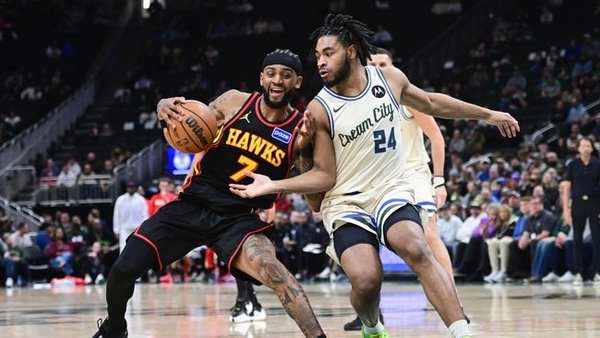
Atlanta enters as a 6.5-point favorite following a hot streak, but the underlying metrics suggest the market is overvaluing the home-court advantage at State Farm Arena. Our prediction identifies a mere 0.3 net rating differential, making this nearly a touchdown spread look inflated for a Hawks team that has struggled to defend its own floor this season.
The Setup: Philadelphia 76ers at Atlanta Hawks
The Atlanta Hawks are laying 6.5 points at State Farm Arena against a Philadelphia squad that’s missing three rotation pieces, and the projection says this line is 4.3 points too wide. the projection has Atlanta by just 2.1 points once you factor in home court, which means the market’s overvaluing the Hawks’ home advantage against a 76ers team that’s actually been better on the road (17-12) than Atlanta has been at home (14-16). Philadelphia enters at 34-28 with Tyrese Maxey carrying the offensive load without Joel Embiid, Paul George, and likely VJ Edgecombe. Atlanta just ripped off five straight wins and sits at 32-31, finally climbing back above .500 after a brutal stretch in January. But here’s the thing—the efficiency gap between these teams is basically nonexistent. The net rating edge sits at just 0.3 per 100 possessions in Atlanta’s favor, which is within noise. The possessions math tells a different story than this spread suggests.
The 76ers have been grinding through injuries all season, but they’ve found ways to compete. Maxey dropped 25 against Utah on Wednesday, and Quentin Grimes hit the clutch free throws that sealed a 106-102 win over a Jazz team that’s fallen apart. Jabari Walker added 22 points, showing the depth pieces can contribute when given runway. Philadelphia’s 19-15 clutch record with a +1.7 clutch plus-minus tells you they don’t fold late in tight games—they actually execute better than their season numbers suggest. Atlanta’s coming off a dominant 131-113 win in Milwaukee, but that Bucks team is in freefall. Nickeil Alexander-Walker led with 23, Onyeka Okongwu had 21, and they outscored Milwaukee 65-42 in the second half. The question is whether that performance translates against a more disciplined defensive structure, even without Embiid protecting the rim.
This line doesn’t add up once you run the efficiency math. The projected total sits at 231.4 possessions across a 101.4-possession pace blend, which means we’re looking at a moderately paced game that favors execution over chaos. Philadelphia’s 114.3 offensive rating matches up almost perfectly against Atlanta’s 113.7 defensive rating—the mismatch there is just 0.6 points per 100 possessions. Going the other way, Atlanta’s 113.9 offensive rating versus Philadelphia’s 114.4 defensive rating creates a -0.5 mismatch. These are razor-thin margins that don’t support a 6.5-point spread, especially when the road team has been the more consistent performer in their respective venue splits.
Game Info & Betting Lines
Game Time: March 7, 2026, 6:00 ET
Venue: State Farm Arena
TV Network: NBA TV
Current Betting Lines (MyBookie.ag):
- Spread: Atlanta Hawks -6.5 (-110)
- Moneyline: Hawks -270 | 76ers +212
- Total: 233.5 (Over/Under -110)
Why This Line Exists
The market’s pricing in the injury situation and Atlanta’s recent momentum, but it’s overreacting to both. Yes, Philadelphia is without Embiid, George, and likely Edgecombe. But this isn’t the same 76ers team that collapses without their stars—they’ve built legitimate depth this season. The 0.3 net rating gap between these teams is essentially nothing, yet we’re being asked to lay nearly a touchdown at home with a Hawks squad that’s 14-16 at State Farm Arena. That home record matters more than the five-game winning streak, which includes wins over teams like Milwaukee that are actively tanking their season.
The projection has this game at Philadelphia 115.6, Atlanta 115.8, which includes the standard 2.0-point home court advantage. That’s a 2.1-point projected margin, not 6.5. The pace blend of 101.4 possessions sits right between Philadelphia’s 100.0 and Atlanta’s 102.9, meaning neither team will be able to fully dictate tempo. This creates a possession-by-possession grind where execution matters more than raw talent. Philadelphia’s 57.2% true shooting percentage is just 0.9 points below Atlanta’s 58.1%, which is within noise. The real separation comes in effective field goal percentage, where Atlanta holds a 2.2-point edge at 55.0% versus Philadelphia’s 52.8%. That’s a medium-level advantage, but it’s not enough to overcome a 4.3-point spread edge when you factor in Philadelphia’s superior clutch performance.
The turnover rates are nearly identical—Philadelphia at 11.9% versus Atlanta at 12.4%—so ball security won’t be a differentiator. Where Atlanta does have an edge is offensive rebounding, but it actually goes Philadelphia’s way by 3.1 percentage points (26.3% versus 23.2%). That means the 76ers will generate more second-chance opportunities despite playing without their primary rim presence. Over 101 possessions, that offensive rebounding gap could be worth an extra three to four scoring chances, which directly narrows this spread.
Philadelphia 76ers Breakdown: What You Need to Know
Tyrese Maxey is the engine, averaging 28.9 points, 6.7 assists, and 2.0 steals while shooting 46.0% from the field and 37.2% from three. He’s been the most consistent offensive creator all season, and his ability to get downhill and either finish or kick creates advantages against Atlanta’s switching defense. Without Embiid and George, Maxey’s usage will spike even higher, but he’s proven capable of handling that load—he dropped 25 in the win over Utah while managing just 2.4 turnovers per game on the season.
Kelly Oubre Jr. steps into an expanded role at 14.3 points per game on 46.2% shooting and 37.2% from three. He’s a capable secondary scorer who can attack closeouts and finish in transition. Jabari Walker showed what he can do with 22 points against Utah, and Quentin Grimes hit the clutch free throws in that same game while contributing 16 points. This isn’t a one-man show—Philadelphia has legitimate secondary options who can score in bunches when given opportunities.
The defensive rating of 114.4 isn’t elite, but it’s functional, especially when they force teams into half-court execution. Philadelphia’s 9.2 steals per game create transition opportunities, and their 5.6 blocks per game provide some rim deterrence even without Embiid. The clutch numbers are what stand out—47.7% shooting in clutch situations with a 19-15 record and a +1.7 plus-minus. This team doesn’t panic late, and they execute better under pressure than their season-long numbers suggest.
Atlanta Hawks Breakdown: The Other Side
Jalen Johnson is the focal point, averaging 22.7 points, 10.5 rebounds, and 8.0 assists while shooting 49.1% from the field. He’s a triple-double threat every night who can facilitate, finish, and rebound at an elite level. His 3.4 turnovers per game are the tradeoff for his high usage, but he’s the engine that makes Atlanta’s offense function. Nickeil Alexander-Walker has been the surprise secondary scorer at 19.8 points per game on 43.6% shooting and 37.5% from three. He dropped 23 in the Milwaukee win and has the green light to hunt his shot.
CJ McCollum adds veteran scoring at 18.7 points per game with 45.2% shooting and 37.9% from three. He’s the steady hand who can create his own shot in the mid-range and provide clutch scoring when needed. Onyeka Okongwu has been excellent at 16.2 points and 7.9 rebounds on 48.6% shooting, and his rim protection (1.0 blocks per game) will be critical against Philadelphia’s penetration. Jonathan Kuminga is questionable with left knee inflammation after sitting out Wednesday’s win, which could impact Atlanta’s wing depth.
The offensive rating of 113.9 is nearly identical to Philadelphia’s 114.3, which means the efficiency edge is minimal. Atlanta’s 30.5 assists per game lead the league in ball movement, and their 70.5% assist rate shows they’re generating quality looks through passing rather than isolation. But the 14-16 home record is a red flag. They’ve been better on the road (18-15) than at State Farm Arena, which suggests they don’t have a real home-court advantage. The clutch numbers are mediocre—14-15 record with a -0.1 plus-minus—which means they don’t close games better than average.
The Matchup: Where This Game Gets Decided
This game will be decided in the margins over 101.4 possessions, and the efficiency gaps are too narrow to support a 6.5-point spread. Atlanta’s 2.2-point effective field goal percentage advantage translates to roughly 2.2 points over the full game, but Philadelphia’s 3.1-point offensive rebounding edge generates additional possessions that could be worth three to four points. That’s a net swing of one to two points in Philadelphia’s favor before you even factor in execution and clutch performance.
The pace blend favors Philadelphia’s style. They prefer to control tempo at 100.0 possessions per game, and Atlanta’s 102.9 isn’t fast enough to create the chaos that would expose Philadelphia’s shorthanded rotation. In a controlled game, Maxey’s ability to create advantages in the pick-and-roll becomes the primary offensive weapon, and Atlanta doesn’t have a lockdown defender who can contain him for 40 minutes. Johnson will switch onto him at times, but Maxey’s speed and shooting touch create problems for bigger defenders.
Defensively, Philadelphia will try to limit Atlanta’s ball movement and force Johnson into isolation situations where he has to create against set defenses. The 76ers’ 9.2 steals per game suggest they’re active in passing lanes, and if they can disrupt Atlanta’s 30.5 assists per game, they’ll force more contested shots. The offensive rebounding edge is critical here—Philadelphia’s 26.3% offensive rebounding rate versus Atlanta’s 23.2% means they’ll generate extra possessions that directly narrow this spread.
The clutch data tilts heavily toward Philadelphia. The 76ers are 19-15 in clutch situations with a +1.7 plus-minus, while Atlanta is 14-15 with a -0.1 plus-minus. That’s a 7.6% win rate gap in close games, which matters when you’re projecting a 2.1-point margin. If this game stays within one possession in the final five minutes—which the projection suggests it will—Philadelphia has the better track record of executing under pressure.
Bash’s Best Bet & The Play
I’m taking the points all day long. The projection has this game at a 2.1-point margin, and we’re getting 6.5 points with a 76ers team that’s 17-12 on the road against a Hawks squad that’s 14-16 at home. The efficiency gap is within noise, the pace blend favors Philadelphia’s controlled style, and the clutch numbers give the 76ers a legitimate edge in close games. Atlanta’s five-game winning streak is impressive, but three of those wins came against sub-.500 teams, and the Milwaukee win came against a Bucks team that’s completely collapsed.
The market’s disrespecting Philadelphia here. Yes, they’re without Embiid, George, and likely Edgecombe, but this team has built legitimate depth and executes better in clutch situations than Atlanta does. The offensive rebounding edge of 3.1 percentage points will generate extra possessions that directly narrow this spread, and Maxey’s ability to create advantages in the pick-and-roll gives Philadelphia a reliable offensive option in half-court sets. The main risk is if Atlanta’s ball movement gets hot early and they build a double-digit lead that forces Philadelphia to chase. But even then, the 76ers’ clutch track record suggests they won’t fold.
BASH’S BEST BET: Philadelphia 76ers +6.5 for 2 units.
this number points to overreaction to injuries and recent results. The possessions math and efficiency gaps don’t support a 6.5-point spread when the projection sits at 2.1. I’ve seen this movie before—the market overvalues home court and recent momentum while ignoring the underlying numbers. Philadelphia covers this spread in a game that stays within one possession down the stretch, and Maxey delivers another clutch performance to keep it close. Take the points and trust the math.