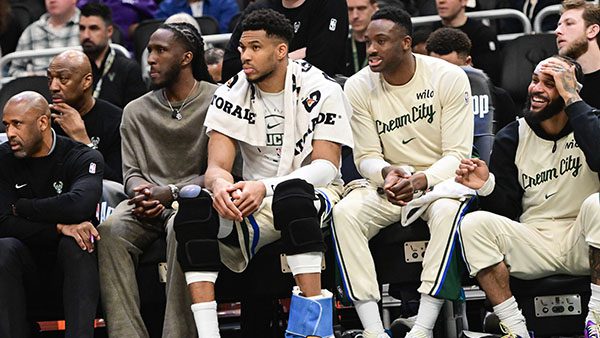
Milwaukee enters Saturday as a heavy 11-point favorite, but our prediction identifies a massive 7.5-point gap between the market price and the actual possession math. While Utah is severely shorthanded in the frontcourt, their 5.6% edge on the offensive glass suggests they can manufacture enough second-chance points to keep this contest within a respectable margin.
Milwaukee is laying 11 at home against a Jazz squad that’s limping into Fiserv Forum on Saturday night, and I’ll tell you right now—this line doesn’t add up once you run the efficiency math. The projection sits at Bucks by 3.5, which means we’re staring at a 7.5-point gap between what the market’s asking and what the possessions math actually supports. Utah’s banged up, sure, but they’re not 11 points worse than a Milwaukee team that just got steamrolled by Atlanta at home. The Bucks gave up 65 second-half points in that loss, and now they’re supposed to cover double digits against a Jazz team that can still score when Keyonte George and Brice Sensabaugh get rolling? I’m taking the points all day long.
Game Info & Betting Lines
Utah Jazz (19-44) at Milwaukee Bucks (26-35)
Date: Saturday, March 7, 2026
Time: 8:00 ET
Venue: Fiserv Forum
TV: Home: FanDuel SN WI | Away: KJZZ-TV, Jazz+, NBA League Pass
Current Betting Lines (MyBookie.ag):
Spread: Milwaukee Bucks -11.0 (-110) | Utah Jazz +11.0 (-110)
Total: 234.5 (Over -110 | Under -110)
Moneyline: Milwaukee Bucks -526 | Utah Jazz +375
Why This Line Exists
The market’s hanging this 11-point spread on Milwaukee’s home court and Utah’s injury situation, but the efficiency gap is too narrow to justify this number. The net rating differential sits at just 2.9 points per 100 possessions in Milwaukee’s favor—that’s Milwaukee at -4.3 versus Utah at -7.2. When you factor in a standard 2-point home-court advantage, the projection lands at Bucks by 3.5, not 11. The pace blend comes in at 100.6 possessions, which is elevated thanks to Utah’s 102.8 tempo pushing Milwaukee’s 98.4 pace upward. That means more possessions for both sides to execute their offensive systems, and Utah’s 113.4 offensive rating suggests they can score even against Milwaukee’s 117.0 defensive rating.
The Bucks own a slight shooting quality edge at 2.7 percentage points in effective field goal percentage—Milwaukee converts at 56.5% compared to Utah’s 53.8%—but that’s not a chasm. It’s a medium-sized advantage that matters over 100 possessions but doesn’t scream blowout territory. What’s more interesting is Utah’s 5.6-percentage-point edge on the offensive glass. The Jazz grab 26.3% of available offensive rebounds compared to Milwaukee’s 20.8%, which means second-chance opportunities that extend possessions and shrink margins. This is exactly the spot where Milwaukee burns you if you’re expecting a comfortable cover.
Utah Jazz Breakdown: What You Need to Know
Utah’s 19-44 record tells you they’re bad, and their 8-23 road mark confirms they struggle away from home. But let’s talk about what they actually do on the floor. The Jazz score 117.7 points per game on 46.6% shooting, and their 113.4 offensive rating shows they can generate efficient offense when the pace is right. Keyonte George is averaging 24.0 points and 6.3 assists while shooting 37.6% from three, and Brice Sensabaugh adds another 12.7 points off the bench. With Lauri Markkanen out, the usage shifts to George and Sensabaugh, and both showed they can produce—George dropped 21 in the first half against Washington in their last outing.
The problem for Utah is on the other end. That 120.6 defensive rating is bottom-tier, and they’re missing Walker Kessler, Jaren Jackson Jr., and Jusuf Nurkic for the season. That’s three rotation bigs who provided rim protection and rebounding, and now Utah’s relying on Kyle Filipowski and whatever depth they can scrape together. But here’s the thing—Milwaukee’s offense isn’t exactly humming right now. The Bucks scored just 113 points against Atlanta and got outscored 65-42 in the second half. Utah’s clutch record sits at 12-15 with a 44.9% field goal percentage in close games, which means they’ve been competitive down the stretch more often than their record suggests.
Milwaukee Bucks Breakdown: The Other Side
Milwaukee’s 26-35 record and 14-16 home mark tell you this isn’t the Bucks team you remember. Giannis Antetokounmpo is still producing—27.6 points, 9.9 rebounds, 5.4 assists on 63.7% shooting—but the supporting cast is inconsistent. Ryan Rollins has emerged as a secondary playmaker with 16.8 points and 5.5 assists per game, and Bobby Portis provides floor spacing at 45.7% from three. But Kevin Porter Jr. is out with knee swelling, which removes 7.4 assists and 2.2 steals from the rotation. That’s a significant ball-handling and defensive presence that won’t be available Saturday night.
The Bucks’ 112.7 offensive rating and 117.0 defensive rating both rank in the bottom half of the league, and their 98.4 pace means they prefer to grind games out rather than run. Milwaukee’s 56.7% clutch win rate is solid—they’ve gone 17-13 in close games—but that Atlanta loss exposed their defensive fragility. Giving up 131 points at home to a Hawks team that was just trying to climb back to .500 is concerning, especially when you’re being asked to cover 11 against a team that plays faster and generates more offensive rebounds. The writing’s on the wall with this matchup—Milwaukee’s defensive issues don’t magically disappear against a depleted Jazz roster.
The Matchup: Where This Game Gets Decided
The possessions math tells a different story than the spread suggests. Over 100.6 expected possessions, Milwaukee’s offensive rating of 112.7 projects to about 113.4 points, while Utah’s 113.4 offensive rating against Milwaukee’s 117.0 defensive rating projects to roughly 113.2 points. That’s a razor-thin margin before you even factor in Utah’s offensive rebounding advantage. The Jazz grab 5.6 percentage points more offensive boards than Milwaukee, which translates to approximately five or six extra possessions over the course of this game. Those second-chance opportunities are worth roughly 1.1 points per possession, which adds 5-7 points to Utah’s expected output.
Milwaukee’s 2.7-percentage-point edge in effective field goal percentage matters, but it’s not enough to overcome the rebounding gap and the pace dynamics. The Bucks prefer to slow games down, but Utah’s going to push tempo every chance they get. That forces Milwaukee into more transition defense, which hasn’t been their strength—remember, they just gave up 65 second-half points to Atlanta. The clutch data suggests both teams can execute in close games, with Milwaukee at 56.7% and Utah at 44.4%, but that 12.3-percentage-point gap isn’t wide enough to justify an 11-point spread. I’ve seen this movie before—the market overreacts to injuries and records while ignoring the efficiency fundamentals that actually determine margins.
Bash’s Best Bet & The Play
The market’s disrespecting Utah here, plain and simple. My model projects Milwaukee by 3.5, which means this 11-point spread is inflated by 7.5 points. That’s not a small edge—that’s a massive gap between perception and reality. Yes, Utah’s missing Markkanen, Kessler, Jackson, and Nurkic. Yes, they’re 8-23 on the road. But the efficiency math doesn’t support a double-digit blowout. Milwaukee’s offense is sputtering, their defense just got torched at home, and Kevin Porter Jr.’s absence removes a key playmaker. Utah’s offensive rebounding and faster pace will keep this game closer than the market expects, and George and Sensabaugh have shown they can score in bunches.
The risk is obvious—if Giannis goes nuclear and Milwaukee shoots lights-out from three, the Bucks can pull away in the second half. But I’m betting on the possessions math, the rebounding edge, and the pace dynamics to keep Utah within striking distance. this number points to overreaction, and I’m riding the value.
BASH’S BEST BET: Utah Jazz +11.0 for 2 units.