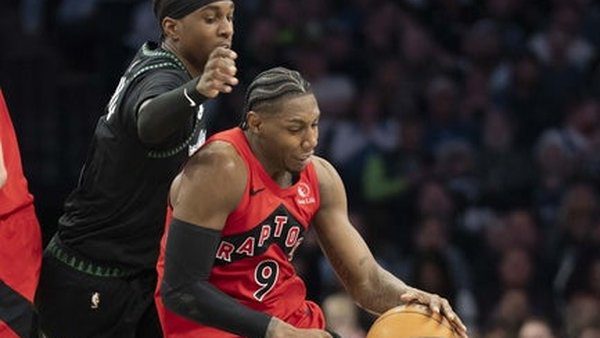
Can a 21-42 Mavericks team really be a 10-point underdog in a game where the efficiency ratings are this close? After running the possession math and transition data, the Mavericks +10.0 has emerged as Bash’s best bet for Sunday evening, offering a massive five-point cushion against a Raptors team that hasn’t found consistency at home.
The Raptors are laying 10 points at home Sunday against a Mavericks team that’s lost six straight and sits at 7-22 on the road. Toronto’s -10.0 at Scotiabank Arena, and the total is set at 229.5. The projection has Toronto by just 4.9 points—a full five points of cushion for Dallas bettors. This line doesn’t add up once you run the efficiency math. The market’s overreacting to Dallas’s recent slide and undervaluing their offensive structure against a Toronto defense that’s been inconsistent at home. I’m taking the points all day long.
Cooper Flagg is questionable with what’s being called injury maintenance after logging 28 minutes in Dallas’s recent back-to-back. Marvin Bagley III is also questionable with a neck sprain after missing five straight. For Toronto, Brandon Ingram is questionable with an illness, while Collin Murray-Boyles and Alijah Martin remain out. The Raptors are 16-16 at home this season—hardly the fortress this spread suggests—while Dallas has covered plenty of numbers as heavy road dogs all year.
Game Info & Betting Lines
When: March 8, 2026, 6:00 ET
Where: Scotiabank Arena
Watch: Home: Sportsnet | Away: KFAA-TV, Mavs.com, NBA League Pass
Spread: Toronto Raptors -10.0 | Dallas Mavericks +10.0
Total: 229.5
Moneyline: Toronto -435 | Dallas +318
Why This Line Exists
The market sees a 35-27 playoff-bound team hosting a 21-42 squad that’s lost six straight, and it’s pricing Toronto as a double-digit favorite based on record and recent results. But the efficiency gap tells a different story. Toronto’s net rating sits at +1.5 per 100 possessions, while Dallas checks in at -4.2—a gap of 5.7 points per 100 possessions. Over the expected 100.8 possessions in this game, that translates to roughly a 5.7-point edge for Toronto before you even factor in home court. Add in a standard 2.0-point home advantage, and you’re looking at a projected margin around 4.9 points for the Raptors.
So why is the market asking Toronto to cover 10? It’s recency bias and record worship. Dallas has been brutal on the road at 7-22, and that six-game losing streak is fresh in everyone’s mind. But this Mavericks offense still operates at 109.7 points per 100 possessions with legitimate shooting from Max Christie at 41.5% from three and efficient scoring from Naji Marshall at 52.5% from the field. The pace blend of 100.8 possessions favors a game with enough scoring opportunities for both sides to stay within striking distance. Toronto’s 113.7 offensive rating gives them the edge, but not by the margin this spread demands.
The Raptors are also dealing with potential lineup questions if Ingram can’t go. Brandon Ingram averages 21.9 points per game on 47.2% shooting and 37.3% from three—losing him would shift more responsibility to Scottie Barnes and RJ Barrett, who just got dunked on by Anthony Edwards in Minnesota. this number points to overreaction to Dallas’s recent struggles without accounting for the actual efficiency math that keeps this game closer than ten points.
Dallas Mavericks Breakdown: What You Need to Know
The Mavericks are a mess by record, but their offensive structure remains intact. Cooper Flagg leads the way at 20.3 points per game on 47.3% shooting, and while his 29.4% from three isn’t pretty, he’s generating 4.2 assists per game and creating offensive flow. Naji Marshall has been a revelation at 15.2 points on 52.5% shooting, and P.J. Washington provides 14.1 points with 6.9 rebounds and legitimate defensive versatility at 1.2 blocks per game.
Dallas shoots 46.9% from the field with a 56.4% true shooting percentage and a 52.9% effective field goal percentage—all respectable marks that keep them competitive offensively. Their 109.7 offensive rating isn’t elite, but it’s functional, especially when paired with their 59.5% assist rate that indicates good ball movement. The problem has been defense, where they allow 113.9 points per 100 possessions. But against a Toronto team that’s 16-16 at home and has its own defensive lapses at 112.2 points allowed per 100, Dallas can stay within range.
The clutch numbers favor Dallas in one key area: they’ve played 39 clutch games this season compared to Toronto’s 31, meaning they’ve been battle-tested in close situations more frequently. Their 38.5% clutch win rate isn’t great, but the experience in tight games matters when you’re catching double digits. If Flagg suits up, Dallas has enough offensive firepower to keep this game from getting out of hand.
Toronto Raptors Breakdown: The Other Side
Toronto’s strength lies in offensive balance and ball movement. Brandon Ingram’s 21.9 points per game on 47.2% shooting and 37.3% from three anchors the offense, while Scottie Barnes provides 18.9 points, 8.0 rebounds, and 5.4 assists with elite defensive versatility at 1.4 steals and 1.6 blocks per game. RJ Barrett adds 18.3 points on 48.0% shooting, and Immanuel Quickley orchestrates at 17.4 points and 6.1 assists per game. That’s four legitimate scoring threats with a 68.7% assist rate that leads to quality shot creation.
The Raptors’ 113.7 offensive rating ranks ahead of Dallas, and their 112.2 defensive rating gives them a slight edge on that end as well. Their 57.3% true shooting percentage and 53.7% effective field goal percentage are basically in line with Dallas—no real shooting gap to exploit here. Where Toronto does create separation is on the offensive glass, where they grab 11.2 offensive rebounds per game compared to Dallas’s 10.0. That 3.2-percentage-point edge in offensive rebounding rate translates to extra possessions and second-chance opportunities that can extend leads.
But Toronto’s home performance has been inconsistent at 16-16, and their clutch win rate of 61.3% is strong but built on just 31 clutch games. They’ve been better in tight situations than Dallas, but this isn’t a team that blows opponents out consistently. Their net rating of +1.5 indicates they’re a solid playoff team, not a dominant force that should be laying double digits against functional NBA offenses.
The Matchup: Where This Game Gets Decided
The pace blend of 100.8 possessions sets up a game with enough scoring chances for Dallas to stay competitive. Toronto’s offensive rating advantage of 4.0 points per 100 possessions gives them the edge in efficiency, but over 100.8 possessions, that’s only about four points of separation before home court. The offensive rebounding gap of 3.2 percentage points favors Toronto and could generate an extra two to three possessions, but Dallas’s ability to limit turnovers at 12.8% keeps them from bleeding extra opportunities.
The key mismatch isn’t overwhelming. When you match Dallas’s 109.7 offensive rating against Toronto’s 112.2 defensive rating, you get a -2.5 mismatch that slightly favors Dallas’s offense against Toronto’s defense. That’s not enough to flip the game, but it’s enough to keep Dallas within striking distance. Toronto’s offense against Dallas’s defense creates a -0.2 mismatch—essentially neutral. This is exactly the spot where Toronto burns you if you’re expecting a blowout. The efficiency gap is too narrow for a 10-point spread.
Dallas’s six-game losing streak includes a 120-100 loss to Boston on Friday, where Jaylen Brown dropped 24 and Jayson Tatum returned from injury. Cooper Flagg had 16 points and eight rebounds in that game, showing he’s still engaged despite the losses. Toronto’s coming off a 115-107 loss to Minnesota where Anthony Edwards scored 22 and embarrassed RJ Barrett with a poster dunk. Neither team is riding momentum, but Dallas has the desperation factor as a massive underdog, while Toronto risks looking past a struggling opponent.
Bash’s Best Bet & The Play
The projection has Toronto by 4.9 points, and the market is asking them to cover 10. That’s a five-point cushion for Dallas bettors, and I’ve seen this movie before with road dogs getting disrespected against mediocre home teams. Toronto’s 16-16 at Scotiabank Arena, and their net rating doesn’t support double-digit spreads against teams with functional offenses. Dallas shoots well enough, moves the ball efficiently, and has the clutch experience to keep this game within single digits.
The main risk is Dallas’s defense, which allows 113.9 points per 100 possessions and could get torched by Toronto’s balanced attack if Ingram plays. But even if Toronto wins, asking them to win by double digits against a team that’s been competitive in clutch situations all year is too much. The possessions math tells a different story than this spread suggests. My model projects a 4.9-point game, and that’s exactly where the value sits.
BASH’S BEST BET: Dallas Mavericks +10.0 for 2 units.
The writing’s on the wall with this matchup. Toronto’s a better team, but not by ten points. Dallas keeps it close, and we cash with room to spare. This line doesn’t add up once you run the efficiency math, and I’m taking the points all day long.