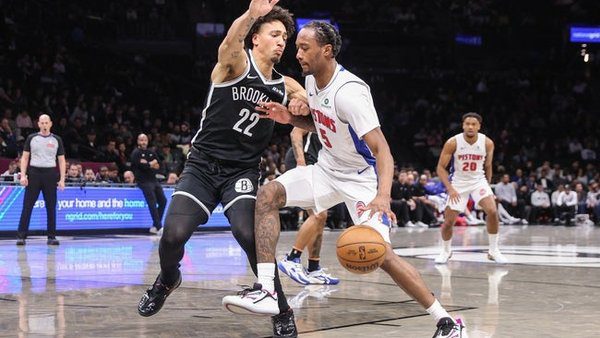
Bash sees a Sixers roster so gutted that even a massive spread might not be enough cushion—but the total tells a different story when you factor in Detroit’s pace and Philadelphia’s necessity offense.
The Setup: Philadelphia 76ers at Detroit Pistons
Detroit is laying 15 points at home against Philadelphia on Thursday night, and honestly, I’m not sure that’s enough. The Sixers are running out a skeleton crew—Embiid, Maxey, Paul George, and now Kelly Oubre are all out. That’s four of their top five scorers sitting. The projection has Detroit winning by 6 points, which creates a 9-point edge toward the Sixers covering, but I’m skeptical that math accounts for just how thin this rotation has become.
This is a conference-leading Pistons team at 46-18 that just snapped a four-game skid with authority in Brooklyn. They’re back home, where they’re 23-8, facing a 76ers squad that’s held together by Cam Payne and VJ Edgecombe. The spread feels massive, but the context feels even bigger.
The total sits at 221, and that’s where my attention really locks in. The projection comes in at 227.3, creating a 6.3-point edge toward the over. Both teams play at virtually identical pace—right around 100 possessions per game—and even a depleted Sixers offense has shown it can score when forced to let guys like Payne and Edgecombe cook.
Game Info & Betting Lines
- Matchup: Philadelphia 76ers (35-30) at Detroit Pistons (46-18)
- Date & Time: March 12, 2026, 7:00 ET
- Location: Little Caesars Arena
- TV: Prime Video
- Spread: Detroit Pistons -15.0 (-110)
- Total: 221.0 (Over/Under -110)
- Moneyline: Detroit -1000 | Philadelphia +623
Why This Line Exists
The market is pricing in exactly what you’d expect: a talent apocalypse meeting a conference juggernaut. Philadelphia’s injury report reads like a hospital wing. Embiid has been out since late February with an oblique strain. Maxey just went down with a finger tendon injury that’ll cost him at least three weeks. Paul George is suspended until late March. And Oubre, who dropped 31 and 12 in their last game, is now out with what looks like a long-term absence.
Detroit, meanwhile, just reminded everyone why they’re sitting atop the East. They demolished Brooklyn 138-100 on Tuesday, with Cade Cunningham and Jalen Duren combining for 47 points on absurd efficiency. Cunningham went 8-for-10, Duren went 9-for-10. That’s the kind of performance that makes you forget about a four-game losing streak real quick.
The 15-point spread reflects the talent gap, the home court advantage, and the scheduling spot. But the total at 221 feels like the market is hedging against Philadelphia’s ability to score without their stars. That’s where I think there’s a disconnect. This Sixers team just put up 139 against Memphis with essentially the same depleted roster. Payne scored 32, Edgecombe added 21, and Quentin Grimes chipped in 22. They scored 139 points without Maxey or Embiid. That’s not a fluke—that’s necessity offense in a high-possession game.
Philadelphia 76ers Breakdown
The Sixers are 35-30 and clinging to the 8-seed in the East. They’re 17-14 on the road, which isn’t terrible, but this isn’t a normal road game. They’re down to Cam Payne running point, VJ Edgecombe handling creation duties, and Andre Drummond anchoring the middle. That’s your core right now.
Payne just dropped 32 points against Memphis, with 13 of those coming in the fourth quarter. Edgecombe returned from a back injury and put up 21 in his first game back. These aren’t stars, but they’re getting volume and usage that inflates their production. When you’re missing four rotation pillars, someone has to shoot the ball.
The efficiency numbers tell a tougher story. Philadelphia ranks 114.5 in offensive rating and 114.8 in defensive rating, producing a net rating of -0.3. They’re basically a break-even team when healthy, and right now they’re nowhere close to healthy. The defensive rating is particularly concerning against a Pistons offense that ranks 116.5. That’s a 5.7-point mismatch favoring Philadelphia’s offense against Detroit’s defense, but it’s hard to trust that edge when the personnel is this compromised.
One thing working in their favor: they play fast. A 99.9 pace means they’ll get possessions, and possessions mean chances to score even when the talent is thin.
Detroit Pistons Breakdown
Detroit is 46-18 and playing like a team that’s figured out its identity. Cade Cunningham is averaging 25.1 points and 9.9 assists, orchestrating an offense that ranks 116.5 in efficiency. Jalen Duren is a monster on the glass and around the rim—18.6 points per game on 63.1% shooting with 10.6 boards. That’s old-school big man production in a modern pace-and-space system.
The defense is where Detroit separates itself. A 108.8 defensive rating ranks among the league’s best, and that 7.6 net rating is the foundation of their success. They’re 23-8 at home, and they just reminded everyone what they’re capable of by boat-racing Brooklyn after losing to them three days earlier.
The one concern is Ausar Thompson being out, which shifts more perimeter minutes to Marcus Sasser. But against a Sixers team this depleted, that’s a minor rotation adjustment rather than a real vulnerability. Caris LeVert is also doubtful, but again—Philadelphia doesn’t have the firepower to exploit depth issues.
Detroit’s offensive rebounding is a significant edge here. They grab 30.7% of their misses compared to Philadelphia’s 26.5%, a 4.2-percentage-point gap that creates extra possessions. Against a thin Sixers frontcourt, Duren and Tobias Harris should feast on the glass.
The Matchup
This game projects to play at 100 possessions, which is right in line with both teams’ season-long pace. That’s important because it means we’re not looking at a grind-it-out defensive slog. Both teams want to play, and even with Philadelphia’s injuries, they’re going to push tempo out of necessity.
The efficiency gap is stark. Detroit holds a 7.9-point advantage in net rating, which is the backbone of my model projecting a 6-point win for the Pistons. But here’s the thing: that projection feels light given the personnel situation. Philadelphia is missing so much talent that even their ability to compete for 48 minutes feels questionable.
On the other side, the total projection of 227.3 makes sense when you break it down. Detroit should score efficiently—115.7 points projected—against a Sixers defense that’s already shaky and now missing key rotation pieces. Philadelphia’s projected 111.7 points might seem high, but they just scored 139 against Memphis with this same depleted roster. Payne, Edgecombe, and Grimes combined for 75 points in that game. Volume scorers in a high-pace game can produce even without elite efficiency.
The clutch numbers favor Detroit significantly—69.4% win rate in close games compared to Philadelphia’s 54.3%. But I’m not sure this game stays close enough for clutch situations to matter. Detroit should pull away in the second half as Philadelphia’s depth gets exposed.
Bash’s Best Bet & The Play
I’m staying away from the spread. The projection says Philadelphia +15 has value, but I don’t trust a roster this thin to stay competitive for four quarters against the best team in the East. Cam Payne and VJ Edgecombe can get buckets, but can they keep this within two possessions late? I’m not betting on it.
The play I like is Over 221. Both teams play at 100 possessions per game, and even a compromised Sixers offense just dropped 139 on Memphis. Detroit’s offense is humming—they just scored 138 against Brooklyn—and their 116.5 offensive rating against Philadelphia’s 114.8 defensive rating creates scoring opportunities. My model projects 227.3 total points, which gives us 6.3 points of value on the over.
The risk is obvious: if Philadelphia’s offense completely craters and they can’t stay above 105 points, we’re in trouble. But I’m betting on pace and volume here. Payne is going to shoot, Edgecombe is going to shoot, and Detroit is going to score efficiently at home. That’s enough to push this over 221.
The Play: Over 221 (-110)