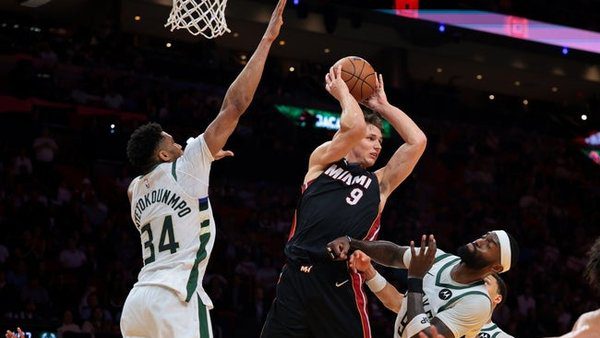
Bash sees a Saturday night clash between two shorthanded Eastern Conference contenders that looks nothing like the rosters suggest on paper. With key pieces sidelined on both sides, he’s finding value in a total the market hasn’t adjusted for.
The Setup: Orlando Magic at Miami Heat
Miami sits as a 3.5-point home favorite Saturday night against Orlando at the Kaseya Center, and this line tells you everything about how the market views these rosters at full strength. The Heat have won seven straight, the Magic have won six straight, and on paper this feels like a coin flip between two teams separated by a single game in the standings. But here’s the thing—neither of these teams is close to full strength, and the injury situations flip the script on what should be a high-octane shootout.
The projection has Miami by 3.0 points, basically in line with the market on the spread. No edge there. But the total at 236.5? That’s where I’m locked in. The model projects 232.1 combined points, giving us a strong lean under with a 4.4-point gap. When you factor in the personnel that’s actually taking the floor Saturday night, this number looks inflated by recent box scores rather than current reality.
Game Info & Betting Lines
Orlando Magic at Miami Heat
When: Saturday, March 14, 2026, 8:00 PM ET
Where: Kaseya Center
Watch: FanDuel SN FL, NBA League Pass
Records: Orlando Magic 37-28 (road: 15-15) | Miami Heat 38-29 (home: 23-11)
Betting Lines (Bovada):
Spread: Miami Heat -3.5 (-110)
Total: 236.5 (Over/Under -110)
Moneyline: Miami Heat -160 | Orlando Magic +135
Why This Line Exists
The spread makes sense when you consider Miami’s 23-11 home record and their seven-game winning streak that includes Bam Adebayo’s historic 83-point explosion against Washington. The Heat are rolling, and the market respects what they’ve done at the Kaseya Center all season. Orlando’s 15-15 road mark doesn’t scream confidence away from home, even with six straight wins.
But the total at 236.5? That’s pricing in the offenses these teams have shown recently, not the personnel actually available. Miami averages 120.5 points per game with a 104.7 pace—fourth-fastest in the league. Orlando’s at 115.6 points with a 100.1 pace. The pace blend projects 102.4 possessions, which should drive scoring opportunities in an up-tempo game. The market sees two hot offenses and assumes points will flow.
What the market isn’t properly pricing is the absence of primary creators and shot-makers on both sides. This total feels like it’s based on what happened last week, not who’s suiting up Saturday night.
Orlando Magic Breakdown
The Magic are down Franz Wagner, Anthony Black, Jonathan Isaac, and Alex Morales. That’s two of their top five scorers and primary ball-handlers completely off the floor. Wagner’s 21.3 points per game and 36.5% three-point shooting is a massive hole in the offensive structure. Black’s 15.3 points and 3.8 assists removes another creator who can collapse defenses.
Orlando just survived an overtime thriller against Washington, with Jalen Suggs dropping a season-high 28 points and hitting the go-ahead three in the extra period. Tristan da Silva added 26, Desmond Bane had 22, and Paolo Banchero contributed 18 points and 10 boards. That’s a lot of offensive production, but it came against a Wizards team that had just surrendered 83 points to Adebayo and has lost 10 straight games. Washington’s defense is a sieve.
The Magic’s offensive rating sits at 114.4 with a defensive rating of 112.9. Their clutch record is excellent at 22-11, and they shoot 41.0% in crunch time. But without Wagner and Black, the shot creation burden falls entirely on Banchero, Bane, and Suggs—and that’s a different offense than what the season averages suggest.
Miami Heat Breakdown
Miami’s injury report is equally problematic for the over. Norman Powell is questionable after missing seven straight with a groin strain. Tyler Herro is questionable and has missed two straight. Andrew Wiggins is out for the fifth consecutive game. Terry Rozier is out indefinitely due to an FBI sports betting probe. That’s four rotation players who combine for significant scoring and shot creation.
Powell averages 22.5 points on 39.0% three-point shooting. Herro’s at 22.1 points on 50.0% shooting overall and 40.2% from deep. Wiggins adds 15.9 points. Even if Powell and Herro are upgraded to available, they’re dealing with injuries that have kept them out multiple games—rust and conditioning are real factors.
Pelle Larsson dropped a career-high 28 points against Milwaukee on Thursday, and Adebayo added 21 following his 83-point masterpiece. But Larsson’s breakout came in extended minutes due to the absences, and expecting that kind of efficiency again is a stretch. Miami’s offensive rating of 114.8 and defensive rating of 111.3 gives them a net rating edge of +3.6, but that’s with a healthier rotation than what’s available Saturday.
The Matchup
The off-def mismatch actually favors Orlando by 3.1 points per 100 possessions when you match their offense against Miami’s defense. That’s a medium-sized edge that suggests the Magic can generate quality looks even on the road. Miami’s offense versus Orlando’s defense shows a smaller 1.9-point advantage for the Heat. Neither team has a dominant mismatch that screams blowout potential.
The pace blend at 102.4 possessions sets up an up-tempo game, which typically pushes totals higher. But pace only matters if you can convert possessions into points, and both teams are missing the shot-makers who typically capitalize in transition and half-court sets. Orlando’s true shooting percentage of 57.6% and Miami’s 57.5% are basically identical—no real gap there. Same story with effective field goal percentage and turnover rate. These teams are mirror images efficiency-wise.
The clutch stats favor Orlando with a 66.7% win rate in tight games compared to Miami’s 55.2%, giving the Magic an 11.5% edge in late-game execution. If this game stays close—and the injury situations suggest it will—Orlando has shown better composure down the stretch. That doesn’t help the over, though. Close games in the final minutes often turn into free-throw contests and clock management, not shootouts.
What really stands out is how much offensive firepower is simply unavailable. Wagner, Black, Powell, Herro potentially, Wiggins, Rozier—that’s a combined 97.1 points per game sitting on the sideline or questionable. Even accounting for increased usage from other players, you can’t just redistribute that scoring without a drop in efficiency.
Bash’s Best Bet & The Play
The Play: Under 236.5 (-110)
I’m laying the juice on the under here. The market is pricing this total based on pace and recent offensive performances, but it’s ignoring the personnel reality. Orlando just played overtime against a terrible Washington defense and needed every bit of Suggs’ heroics to escape. Miami’s last game featured Larsson’s career night, which isn’t a sustainable expectation. Both teams are down primary shot creators and ball-handlers.
The projection sits at 232.1 total points, a 4.4-point edge under the posted number. That’s a strong lean, and when you layer in the injury context that the market hasn’t fully adjusted for, this total feels vulnerable. The pace will be there—102.4 possessions means opportunities. But opportunities don’t equal points when your best offensive weapons are watching from the bench.
The risk is obvious: both teams could get hot from three, or the up-tempo pace could overwhelm the defensive adjustments. If Powell and Herro are upgraded and play significant minutes, that changes the calculus. But even if they suit up, they’re not at full strength, and expecting them to immediately return to their season averages after multi-game absences is optimistic. I’ll take my chances with the personnel limitations dragging this one under the inflated number.