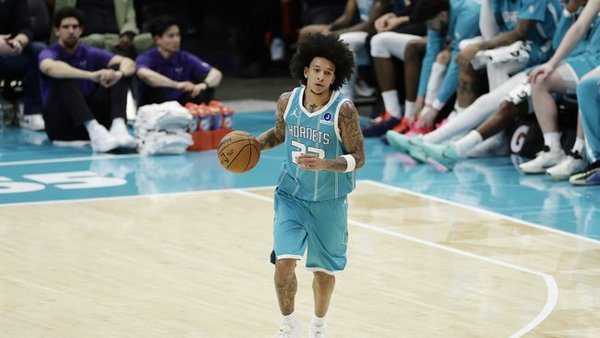
Bryan Bash sees a spread that’s accounting for the talent gap but may not fully price in the possessions and shooting quality Charlotte brings at home. He’s eyeing the total in a matchup that could play slower than the market expects.
The Setup: Memphis Grizzlies at Charlotte Hornets
Charlotte sits at -16.0 hosting a Memphis squad that’s barely recognizable from the team we saw earlier this season. The Grizzlies are 24-45, 11-23 on the road, and missing basically everyone who matters. Ja Morant is doubtful with an elbow issue, Zach Edey is done for the year, and Santi Aldama, Scotty Pippen Jr., and Brandon Clarke are all shut down. The Hornets, meanwhile, just dropped 130 on Orlando behind 21 made threes and are pushing for playoff positioning at 36-34.
The market has this pegged as a blowout, and rightfully so. Charlotte’s net rating sits at +3.8 while Memphis is -3.0, creating a gap of 6.8 points per 100 possessions in Charlotte’s favor. But the total at 235.0 caught my attention immediately. Memphis plays at a 101.5 pace while Charlotte runs at 98.0—this projects closer to 99.8 possessions, which is deliberate basketball. My model projects this total landing around 230.4, which puts us about 4.6 points below the market number.
Game Info & Betting Lines
Game Time: March 21, 2026, 7:00 ET
Location: Spectrum Center
TV: Home: FanDuel SN SE | Away: NBA League Pass
Current Odds (MyBookie.ag):
- Spread: Charlotte Hornets -16.0 (-110) | Memphis Grizzlies +16.0 (-110)
- Total: Over 235.0 (-110) | Under 235.0 (-110)
- Moneyline: Charlotte -1250 | Memphis +725
Why This Line Exists
The market is pricing in exactly what it should: a massive talent disparity. Charlotte’s got LaMelo Ball, Brandon Miller, and Kon Knueppel all averaging between 19-20 points per game, plus Coby White and Miles Bridges providing depth. Memphis is running out Tyler Burton on 10-day contracts—he dropped 23 against Boston but that was in a loss where the Celtics pulled away late.
The 16-point spread reflects Charlotte’s 117.8 offensive rating against Memphis’ 116.6 defensive rating, which creates a 1.2-point mismatch when Charlotte has the ball. Going the other way, Memphis’ 113.6 offensive rating against Charlotte’s 114.0 defensive rating is basically within noise—there’s no real offensive advantage for the Grizzlies in this spot.
But here’s what the market might be overestimating: scoring volume. Charlotte just hung 130 on Orlando with 21 threes, and Memphis has been in competitive games despite the losses. The Celtics only beat them 117-112 on Friday, and Memphis hung 103 through three quarters. The perception is that Charlotte will run them off the floor, but the pace tells a different story. This isn’t a track meet waiting to happen.
Memphis Grizzlies Breakdown
The Grizzlies are down to spare parts. Ty Jerome is leading the team at 19.9 points per game with solid efficiency—48.0% from the field and 41.9% from three. He’s the closest thing to a reliable scorer they have left. Beyond Jerome, you’re looking at Javon Small (13 points against Boston), DeJon Jarreau (13 points), and whoever else is healthy enough to suit up.
Memphis’ offensive rating of 113.6 isn’t terrible in a vacuum, but they’re generating that against bottom-tier competition and in garbage-time situations. Their 57.3% true shooting and 53.5% effective field goal percentage show they can make shots when they get clean looks, but the creation just isn’t there without Morant. They’re turning it over on 13.0% of possessions, which is actually solid ball security, but that doesn’t matter much when you can’t generate quality attempts.
Defensively, they’re allowing 116.6 points per 100 possessions, and Charlotte’s 117.8 offensive rating suggests the Hornets will get theirs. The Grizzlies are also getting crushed on the glass—Charlotte holds a 4.5 percentage-point edge in offensive rebounding, which means second-chance opportunities will tilt heavily toward the home side.
Charlotte Hornets Breakdown
Charlotte is two games over .500 for the first time since 2021-22, and they’re riding momentum after torching Orlando. Brandon Miller went 5-of-10 from three for 25 points, Kon Knueppel added 23 on 4-of-9 from deep, and Coby White led the bench with 27 points on 5-of-8 from distance. When the Hornets are making threes at that clip, they’re a nightmare to contain.
But here’s the thing—Charlotte’s shooting 38.0% from three on the season, not the 45.7% they hit against Orlando. Regression matters, especially when the total is inflated by recency bias. The Hornets’ 117.8 offensive rating is elite, and their 114.0 defensive rating shows they can get stops when needed. The 1.5 percentage-point edge in effective field goal percentage over Memphis is small but real, and it compounds over a full game.
Charlotte’s also dominant on the glass, with a 30.2% offensive rebounding rate compared to Memphis’ 25.8%. That 4.5-point gap is one of the strongest edges in this matchup, and it should create extra possessions for the Hornets. But possessions only matter if you’re playing fast enough to maximize them, and Charlotte’s 98.0 pace suggests they’re not looking to run teams out of the gym.
The Matchup
This is a game where Charlotte should control every phase. The Hornets hold advantages in net rating, shooting quality, and rebounding. Memphis has no answer for LaMelo Ball’s playmaking or Brandon Miller’s scoring, and the Grizzlies’ depleted frontcourt will struggle to contain Charlotte’s second-chance opportunities.
But the pace is the key here. The projected possession count sits around 99.8, which is below both teams’ season averages. Charlotte doesn’t need to push tempo when they’re up 20—they’ll settle into halfcourt execution and milk the clock. Memphis, meanwhile, doesn’t have the athletes to force transition opportunities or the depth to sustain a faster pace.
The model projects Charlotte winning by 5.4 points when you factor in home-court advantage, which creates a 10.6-point edge against the 16-point spread. That’s a significant gap, and it suggests Memphis could cover if they keep it competitive into the second half. But the more interesting play is the total. The projection of 230.4 points sits 4.6 points below the 235.0 market number, and that edge is rooted in pace and shot selection rather than defense.
Charlotte’s going to win this game comfortably, but the question is whether they need to score 120+ to do it. Against a Memphis team that can’t generate transition buckets or force turnovers at a high rate, the Hornets can control tempo and still win by double digits. The under feels like the sharper side when you’re getting 4.6 points of value based on possession count and shooting regression.
Bash’s Best Bet & The Play
I’m laying the under 235.0 in this one. Charlotte’s going to win, probably by 12-15 points, but they’re not going to need a shootout to get there. The pace projects to 99.8 possessions, which is slower than both teams’ season averages, and Memphis doesn’t have the firepower to keep up in a track meet anyway. Charlotte’s 38.0% three-point shooting on the season is more reliable than the 45.7% they hit against Orlando, and regression should bring the scoring back to earth.
the projection sees this landing around 230.4 total points, which gives us nearly five points of cushion against the 235.0 number. That’s a strong edge rooted in pace and shot quality, not defensive dominance. Charlotte will control this game from the opening tip, but they’ll do it in the halfcourt, not in transition.
The Play: Under 235.0 (-110)
Risk Note: If Charlotte gets hot from three early and Memphis tries to keep pace, this total could fly over in a hurry. But the possession count and pace metrics suggest a more controlled game, and I’ll trust the math over the recent box scores.