Bash sees a Wednesday night West Coast matchup where injury uncertainty meets a pace differential the market hasn’t fully priced. He’s got a lean on the total in a spot where shooting variance could dictate the outcome.
The Setup: Toronto Raptors at Los Angeles Clippers
Wednesday night at the Intuit Dome, and we’re getting Toronto at +4 against a Clippers team that just reminded everyone Kawhi Leonard still exists. The total sits at 226.5, and that’s the number catching my attention more than the spread.
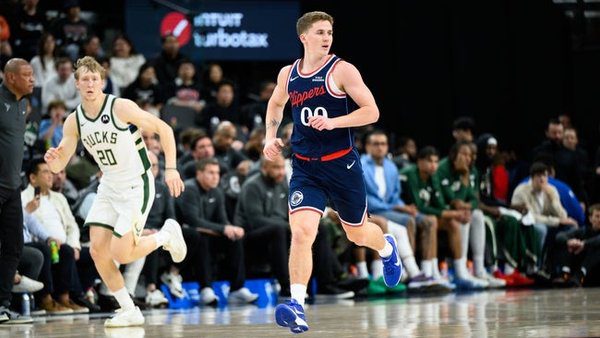
The Raptors just hung 143 on Utah—shooting 54% from three and 61% overall in a game that got out of hand in the third quarter. They’re riding that offensive high into a building where the Clippers just dismantled Milwaukee 129-96 behind Leonard’s 28 points in 25 minutes. Both teams looking sharp offensively in their last outings, and the market’s pricing this like we’re getting another shootout.
Here’s the thing: Toronto plays at 99.3 possessions per game. The Clippers operate at 97.2. The pace blend projects to 98.2 possessions—this is a deliberate game by modern NBA standards. And when you’ve got Brandon Ingram and Immanuel Quickley both questionable for Toronto, plus Kawhi Leonard’s ankle keeping him on the injury report, we might be looking at a game where offensive rhythm takes longer to find than these recent box scores suggest.
Game Info & Betting Lines
Game Time: March 25, 2026, 10:30 ET
Location: Intuit Dome
TV: Check local listings
Current Bovada Lines:
- Spread: Los Angeles Clippers -4.0 (-110)
- Moneyline: Clippers -175 / Raptors +150
- Total: 226.5 (Over/Under -110)
Why This Line Exists
The Clippers are home favorites because they’ve got Kawhi Leonard playing at an MVP level—28.3 points per game on 50.4% shooting and 38.5% from three. They’re 20-15 at home, and they just put on a clinic against Milwaukee where they shot 45% from deep and controlled every aspect of the game.
Toronto’s 21-15 on the road and fighting for playoff positioning—they’re a half-game up on Atlanta for that fifth seed and the automatic playoff berth that comes with it. The Raptors have been the better clutch team this season (21-13 in clutch situations versus the Clippers’ 13-17), and they’ve got the superior net rating at plus-2.0 compared to the Clippers’ plus-1.0.
The total at 226.5 is reacting to recent offensive explosions. Toronto just scored 143. The Clippers put up 129. Both teams shot the lights out. The market’s pricing recency bias here, expecting another track meet. But the underlying pace metrics tell a different story—these are two teams that rank in the bottom half of the league in possessions per game.
The Clippers also carry a true shooting percentage edge of 2.7 percentage points, which matters in half-court execution. When possessions are limited, shooting efficiency becomes the separator.
Toronto Raptors Breakdown
The Raptors’ injury situation is messy heading into this one. Brandon Ingram—their leading scorer at 21.6 points per game—sat out Monday with right heel inflammation and remains questionable. Immanuel Quickley is dealing with plantar fasciitis in his right foot and could miss a second straight game. Jakob Poeltl is questionable with lower-back management after sitting Monday.
When healthy, this is a balanced offensive attack. RJ Barrett just went off for 27 points on 10-of-15 shooting against Utah, including 4-of-5 from three. Scottie Barnes stuffed the stat sheet with 20 points, 10 assists, and seven rebounds. Ja’Kobe Walter added 21 points on 6-of-8 from deep. Sandro Mamukelashvili contributed 23.
But that Utah game was against the 21-51 Jazz, a team eliminated from playoff contention that’s allowing opponents to shoot quality looks. The Clippers present a different defensive challenge—they’re 115.4 in defensive rating compared to Toronto’s 112.4, but they’ve got length and versatility when Leonard and Derrick Jones Jr. are engaged.
Toronto’s offense runs at 114.4 offensive rating with a 57.7% true shooting percentage. They’re not an elite shooting team from three at 34.9%, but they get to the rim effectively and create second chances with an offensive rebounding rate of 25.4%.
Los Angeles Clippers Breakdown
Kawhi Leonard’s health is the elephant in the room. He’s questionable with a left ankle sprain after dropping 28 in just 25 minutes against Milwaukee. If he sits, this spread and total both need serious recalibration. Bennedict Mathurin and Jordan Miller would see increased minutes, but you’re not replacing Leonard’s two-way impact.
When Leonard plays, the Clippers are a different team. He’s scoring 28.3 per game on elite efficiency—50.4% from the field and 38.5% from three. Darius Garland provides secondary creation at 18.8 points and 6.9 assists per game, shooting 40.6% from deep. Bennedict Mathurin adds 18.5 points, though his three-point shooting at 31.9% is a weak spot.
The Clippers’ offense runs at 116.4 offensive rating with a 60.4% true shooting percentage—both numbers superior to Toronto’s. They move the ball less (23.8 assists per game versus Toronto’s 29.1), but they compensate with individual shot creation and efficiency.
Defensively, they’re 115.4 in defensive rating. They force turnovers at a solid rate (9.0 steals per game) and protect the rim adequately (4.8 blocks). But they’re not a lockdown unit—they’ve allowed opponents to find rhythm when their transition defense breaks down.
The Matchup
This game comes down to pace and injury availability. The projection shows a total of 225.2 points in a game expected to feature 98.2 possessions. That’s a slower game than what we saw from either team in their last outing.
Toronto’s offense against the Clippers’ defense projects to an offensive rating of 114.9 per 100 possessions. The Clippers’ offense against Toronto’s defense comes in at 114.4. Neither team holds a significant matchup advantage—the net gap is just 1.0 point per 100 possessions in Toronto’s favor based on season-long efficiency.
The true shooting gap of 2.7 percentage points favors the Clippers, which matters in a game where possessions are limited. If this becomes a half-court execution battle, the Clippers have the edge with Leonard’s isolation scoring and Garland’s pick-and-roll creation.
But Toronto’s clutch performance this season (21-13 record, plus-1.0 in clutch situations) suggests they’re comfortable in tight games. The Clippers are 13-17 in clutch situations with a minus-0.4 rating—they’ve struggled to close games consistently.
The offensive rebounding differential slightly favors Toronto (25.4% to 23.7%), which could create extra possessions in a slower-paced game. Those second-chance opportunities become more valuable when you’re not getting 105 possessions.
Bash’s Best Bet & The Play
I’m looking at the under 226.5. My model projects 225.2 points, giving us a 1.3-point cushion, and the pace dynamics support a game that stays below this number. Both teams operate in the bottom third of the league in possessions per game, and the injury uncertainty on both sides—particularly if Leonard or Ingram sit—could disrupt offensive rhythm early.
The recent box scores are loud, but they came against defensive-minded opponents who aren’t representative of what we’re getting Wednesday night. Toronto’s defense ranks 112.4 in defensive rating—significantly better than Utah’s. The Clippers’ defense, while not elite, is better than Milwaukee’s current iteration without Giannis Antetokounmpo.
The risk here is obvious: if both teams get hot from three like they did in their last games, this total gets torched. Toronto shot 54% from deep against Utah. The Clippers hit 45% against Milwaukee. If we get another variance explosion, the under dies quickly. But I’m betting on regression to season-long shooting percentages and a pace that doesn’t support 227-plus points.
The Play: Under 226.5 (-110)
This is a game where the market’s reacting to recent offensive fireworks without fully accounting for the pace differential and defensive matchup. I’ll take the under and trust that 98 possessions in a game with injury questions doesn’t produce the shootout the total suggests.