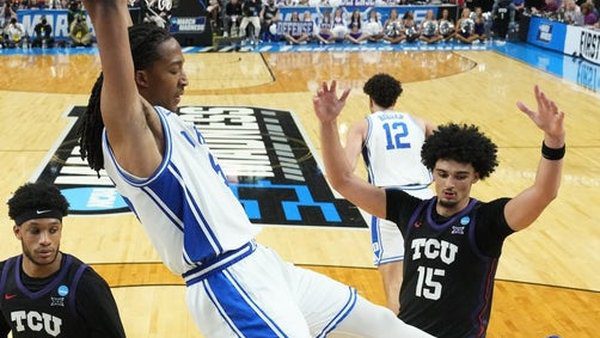
Bash is backing the No. 1 seed in this Elite Eight clash, but the margin matters more than the result. Duke’s defensive dominance and Cameron Boozer’s two-way brilliance create separation value against a St. John’s squad that’s exceeded expectations but faces a talent gap at the worst possible time.
The Line and the Ledger
Duke’s laying 6.5 points against St. John’s in the NCAA Elite Eight at Capital One Arena on Friday night at 7:10 PM ET, and the number tells you everything about how the market views this matchup. The Blue Devils entered March as the wire-to-wire No. 1 team in both polls, and nothing in their tournament run has changed that perception. St. John’s, meanwhile, has authored one of the season’s better stories—Rick Pitino steering a No. 5 seed to the doorstep of the Final Four with a 30-6 record and legitimate defensive credentials. But when you dig into the collegebasketballdata.com numbers, this isn’t a coin-flip game. Duke’s adjusted net rating sits at +41.0, ranking first nationally. St. John’s checks in at +27.4, good for 17th. That’s a 13.6-point efficiency gap on a neutral floor, and it’s the foundation for why this spread exists.
Why Duke -6.5 Makes Sense
The market landed here because the Blue Devils represent the single most complete team left in the tournament. Duke ranks first in adjusted defensive efficiency at 87.9, per KenPom, and fifth in adjusted offensive efficiency at 128.9. St. John’s counters with the 11th-ranked defense nationally (93.7 adjusted) and a respectable 39th-ranked offense (121.1 adjusted). The Red Storm have earned their spot in this game—their RPI résumé doesn’t exist in the data, but Duke’s does, and it’s spotless: 34-2 overall, 16-2 in Quadrant 1 games, and a strength of schedule ranked seventh nationally. That Q1 record matters in March because it signals Duke has been tested repeatedly against elite competition and passed nearly every exam. St. John’s has the defensive chops to slow tempo and keep this game in the 60s or low 70s, but the shooting gap is real. Duke posts a 60.4% true shooting percentage compared to St. John’s 55.7%, and that 4.7-point edge compounds over 68 projected possessions. The total sits at 141.5, and the model projects 146.9, suggesting the market is undervaluing the offensive firepower Duke brings even in a slower-paced Elite Eight environment.
The Duke Blueprint
Cameron Boozer is the best player on the floor, and it’s not particularly close. The forward is averaging 23.0 points and 9.9 rebounds per game, ranking third nationally in scoring, and he’s the engine for everything Duke does offensively. Boozer’s ability to score inside, facilitate from the elbow, and rebound on both ends makes him a matchup nightmare for St. John’s, which doesn’t have a single defender with his combination of size and skill. Duke’s offensive rating of 123.1 ranks 15th nationally, and the Blue Devils generate that efficiency without relying on breakneck pace—their 66.6 possessions per game rank 194th. That’s a deliberate, methodical attack that doesn’t turn the ball over (15.9% turnover rate) and crashes the offensive glass at an elite level (38.3% offensive rebound rate, fifth nationally). St. John’s will pack the paint and dare Duke to beat them from three, but the Blue Devils shoot 34.6% from deep and 60.3% on twos. I trust Jon Scheyer’s team to execute in the halfcourt against a disciplined Pitino defense, and the rebounding edge tilts heavily toward Duke.
St. John’s Ceiling and Floor
The Red Storm have overachieved relative to preseason expectations, and Pitino deserves credit for building a team that ranks 20th in defensive rating (98.9) and blocks 4.9 shots per game (20th nationally). Zuby Ejiofor (15.5 PPG, 6.9 RPG) and Bryce Hopkins (15.1 PPG, 5.0 RPG) provide frontcourt scoring, but neither player operates at Boozer’s level. St. John’s runs at a 69.5 possession pace (59th nationally), which is slightly faster than Duke’s preferred tempo, and that could create a few extra transition opportunities. The problem is Duke’s defense doesn’t allow those advantages to snowball. The Blue Devils hold opponents to a 45.9% effective field goal percentage (ninth nationally) and force just 17.7% turnovers, meaning they don’t gamble or give up easy baskets. St. John’s offensive rating of 115.4 ranks 87th, and I don’t see how they consistently generate quality looks against the nation’s top-ranked defense. The Red Storm’s best path to covering involves Ejiofor and Dillon Mitchell (10.5 PPG, 6.5 RPG) dominating the glass and extending possessions, but Duke’s defensive rebounding rate (24.9%, ninth nationally) makes that a difficult proposition.
Matchup Matrix
| Metric | St. John’s | Duke |
|---|---|---|
| KenPom Rank | #16 | #3 |
| RPI Rank | data pending | #1 |
| Strength of Schedule | #39 | #7 |
| Q1 Record | data pending | 16-2 |
| Adj. Offensive Efficiency | 121.1 (#39) | 128.9 (#5) |
| Adj. Defensive Efficiency | 93.7 (#11) | 87.9 (#1) |
The pace differential matters here because Duke’s ability to control tempo without sacrificing efficiency is rare. The Blue Devils slow the game to 66 possessions, grind opponents down defensively, and still score 1.23 points per possession. St. John’s prefers a slightly faster game at 69.5 possessions, but they won’t dictate terms against a Duke team that ranks first in defensive efficiency and ninth in defensive rebounding rate. The style clash favors the team that can execute in the halfcourt, and that’s Duke by a significant margin. St. John’s will need to shoot above their season averages—33.2% from three, 51.5% on twos—to stay within striking distance, and I don’t trust that happening against this level of defensive pressure.
The Injury Factor
Duke will be without Caleb Foster, who’s been out since early March with a fractured foot. Foster averaged 9.2 points and 2.9 assists per game, and his absence removes a secondary ball-handler and perimeter defender from the rotation. That said, Duke has played the entire NCAA Tournament without him and hasn’t missed a beat. Isaiah Evans (12.2 PPG) and Nikolas Khamenia (6.6 PPG, 4.4 RPG) have absorbed Foster’s minutes without a noticeable drop-off, and Jon Scheyer’s rotation is settled heading into this Elite Eight matchup. St. John’s has no significant injuries to report, which means Pitino has his full arsenal available. The problem isn’t health—it’s talent and efficiency. Duke is simply the better team on both ends of the floor.
The Bet
BASH’S BEST BET: Duke -6.5 for 2 units. The model projects Duke winning by 4.6 points, which creates a 1.9-point gap between the projection and the market spread. I’m comfortable laying the extra points because Duke’s defensive dominance and Cameron Boozer’s ability to control the game create separation in the final 10 minutes. St. John’s has the defensive structure to keep this competitive through the first half, but the talent gap will show late. Duke’s 16-2 record in Quadrant 1 games tells you they know how to close against quality opponents, and I trust Scheyer’s team to execute down the stretch. The primary risk is St. John’s shooting above their season averages from three and turning this into a rock fight that stays within a single possession. But Duke’s offensive rebounding rate (38.3%, fifth nationally) and defensive efficiency (87.9, first nationally) give them multiple ways to win. I’m laying the points with the best team in college basketball.