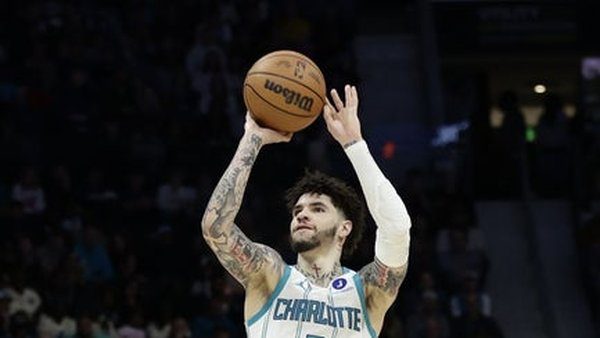
Bash sees a Sunday night total that hasn’t adjusted for Boston’s depleted rotation and the pace dynamic this creates. With key Celtics questionable and Charlotte’s tempo advantage, the scoring environment looks different than the market thinks.
The Setup: Boston Celtics at Charlotte Hornets
Charlotte sits -1.0 at home against a Boston squad that might be without half its core rotation. The total opened at 216.0, and that’s the number drawing my attention Sunday night at Spectrum Center.
Boston’s injury report reads like a playoff team in maintenance mode—Jayson Tatum, Jaylen Brown, and Derrick White all listed as questionable, with Nikola Vucevic already ruled out. Charlotte just had a five-game winning streak snapped by Philly on Saturday, dropping a 118-114 decision despite Brandon Miller’s 29 points and five triples. The Hornets push pace at 97.9 possessions per game compared to Boston’s 95.5, and that gap matters more when rotations get thin.
The projection lands at 223.7 total points, creating a strong edge over the market’s 216.0. That seven-point gap isn’t noise—it’s a fundamental disconnect between what the betting line suggests and what the pace and efficiency numbers indicate.
Game Info & Betting Lines
Game Time: March 29, 2026, 6:00 ET
Location: Spectrum Center
TV: Home: FanDuel SN SE | Away: NBC Sports BO, NBA League Pass
Current Odds (Bovada):
- Spread: Charlotte Hornets -1.0 (-110)
- Moneyline: Charlotte Hornets -115 | Boston Celtics -105
- Total: 216.0 (Over/Under -110)
Records:
Boston Celtics: 49-24 (Road: 23-13)
Charlotte Hornets: 39-35 (Home: 19-18)
Why This Line Exists
The market has priced this as essentially a pick’em, which makes sense given Boston’s injury uncertainty. Charlotte holds a slight home edge, but the Celtics’ 49-24 record and second-place conference standing command respect even on the road. The moneyline basically reflects a coin flip—Charlotte -115, Boston -105.
What’s interesting is how the total sits at 216.0 when both teams rank in the top half of offensive efficiency. Boston posts a 119.3 offensive rating while Charlotte checks in at 118.3. The Hornets’ defensive rating of 113.6 creates a medium-strength offensive mismatch when facing Boston’s attack, generating a +5.7 advantage for the Celtics’ offense against Charlotte’s defense.
The pace blend projects 96.7 possessions, which might seem deliberate but still creates scoring opportunities when you’re dealing with two teams shooting above 57% true shooting. Charlotte’s 59.0% true shooting percentage represents a small but meaningful 1.2-point edge over Boston’s 57.8% mark. The market appears to be pricing in conservative tempo without fully accounting for how Charlotte’s natural pace advantage accelerates when Boston’s rotation depth gets compromised.
Boston Celtics Breakdown
The Celtics just gutted out a 109-102 win over Atlanta on Friday without Jaylen Brown, who sat with Achilles tendinitis. Payton Pritchard exploded for 36 points off the bench while Jayson Tatum added 26 points and 12 rebounds despite shooting just 8-for-24 from the field. That kind of inefficiency from Tatum gets masked when Pritchard catches fire, but it’s not a sustainable formula on a back-to-back.
Now Boston faces Sunday’s game with Tatum, Brown, and Derrick White all questionable. Pritchard averaged 16.9 points per game this season on 45.7% shooting and 36.7% from three, but asking him to carry that offensive load two nights in a row against a team that pushes pace is a different ask. White’s 17.1 points and 5.5 assists provide crucial secondary creation, and his absence would force even more ball-handling onto Pritchard and the remaining guards.
Boston’s 46.3% field goal percentage and 36.1% three-point shooting represent solid efficiency, but the 119.3 offensive rating depends on having multiple creators to exploit mismatches. With Vucevic already out and potentially three more rotation players sidelined, the Celtics’ ability to execute in half-court sets diminishes significantly.
Charlotte Hornets Breakdown
Charlotte’s five-game winning streak ended Saturday against Philadelphia, but the 118-114 final showed exactly what this offense can do. Brandon Miller hit five threes and finished with 29 points and eight rebounds. LaMelo Ball added 20 points and eight assists, while Moussa Diabate contributed 10 points and 11 rebounds. The Hornets led by 11 after one quarter and pushed Philly deep into the fourth before Joel Embiid’s 29 points and Paul George’s 26-13 line proved too much.
Miller’s 20.5 points per game on 43.4% shooting and 39.0% from three makes him a legitimate floor-spacing threat. Ball’s 19.7 points and 7.1 assists drive the pace at 97.9 possessions per game, and that tempo creates transition opportunities that inflate scoring totals. Kon Knueppel adds another 19.0 points per game on ridiculous 48.5% shooting and 43.6% from three, giving Charlotte multiple perimeter weapons who can exploit a shorthanded Boston defense.
The Hornets’ 118.3 offensive rating and 55.2% effective field goal percentage show an offense that converts efficiently when the pace gets up. Charlotte’s turnover rate of 13.7% creates some extra possessions for opponents, but against a potentially depleted Boston squad, those extra opportunities might not hurt as much as they typically would.
The Matchup
The pace dynamic shapes everything here. Charlotte’s 97.9 possessions per game against Boston’s 95.5 creates a blend around 96.7 possessions, but that number assumes full rotations on both sides. When Boston loses rotation depth, their ability to control tempo diminishes. Tired legs lead to quicker shots, fewer offensive rebounds, and less resistance in transition defense.
Charlotte’s offense versus Boston’s defense generates a +6.8 advantage for the Hornets, a strong mismatch that suggests scoring efficiency when the Hornets have the ball. Boston’s 111.5 defensive rating has been solid all season, but that number gets tested when you’re running shorter rotations and asking fewer players to cover more minutes on a back-to-back.
The shooting efficiency gap favors Charlotte slightly—that 1.2-point true shooting edge matters over 96-97 possessions. Boston’s 54.7% effective field goal percentage sits just half a point behind Charlotte’s 55.2%, basically within noise. But Charlotte’s ball movement generates 26.4 assists per game compared to Boston’s 24.4, and that extra passing creates better looks when the defense is stretched thin.
Boston’s clutch numbers show a 48.4% win rate in close games compared to Charlotte’s 35.7%, a gap that suggests the Celtics find ways to execute when it matters. But clutch situations require having your best players available, and if Tatum or Brown sit, that execution advantage evaporates.
Bash’s Best Bet & The Play
The total at 216.0 doesn’t account for what happens when Boston’s rotation gets compromised and Charlotte’s pace advantage takes over. My model projects 223.7 total points, creating a strong edge of 7.7 points over the market number. That’s not a marginal difference—it’s a fundamental mispricing of the scoring environment.
Charlotte’s tempo forces Boston to play faster than they want, especially with potentially limited depth. The Hornets’ three-point shooting from Miller, Ball, and Knueppel creates spacing that a shorthanded Boston defense will struggle to contain over four quarters. Even if Boston keeps this competitive, the pace and efficiency numbers point to a game that sails over 216.
The Play: Over 216.0 (-110)
I’m backing the over with confidence here. The injury situation creates uncertainty around the spread, but it clarifies the total. Fewer rotation players means less defensive resistance, quicker possessions, and more transition opportunities for Charlotte. The risk is Boston rests everyone and plays ultra-conservative, turning this into a grind-it-out affair. But even in Friday’s win over Atlanta without Brown, Boston still allowed 102 points and scored 109. Charlotte’s pace makes that floor higher, not lower. This total should be closer to 220, and I’ll take the seven points of value the market is giving us.