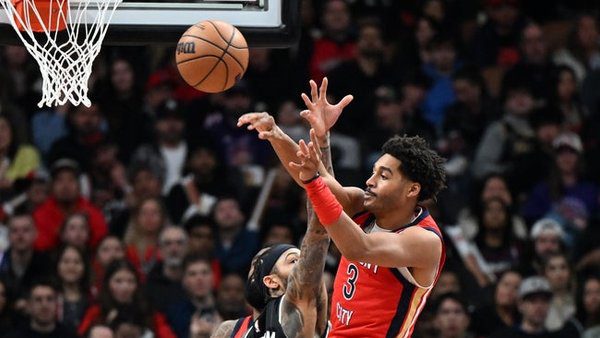
Bash sees a road favorite catching a wounded team at the right time, and he’s looking at both the spread and the total in a game where the efficiency gap might be wider than the market thinks.
The Setup: Houston Rockets at New Orleans Pelicans
Houston rolls into the Smoothie King Center on Sunday night as a 6-point road favorite against a Pelicans team that’s lost four straight and sits at 25-50 on the season. That’s a hefty number to lay on the road, but the Rockets are 44-29 and fighting for playoff positioning in the West—they’re just a game back of Minnesota for fifth and trying to avoid the play-in altogether. New Orleans, meanwhile, is down multiple rotation pieces and has dropped five straight away from home before returning to face a team that just snapped a two-game skid with a solid win in Memphis.
The projection here has Houston by 2 points, which creates a 4-point cushion against the spread for the home underdog. That’s a meaningful gap. The total sits at 225, and with a pace blend around 99 possessions—deliberate by today’s standards—and both teams hovering in the mid-110s offensively, we’re looking at a number that feels about right on the surface. But the efficiency picture and the injury situation tell me there’s more to unpack here.
Game Info & Betting Lines
When: March 29, 2026, 7:00 ET
Where: Smoothie King Center
Watch: Home: GCSEN, Pelicans.com | Away: Space City Home Network, NBA League Pass
Current Betting Lines (Bovada):
- Spread: Houston Rockets -6.0 (-105) | New Orleans Pelicans +6.0 (-115)
- Total: Over 225.0 (-110) | Under 225.0 (-110)
- Moneyline: Houston Rockets -235 | New Orleans Pelicans +195
Why This Line Exists
The market is giving Houston a full touchdown on the road because the season-long efficiency differential is stark. The Rockets are plus-4.0 in net rating; the Pelicans are minus-4.0. That’s an 8-point gap per 100 possessions, and it’s the foundation of why Houston is favored this heavily. Add in the fact that New Orleans is dealing with questionable tags for both Trey Murphy III and Dejounte Murray—two of their top four scorers—and you’ve got a line that reflects both the talent gap and the availability concerns.
But here’s the thing: Houston is 19-19 on the road this season, and New Orleans is 16-22 at home. Neither team is dominant in their respective venue split, and the Rockets have been inconsistent in clutch situations all year—they’re 19-22 in games decided by five or fewer in the final five minutes. That clutch record is a confidence killer when you’re laying points. The Pelicans, meanwhile, are even worse in the clutch at 12-26, but they’re getting six points here. They don’t need to win; they just need to hang around.
The offensive rebounding gap is also baked into this line. Houston grabs 34.9% of available offensive boards; New Orleans sits at 27.2%. That’s a 7.7-point edge in second-chance opportunities, and it’s one of the reasons the Rockets can control possessions even when their half-court offense stalls. The market knows Houston has more ways to generate points, and that’s reflected in the spread.
Houston Rockets Breakdown
Kevin Durant is the engine here, averaging 26.0 points per game on 51.8% shooting and 41.1% from three. He dropped 25 points and 10 assists in Friday’s win over Memphis, and he’s the reason Houston can close games even when the offense gets stagnant. Alperen Sengun continues to be the hub in the middle—20.4 points, 8.9 boards, 6.2 assists per game—and Amen Thompson gives them athletic versatility at 17.9 points and 7.9 rebounds. Jabari Smith Jr. had 21 points and 16 rebounds in Memphis, and when he’s active on the glass, Houston’s offensive rebounding edge becomes overwhelming.
The Rockets run at a 96.9 pace, which is slower than New Orleans’ 101.0, but they’re more efficient on both ends. Their 116.3 offensive rating ranks among the better marks in the league, and their 112.3 defensive rating is solid. Steven Adams is out for the season, but Clint Capela and Dorian Finney-Smith have been splitting backup center minutes behind Sengun without much drop-off. The depth is there, and the efficiency holds up even when the rotation tightens.
New Orleans Pelicans Breakdown
The Pelicans are in survival mode. Trey Murphy III is questionable with a right ankle sprain and has already missed two games. Dejounte Murray is also questionable after sitting out Friday for injury management. If both are out, you’re looking at a starting lineup built around Zion Williamson, Saddiq Bey, and Jordan Poole—talented, but not deep enough to match Houston’s firepower. Zion scored 22 points on 9-for-13 shooting in Toronto, and when he’s aggressive, he’s still one of the most efficient scorers in the league at 60.3% from the field. But he’s not a high-volume three-point shooter, and if Houston can wall off the paint, his impact gets limited.
Saddiq Bey has been solid at 17.4 points per game, and Jordan Poole provides some perimeter creation, but Poole’s efficiency is a problem—36.7% from the field and 32.8% from three. The Pelicans are 113.3 in offensive rating and 117.3 in defensive rating, which tells you they can score in spurts but can’t get stops consistently. They’re also just 9-28 on the road this season, and while this is a home game, the pattern of losing close games—12-26 in clutch situations—suggests they struggle to execute when the margin tightens.
The Matchup
The pace blend projects around 99 possessions, which is slower than New Orleans’ typical tempo and closer to Houston’s preferred style. That favors the Rockets, who can grind possessions and lean on Durant in the half-court. The offensive rebounding gap is massive—Houston’s 7.7-point edge in offensive board rate is one of the strongest differentials in this matchup. That means second-chance points, extended possessions, and fewer clean defensive stops for New Orleans.
The shooting quality is basically priced correctly—Houston’s true shooting percentage is 57.2%, New Orleans is at 56.8%, and the effective field goal percentages are within a point of each other. There’s no real gap there, which means the margin comes down to possessions and efficiency in transition. Houston’s turnover rate is slightly higher at 13.7% compared to New Orleans’ 12.3%, so the Pelicans do a better job protecting the ball. But when you’re giving up 7.7 points in offensive rebounding, that ball security advantage gets erased quickly.
The injury situation is the wild card. If Murphy and Murray both sit, New Orleans loses two of its top four scorers and a significant chunk of its perimeter defense. That shifts more responsibility to Zion and Bey, and it opens up driving lanes for Durant and Thompson. If both play, the Pelicans have a puncher’s chance to keep this within the number. But even at full strength, the efficiency gap is real—my model projects Houston by 2 points, and that includes a standard 2-point home-court adjustment for New Orleans.
Bash’s Best Bet & The Play
I’m taking New Orleans +6. The projection gives the Pelicans a 4-point cushion against the spread, and that’s enough for me to back the home dog in a spot where Houston has been inconsistent on the road and shaky in clutch situations. The Rockets are the better team, no question, but laying six points on the road against a team that can still score—even undermanned—feels like too much. Zion can get 20-plus on volume alone, and if one of Murphy or Murray plays, the Pelicans have enough to stay within a possession or two late.
The risk here is obvious: if New Orleans is down both Murphy and Murray, and Poole goes cold, this could get ugly in the fourth quarter. Houston’s offensive rebounding will create extra possessions, and Durant will close. But I’ll take my chances with the points and the home floor. This feels like a game that stays within five or six until the final minute, and that’s all I need.
The Play: New Orleans Pelicans +6 (-115)