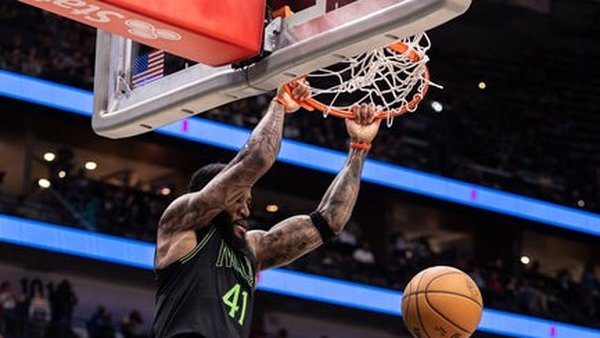
Bash examines a late-season matchup between two lottery-bound squads where the market’s double-digit spread doesn’t align with the underlying efficiency data or the depleted rosters taking the floor Tuesday night.
The Setup: Jazz at Pelicans
New Orleans is catching 11.5 points at home against Utah on Tuesday night, and on the surface, that number screams blowout territory. The Pelicans are home, the Jazz are 8-31 on the road, and we’re looking at two teams playing out the string in early April. But here’s the thing—when I dig into the efficiency metrics and account for who’s actually available, this spread feels inflated by about seven points.
Utah enters 21-58 overall and absolutely gutted by injuries. Lauri Markkanen is out. Keyonte George is out. Walker Kessler and Jaren Jackson Jr. are done for the season. This is a skeleton crew running on fumes. New Orleans sits at 25-54, riding a seven-game losing streak after Orlando beat them at home Sunday night. Trey Murphy III is out with an ankle sprain, and Dejounte Murray is questionable with a bruised hand. The projection has this game landing around four points, which creates a massive gap between what the market is asking and what the matchup actually suggests.
Game Info & Betting Lines
Utah Jazz at New Orleans Pelicans
When: April 7, 2026, 8:00 ET
Where: Smoothie King Center
Watch: Home: GCSEN, Pelicans.com | Away: KJZZ-TV, Jazz+, NBA League Pass
Current Odds (MyBookie.ag):
Spread: New Orleans Pelicans -11.5 (-110)
Total: 242.0 (Over/Under -110)
Moneyline: Pelicans -625 | Jazz +430
Why This Line Exists
The market is pricing this as a mismatch based purely on optics. Utah is 8-31 on the road. New Orleans is home. The Pelicans have slightly better efficiency numbers across the board—their net rating sits at -4.4 compared to Utah’s -8.6, a gap of 4.2 points per 100 possessions. That net rating edge is legitimate and forms the foundation of why New Orleans should be favored here.
But 11.5 points? That’s asking the Pelicans to not just win, but to dominate a game they have no incentive to dominate. This is lottery positioning season. New Orleans just lost seven straight, including a home collapse against Orlando where they managed one field goal in the final 4:50. Saddiq Bey scored 32 points in that loss, Zion Williamson had just one point in the fourth quarter, and the team folded down the stretch. The clutch numbers back up what we’re seeing—New Orleans is 12-29 in clutch situations this season with a -2.3 plus-minus in those spots.
The pace context matters here too. The expected possession count sits around 102 possessions, which is up-tempo enough to create scoring opportunities but not so fast that it guarantees separation. Utah plays at 103.1 pace, New Orleans at 101.0. This game will have possessions, but the efficiency gap isn’t wide enough to justify double digits when both rosters are this compromised.
Jazz Breakdown
Utah is running on fumes. With Markkanen out since late February due to a hip impingement, Keyonte George sidelined since mid-March with a hamstring strain, and both Kessler and Jackson done for the year, this roster has no business being competitive against anybody. The Jazz are scoring 117.1 points per game on 112.7 offensive rating, but those numbers are inflated by earlier-season production when the rotation was intact.
What’s left? Brice Sensabaugh averaging 14.8 points, Kyle Filipowski questionable for this one, and a collection of end-of-bench pieces trying to survive 48 minutes. The shooting percentages look fine on paper—46.5% from the field, 34.6% from three—but context matters. This team is 8-31 on the road for a reason. They get bullied in hostile environments, and their defensive rating of 121.2 is bottom-five territory.
Here’s the twist: Utah actually has a slight clutch edge over New Orleans. The Jazz are 13-21 in clutch situations with a -0.3 plus-minus, which is bad, but it’s not as bad as the Pelicans. In tight games, Utah has shown more fight than you’d expect from a 21-win team. That matters when you’re catching double digits.
Pelicans Breakdown
New Orleans is 25-54 and circling the drain. They’re 16-24 at home, which is better than Utah’s road mark but hardly inspiring. The seven-game losing streak has exposed every crack in this roster. Trey Murphy III, their leading scorer at 21.5 points per game, is out with an ankle sprain. Dejounte Murray is questionable with a bruised hand. Zion Williamson is playing—21.0 points per game on 60% shooting—but he’s been a non-factor in fourth quarters lately.
The offensive rating sits at 113.0, just barely ahead of Utah’s 112.7. The defensive rating of 117.4 is better than the Jazz’s 121.2, and that creates the mismatch edge that shows up as -8.2 per 100 possessions when you match New Orleans’ offense against Utah’s defense. That’s a strong advantage and the best reason to believe the Pelicans can pull away.
But can they actually execute? The clutch numbers say no. New Orleans is 12-29 in clutch games with a -2.3 plus-minus. They’re shooting 25.6% from three in those spots. This is a team that folds when games tighten up, and against a Utah squad with nothing to lose, there’s real risk this game stays closer than the market expects.
The Matchup
The core tension here is simple: New Orleans has the efficiency edge, but neither team has the roster depth or motivation to blow this thing open. My model projects a 4.1-point margin in favor of the Pelicans, which includes the standard two-point home court advantage. That puts the fair value of this spread somewhere around four, maybe five points. The market is asking for 11.5.
The pace blend of 102 possessions creates enough scoring chances to push the total projection to 236.9, which sits well under the posted 242.0. Both teams are dealing with key injuries, both are playing out the string, and neither has shown the ability to separate in recent games. The shooting efficiency is basically priced correctly—true shooting and effective field goal percentages are within noise levels between these two squads.
What jumps out is the turnover and rebounding data. New Orleans has a slight ball security edge at 12.3% turnover rate compared to Utah’s 13.2%, but that’s marginal. The offensive rebounding rates are nearly identical—26.8% for New Orleans, 26.3% for Utah. This isn’t a game where one team is going to dominate the glass or force a bunch of extra possessions through turnovers.
The real story is that this game projects as a low-possession, low-efficiency grind between two lottery teams with depleted rosters. New Orleans should win. But covering 11.5 at home against a Jazz team that’s shown clutch resilience? That’s a different conversation entirely.
Bash’s Best Bet & The Play
I’m on Utah +11.5 and the Under 242.0. The spread is the stronger play, but both sides of this game point toward a closer, uglier contest than the market is pricing.
The Jazz are catastrophically injured, but they’re getting 11.5 points in a spot where the efficiency data suggests a four-point game. New Orleans has the edge, but they’re on a seven-game skid, missing Murphy, possibly without Murray, and they’ve been brutal in clutch situations all season. This is a lottery team laying double digits against another lottery team in April. The incentive structure is all wrong for a blowout.
The Under makes sense as a secondary play. The projection sits at 236.9, nearly six points under the posted total. Both teams are compromised, neither can shoot consistently in late-game situations, and the pace won’t be fast enough to overcome the efficiency gaps. This game has 225-230 written all over it.
Risk note: If Murray sits and the Pelicans get out to an early lead, they might coast to a double-digit win simply because Utah has no firepower to mount a comeback. But at 11.5, you’ve got cushion for that scenario. I’ll take the points and the Under and hope for exactly what the numbers suggest—a low-scoring slog that stays within single digits deep into the fourth.